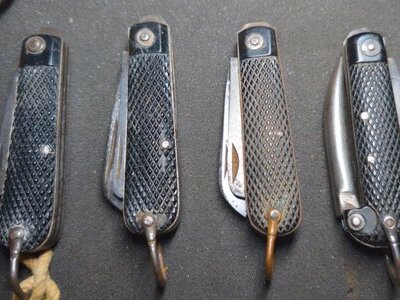
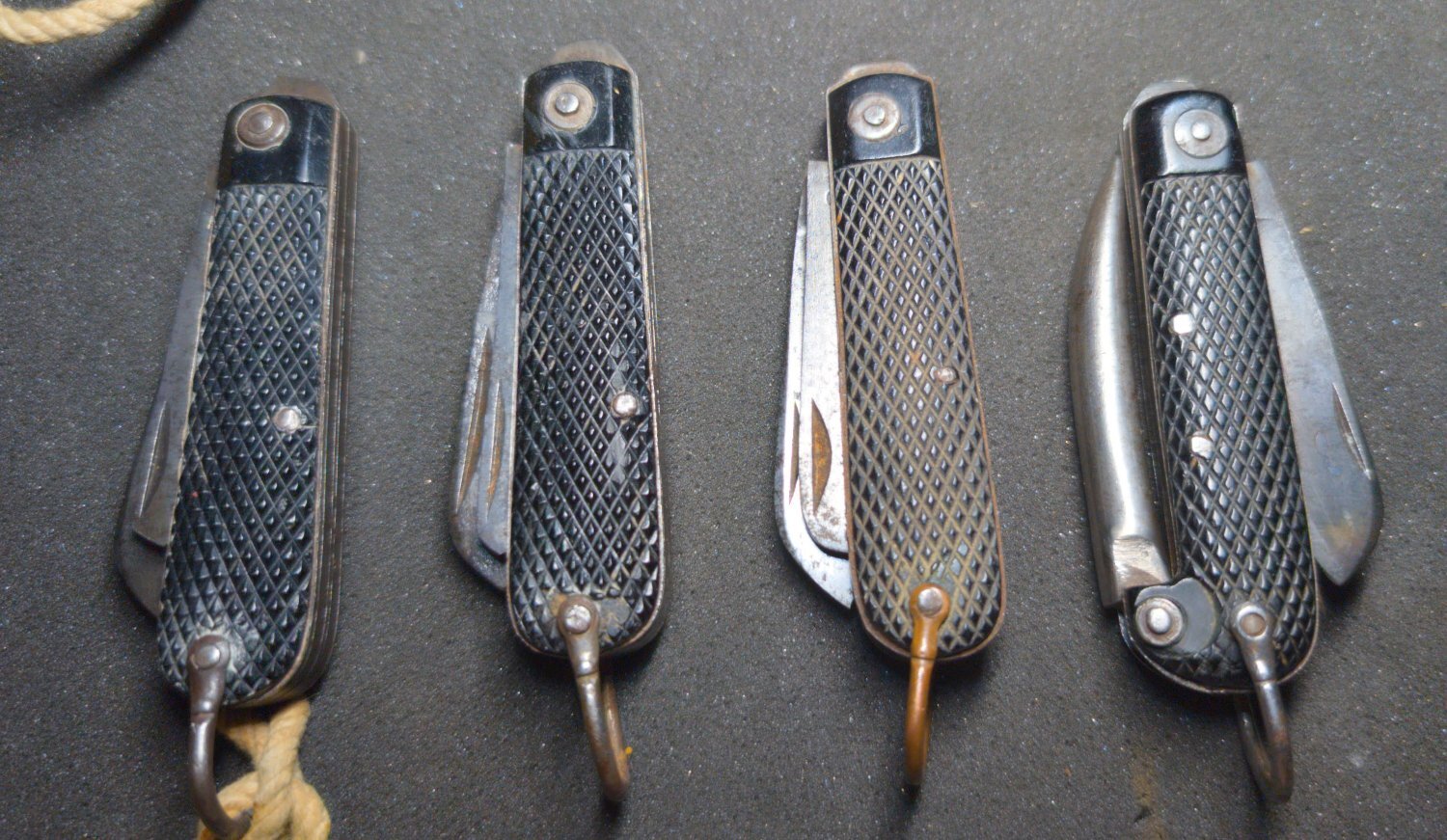
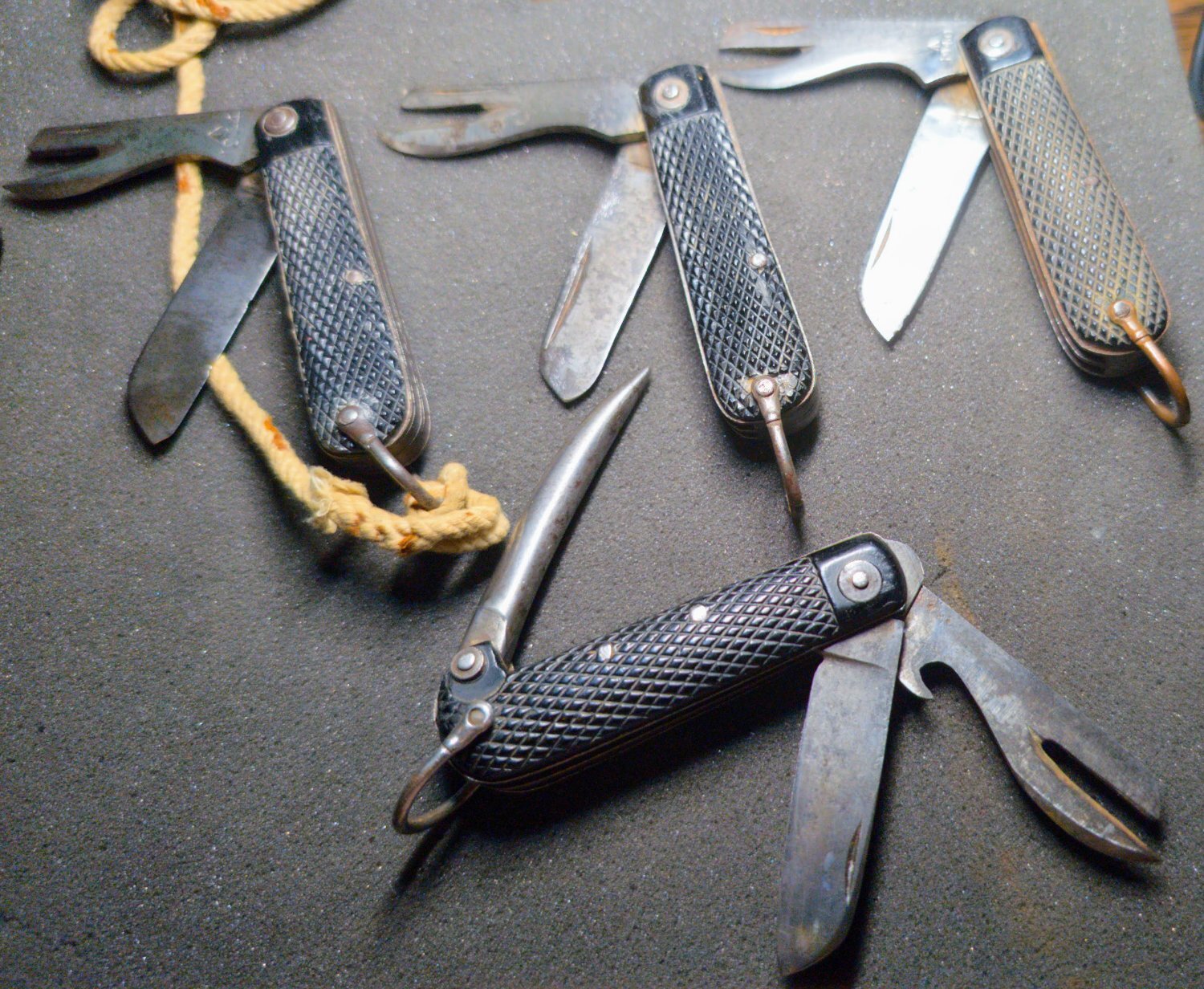
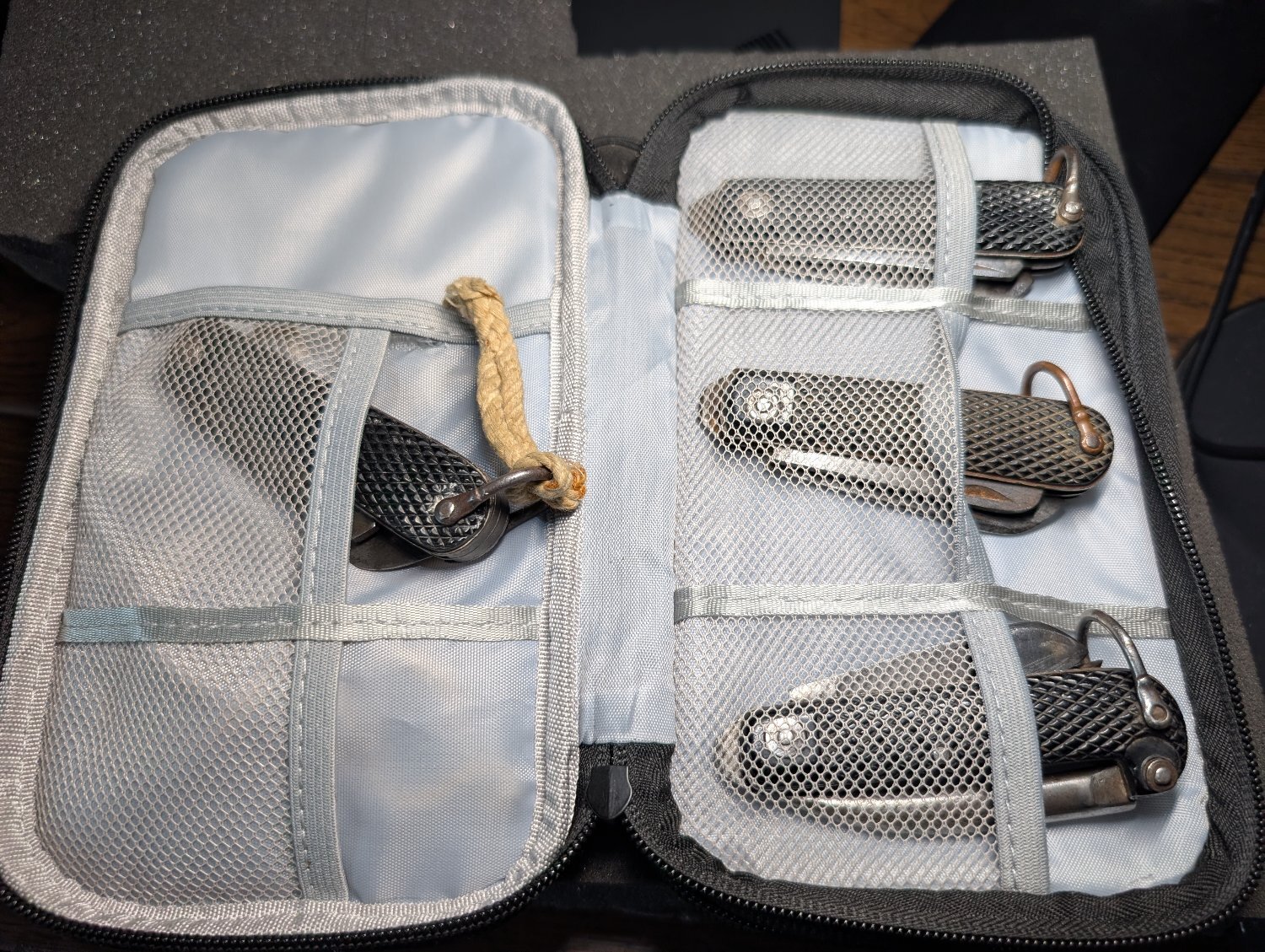
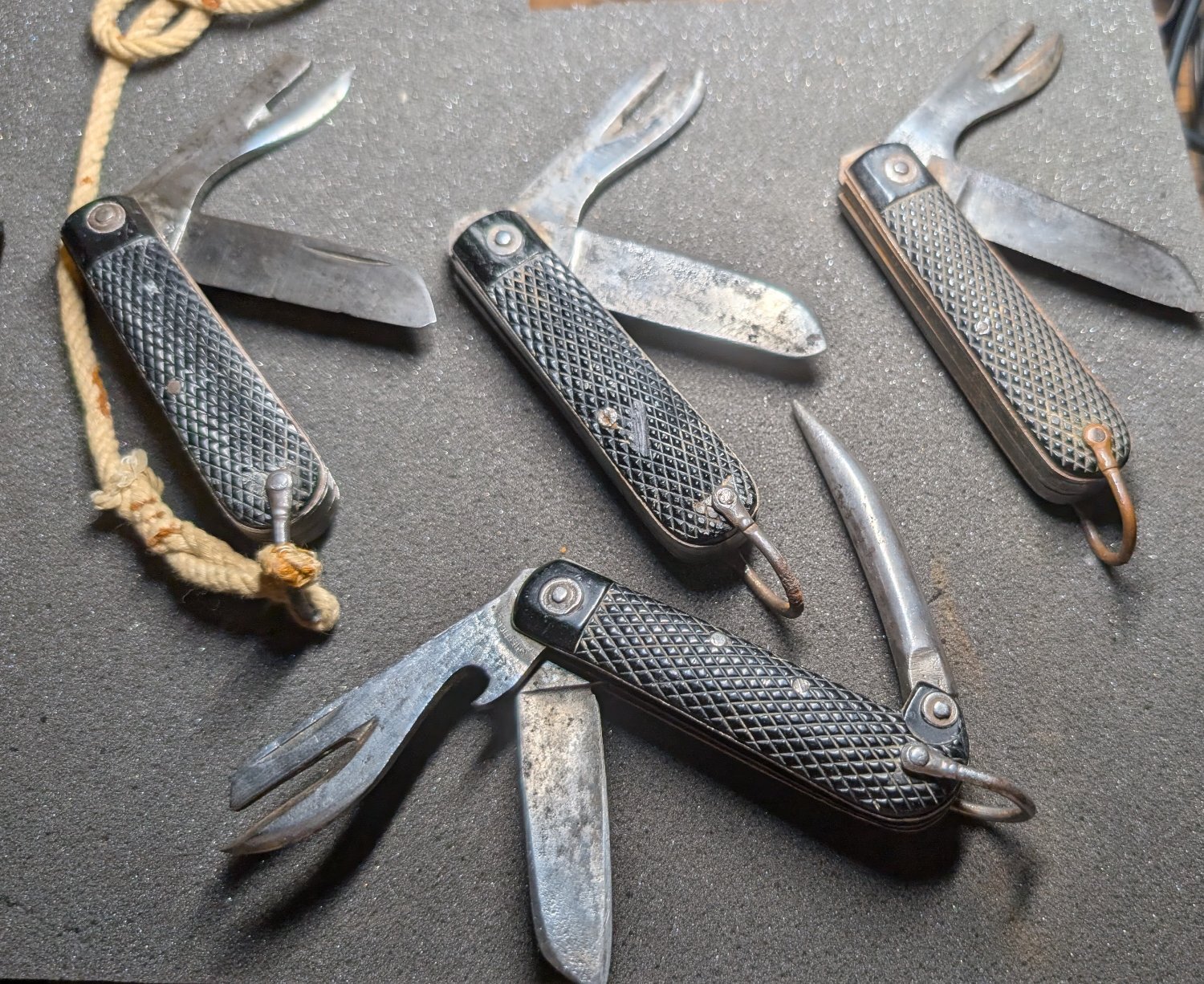
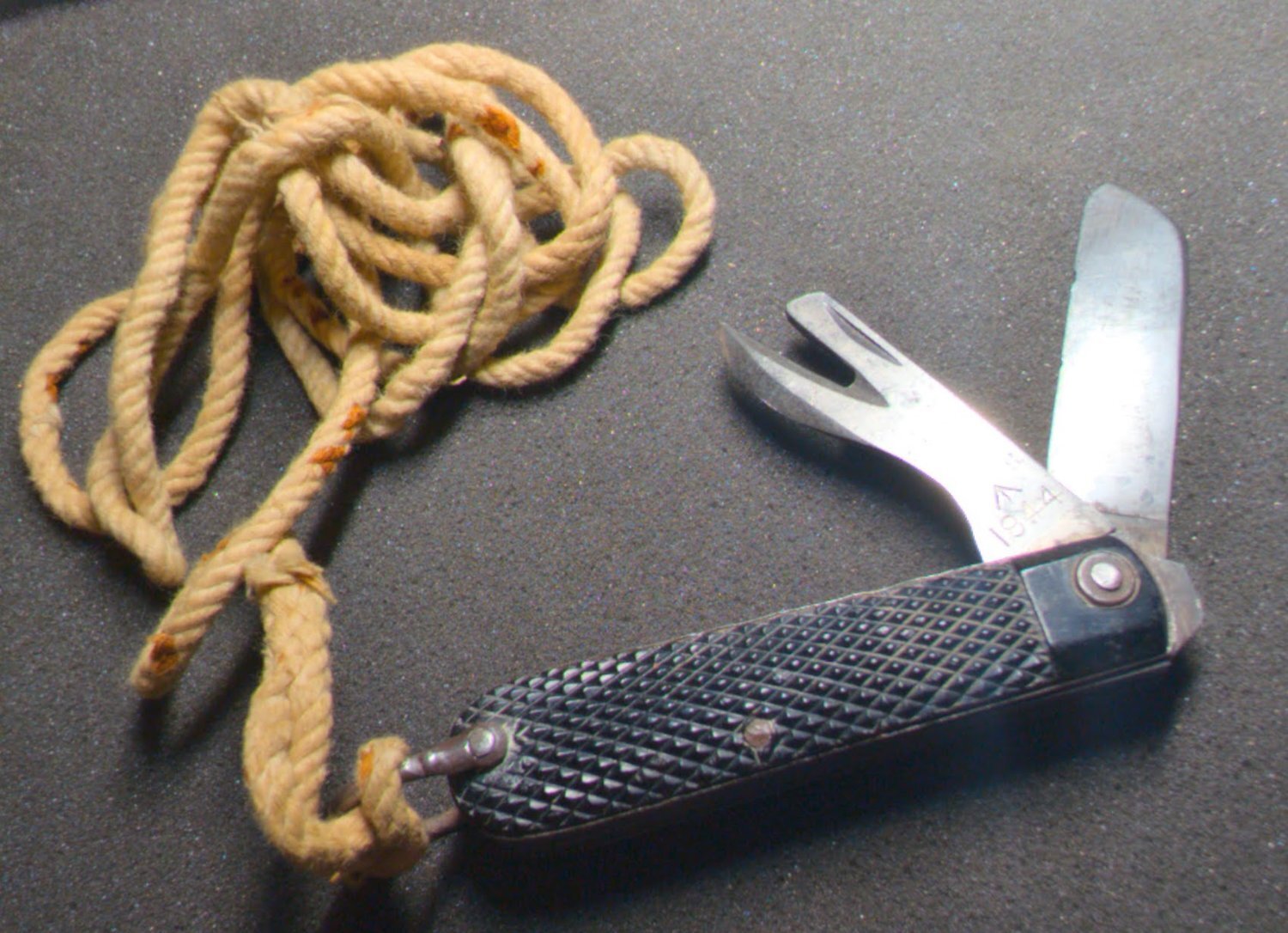
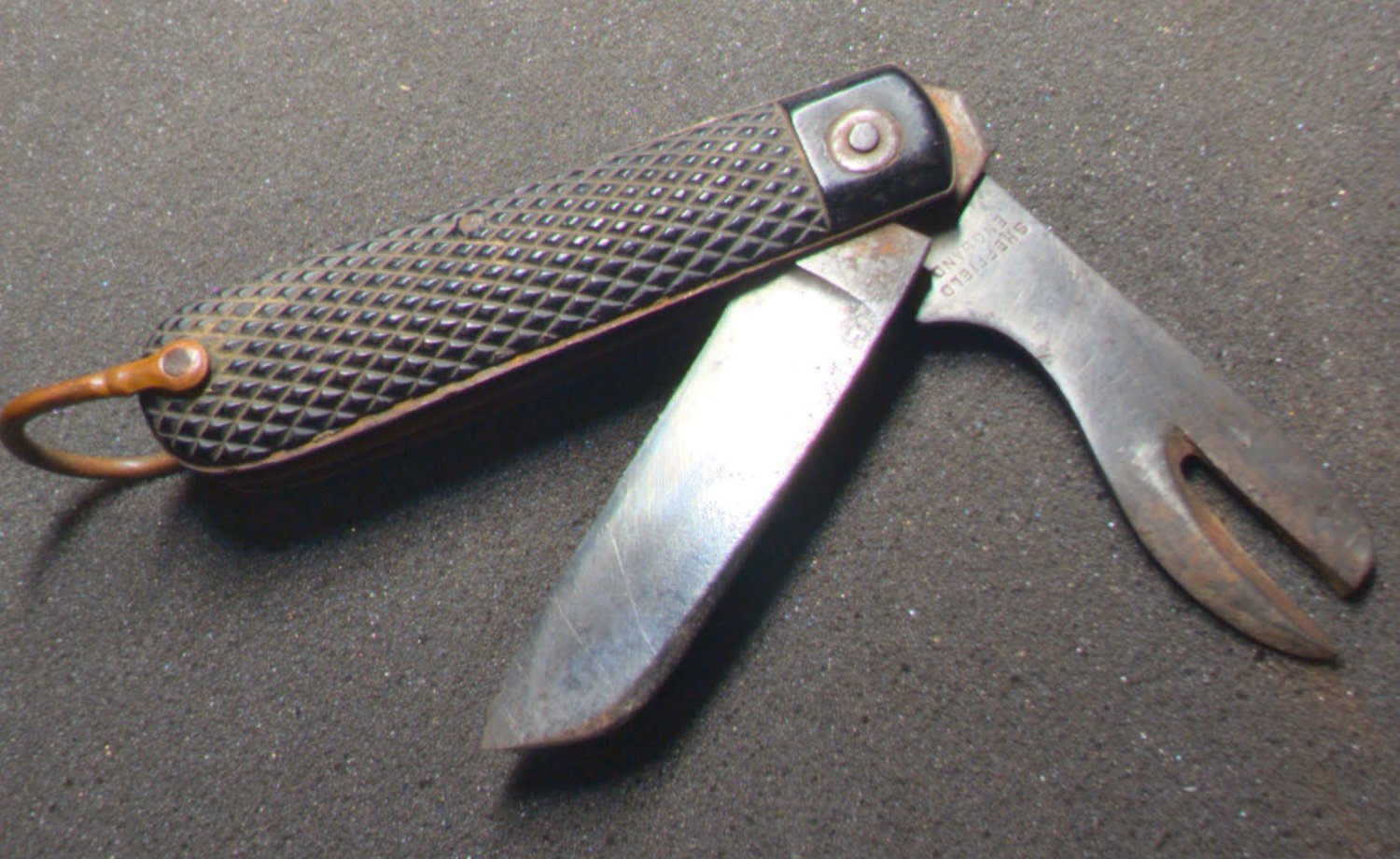
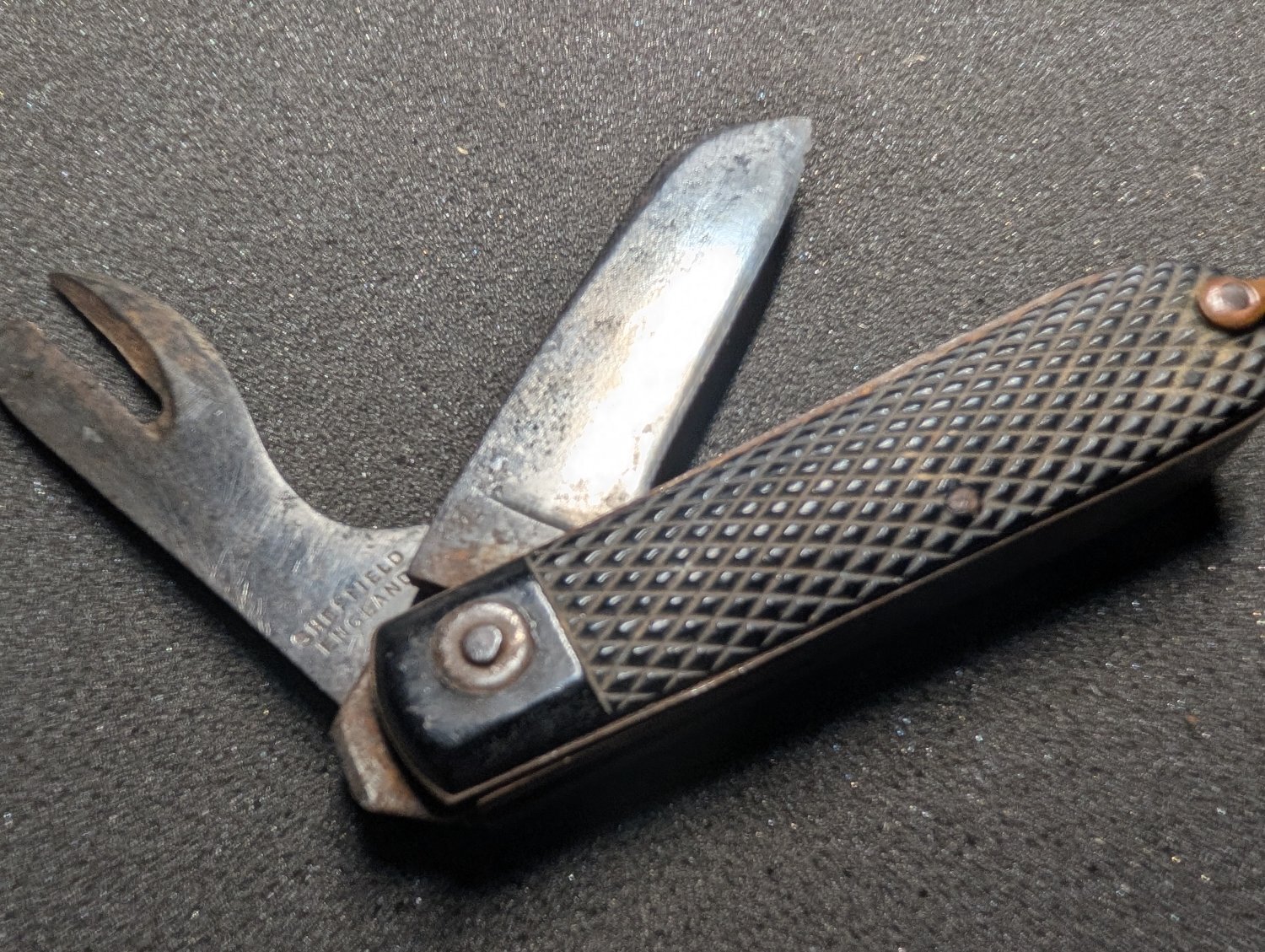
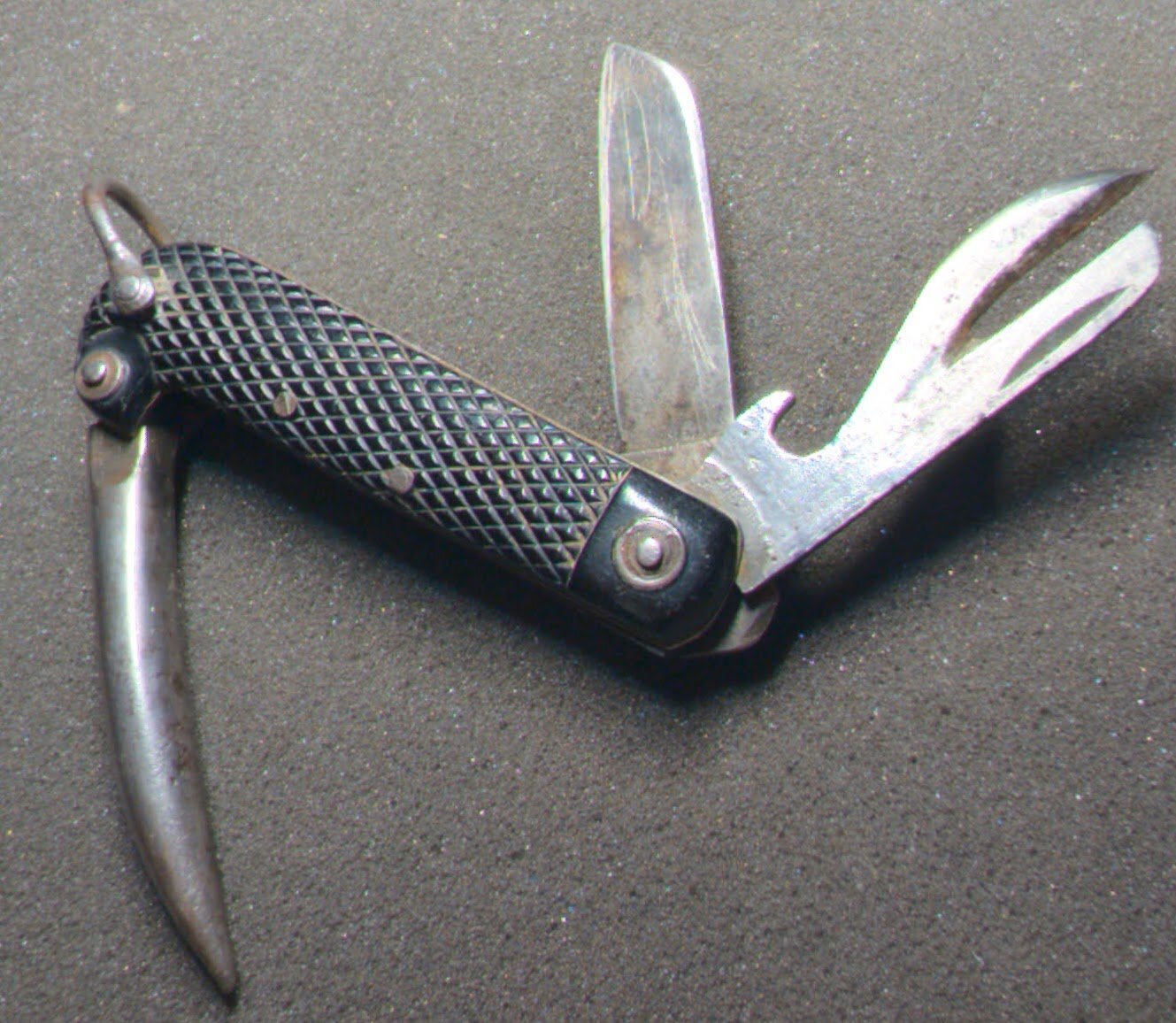
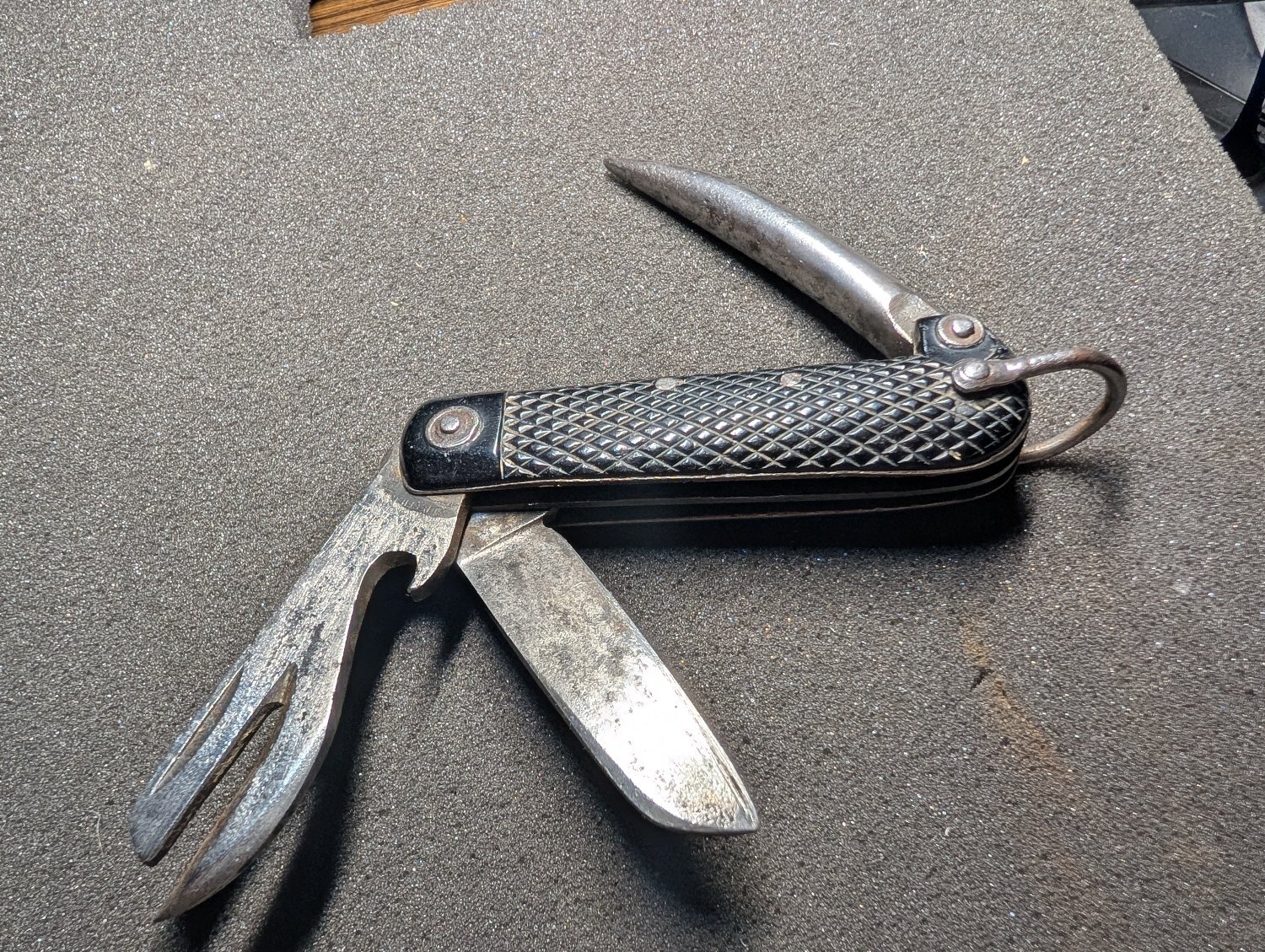


4 x WWII British military clasp knives
please see photos from more information as i'm not an excerpt in no way shape or form but found information below on the internet
All four of the knife's springs are firm and blades haven't been overly ground down or pitted.
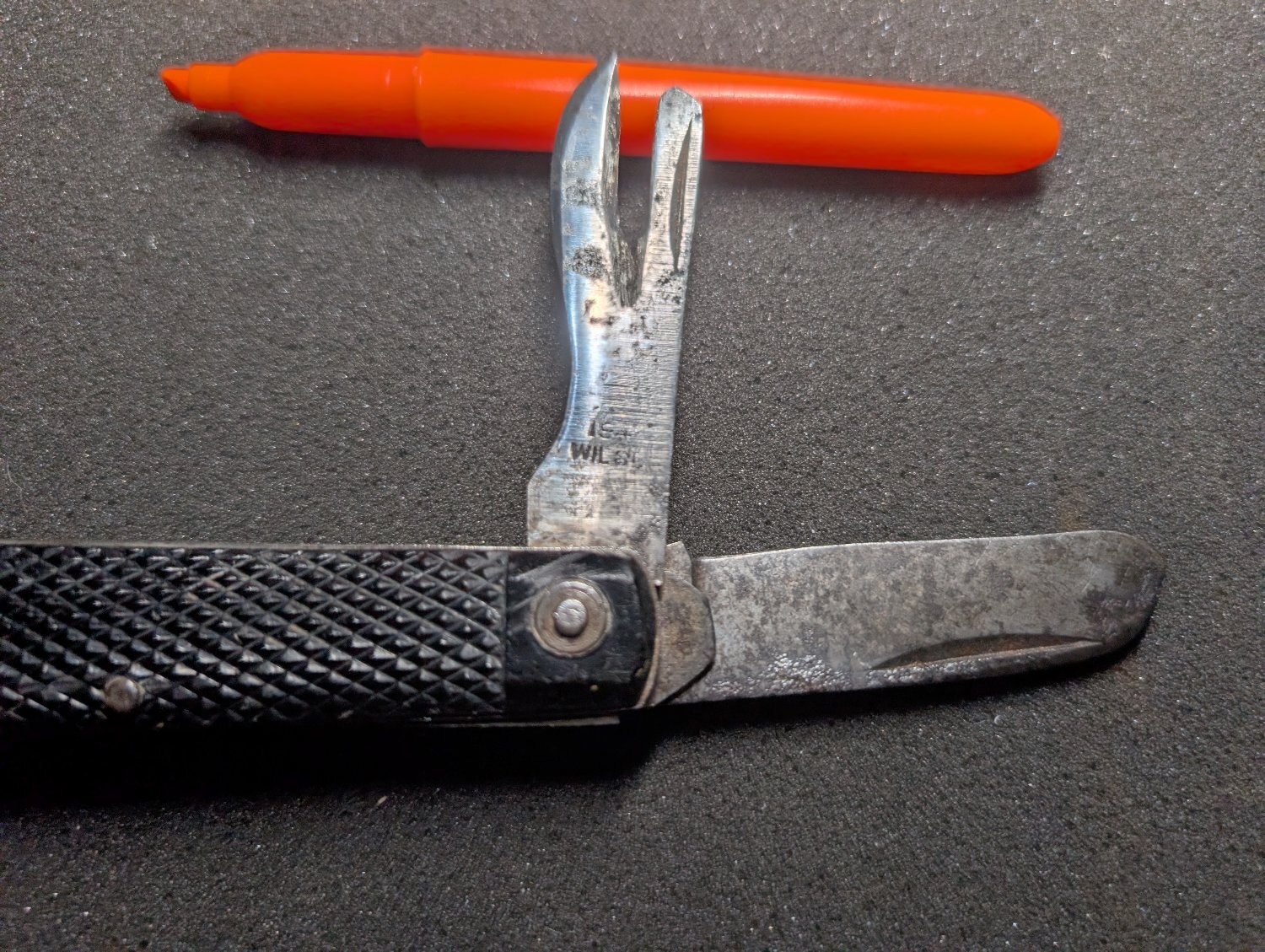
I. Wilson, Sycamore Street, Sheffield
Joseph Rodgers & Sons by the Cutlers' Company of Hallamshire
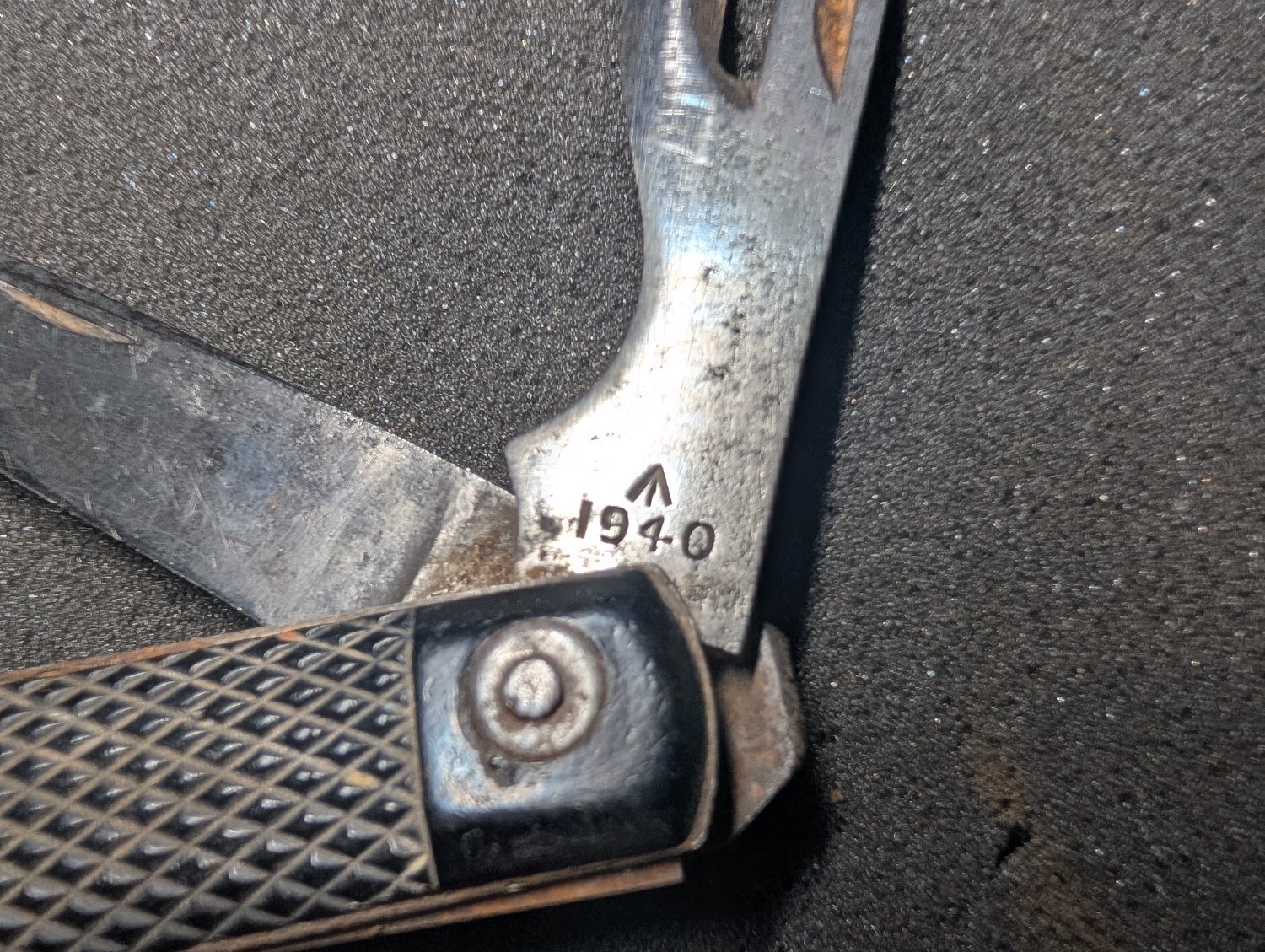
British Army 2-piece clasp knife, manufactured in 1940.
Identification Details
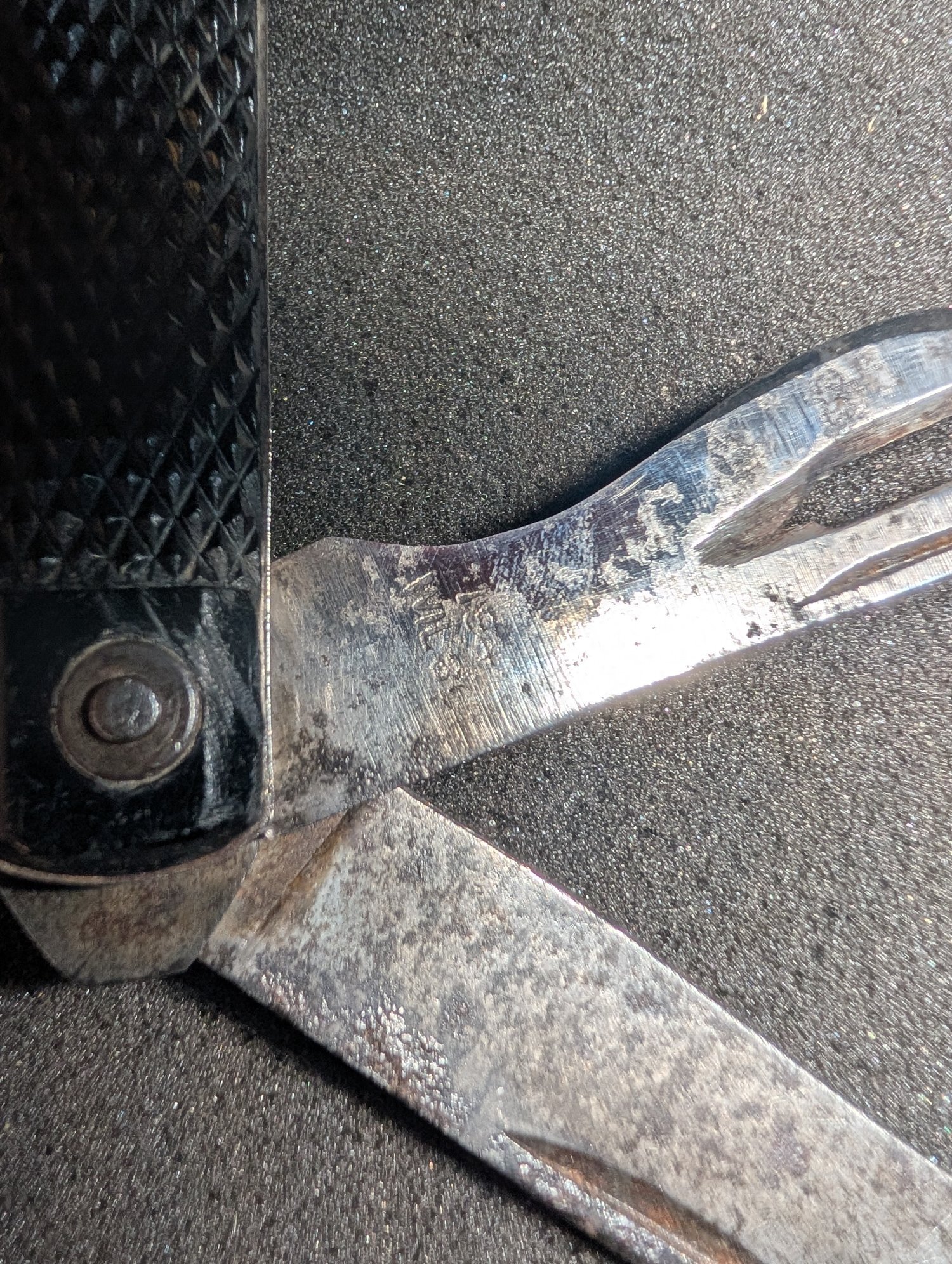
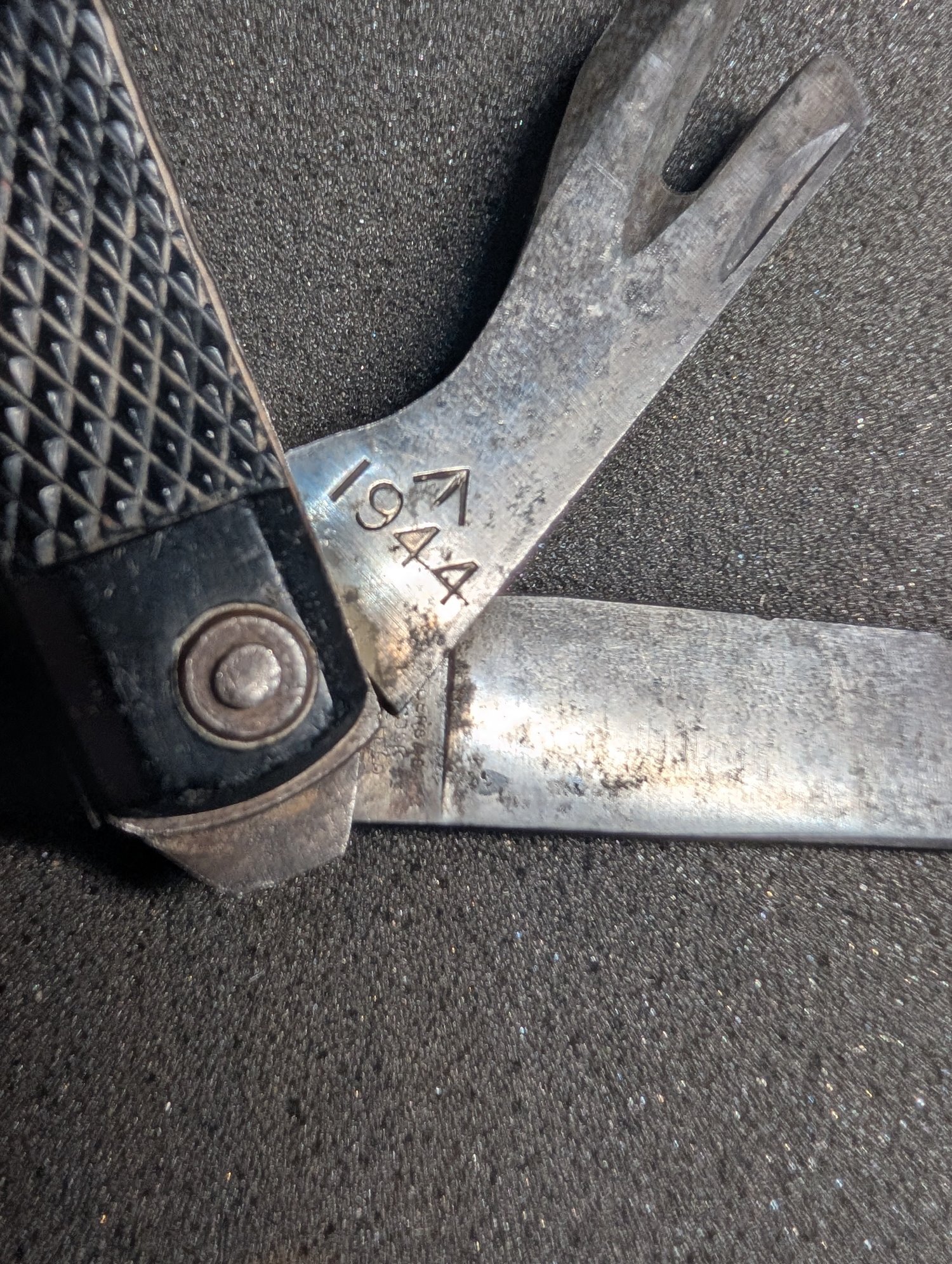
Markings: The tang of the can opener is clearly stamped with the British military Broad Arrow (Pheon) inspection mark and the date 1940.
Scales (Handles): Chequered black synthetic scales, often made of Bexoid or similar early plastics/composites typical for WW2-era manufacture.
Features:
Single sheepfoot cutting blade.
Combined tin opener and bottle opener/lever.
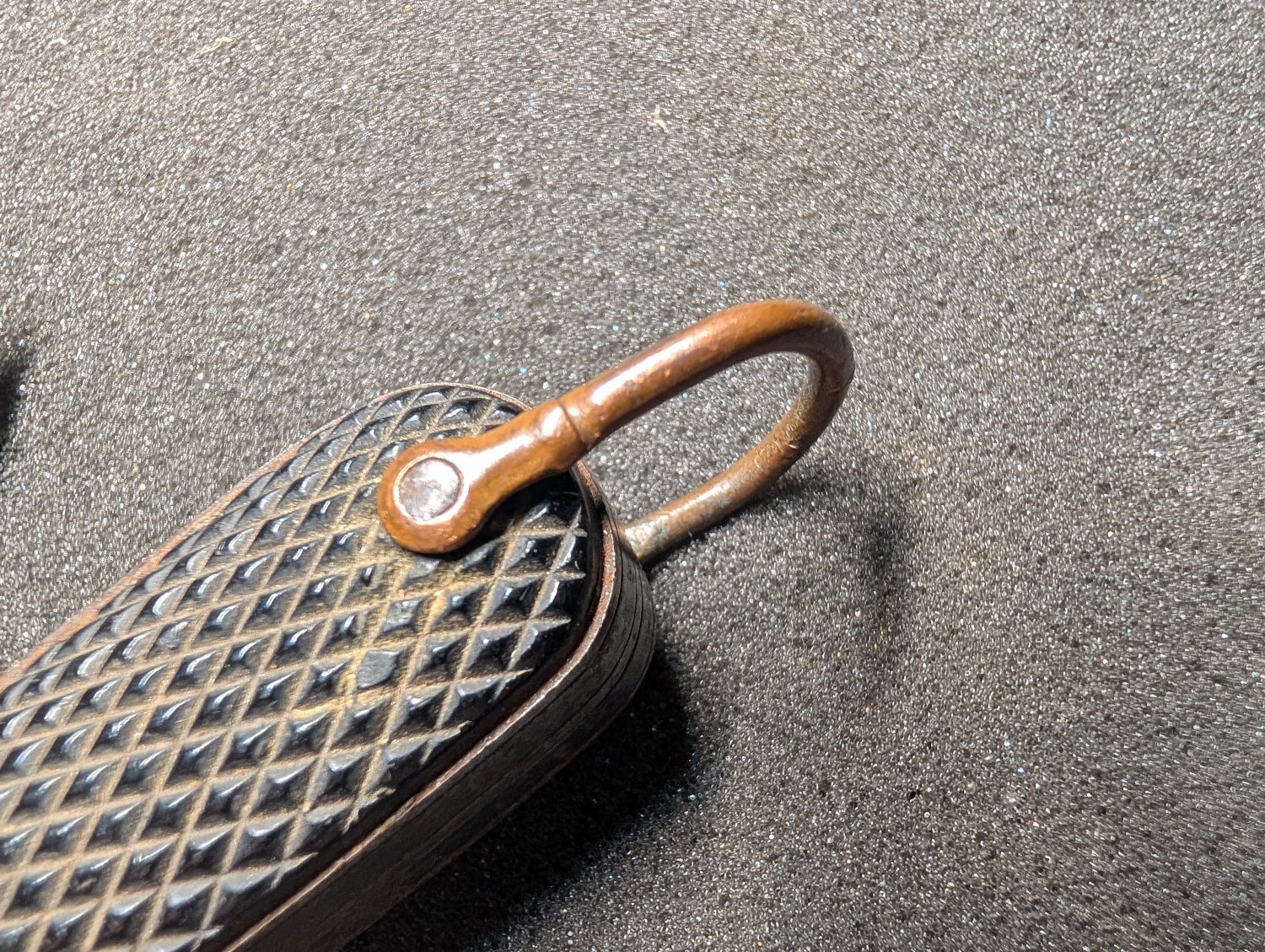
Brass copper shackle (beading ring) at the butt end for attaching a lanyard.
Early-war dates (1939–1940) with copper/brass shackles generally command a slight premium among collectors over mid-to-late war versions.
Date Stamp: Stamped 1944 above the maker's name.
Maker Stamp: WILSON (I. Wilson, Sycamore Street, Sheffield).
Blade Condition: The carbon steel sheepfoot blade exhibits natural age patina, light surface pitting, and long nail nick pull, characteristic of wartime carbon steel cutlery.
This confirms your 2-blade British Army clasp knife was produced under military contract during the peak of World War II in 1944.
Crisp Broad Arrow and date stamp markings keep interest high, even with late-war steel shackles.
Maltese Cross and Six-Pointed Star: This iconic dual-symbol trademark (a Maltese Cross on the left and a six-pointed star on the right) was granted to Joseph Rodgers & Sons by the Cutlers' Company of Hallamshire in 1682 and used right up through the 20th century.
All four of the knife's springs are firm and blades haven't been overly ground down or pitted.


Not quite what you’re looking for?