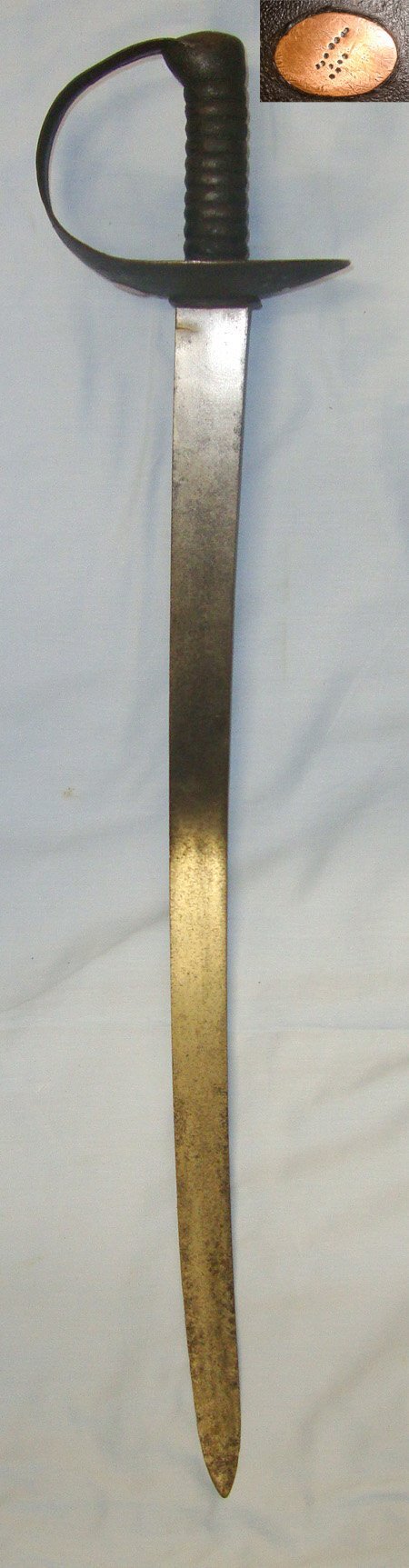
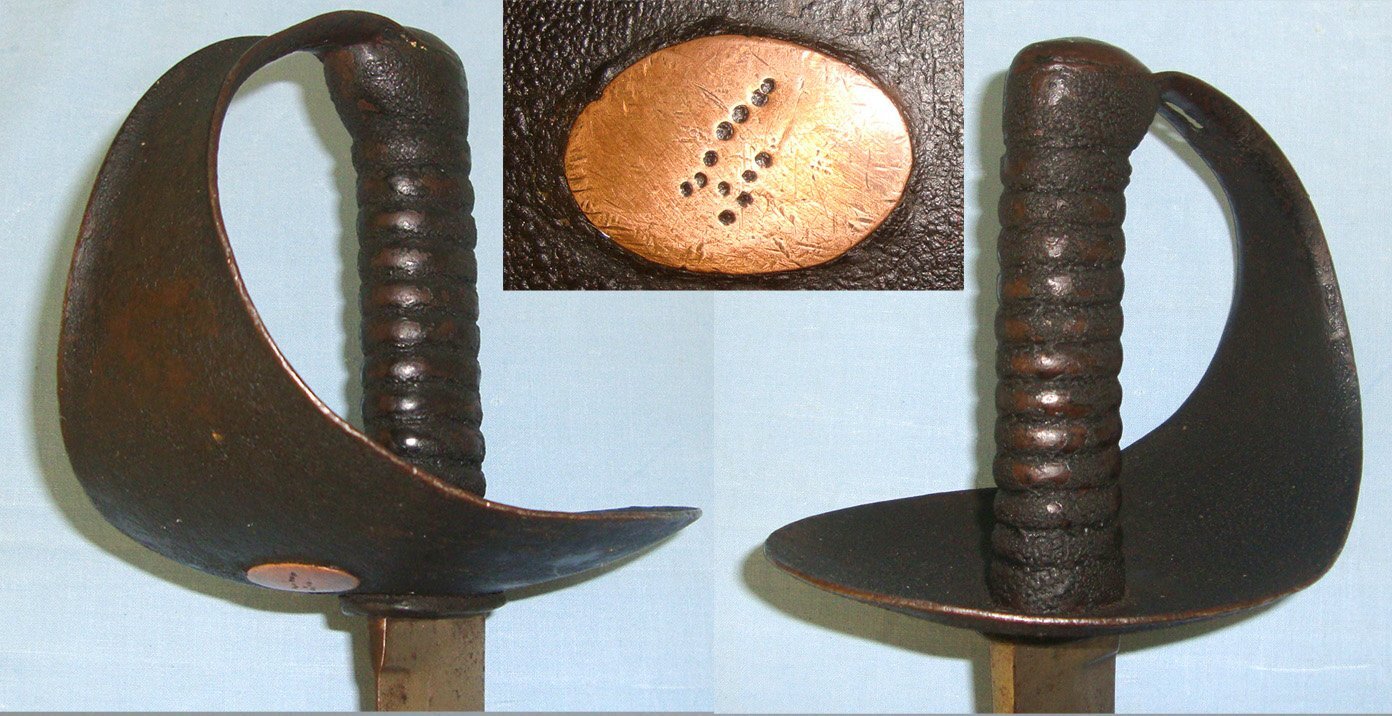
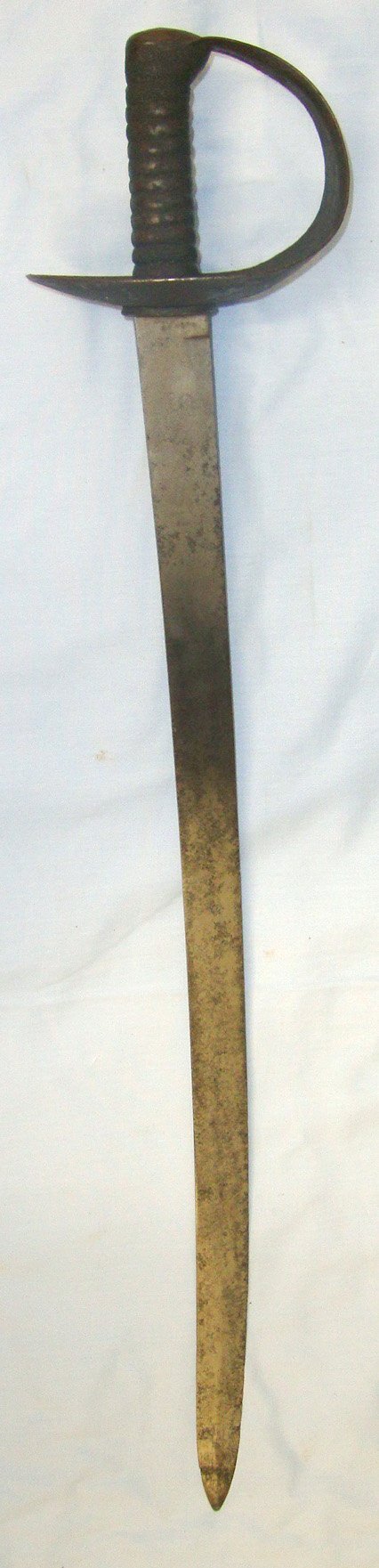


British 1845 Pattern Royal Navy Boarding Cutlass Guard With Brass Lozenge Marked Weapon Number ‘4’. Sn 22370:2 Sword
British 1845 Pattern Royal Navy Boarding Cutlass Guard With Brass Lozenge Marked Weapon Number ‘4’. Sn 22370:2 - 22370:2
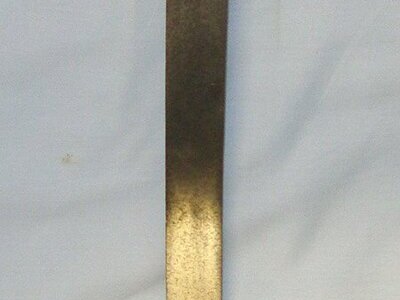
The British Royal Navy due to its global presence and command of the sea was by far the most organised and trained of all the World major sea services and it's edged weapons used for boarding and repelling boarders reflected this. The Royal Navy was one of the first Navies in the 18th Century to begin standardising the personal edged weapons used by ordinary seaman. Experiments during the early 1840s for a new naval cutlass design to replace the venerable 1804 Pattern resulted in a design by George Lovell, the Inspector of Small Arms, being accepted in 1842. A fire at the Tower of London destroyed early stocks and the design did not enter service in bulk until three years later, hence being termed the 1845 Pattern. It was considered very successful, handling well compared to its bulky predecessor the 1804 Pattern and being simpler to manufacture (see page 248 of World Swords by Withers). Our example has the classic single edged 29 ½” (35 ¼” overall). The blade is 1 ½” broad at its widest and the spine is 7mm width at its widest. The blade has staining consistent with age & service use. It has the correct full steel bowl knuckle guard and ribbed steel hilt all blackened with original black paint or paint and tar mix much of which is present. The guard is slotted for wrist strap and has its original brass lozenge riveted to the front with a weapon / rack number punch dot applied ‘4’ (Wither’s book illustrates a similar afore described hilt plates). These weapons were stored in locked racks on board ships and issued only for training or combat so are often found without scabbards. Only a small number were furnished with scabbards so that with a baldrick they could be worn for land-bound duties. Our example is without scabbard. The price for this piece of British Naval history includes UK delivery. Sn 22370:2 (tub armoury)
£675.00
Related ads
3 photos
![German WW 1Gruson Ballooon Gun (53x176R) German WW 1Gruson Ballooon Gun (53x176R) Round Antique & Militaria]() £ 295
Promoted
£ 295
Promoted



Not quite what you’re looking for?