


INERT DEACTIVATED. British, WW2, Rare, 4 Pound Tile Breaking Pointed Steel Tip Incendiary Bomb. - O 1885 INERT DEACTIVATED. British, WW2, Rare, 4 Pound Tile Breaking Pointed Steel Tip Incendiary Bomb. - O 1885 Other Ammunition
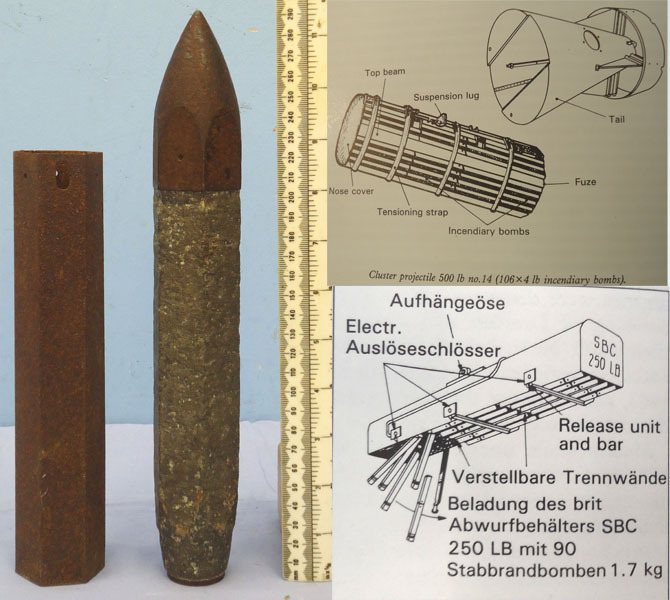
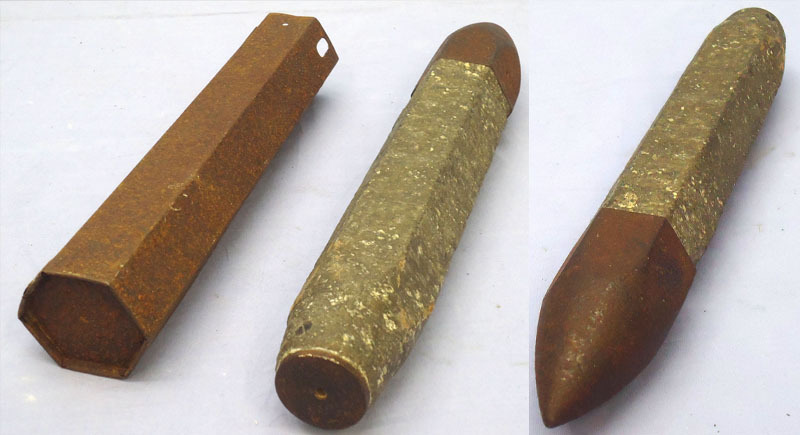
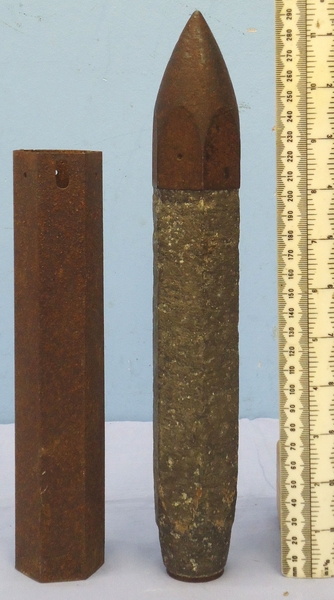
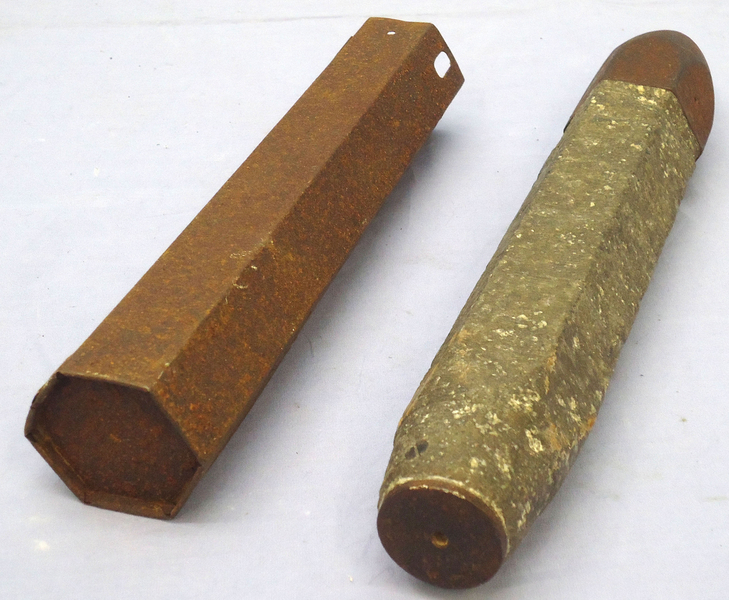
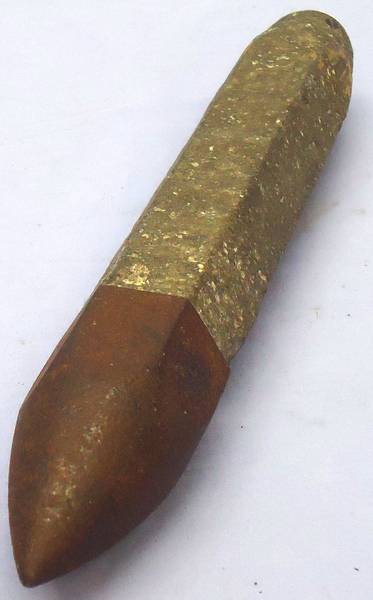
INERT DEACTIVATED. At the start of WW2 with the firebombing of British cities by the German Luftwaffe in the 1940/1 Blitz much information was used from the German method of dropping incendiary bombs followed by high explosive bombs which would spread the fires, injure/kill the firefighters/rescuers and their equipment. The British 4 pound incendiary bomb was developed by ICI in 1934 after various trials including the German incendiary bomb. The design was finalised with a all hexagonal bomb with a magnesium body filled with thermite, a flat steel tip and pressed steel hexagonal fins. This bomb could penetrate the roof and 1 to 2 upper floors of a normal building. This is a rare British 4 pound tile breaker incendiary bomb with a pointed steel tip as opposed to the normal flat bottomed type. This would enable the bomb to penetrate roofs easier instead of bouncing on to the ground where the roofs were very steep which were more frequent in the continent as opposed to British roofs. The bomb measures18 inches in length is the same length as the normal 4 pound incendiary bomb so that it could be packed into canisters. The steel nose is 3 ½ inches in length instead of the normal 1 ¾ inches and has been turned to a point. The bomb is complete with an undamaged pressed steel hexagonal tailfin assembly. See pages 60, 61 and 88 in the reference book ‘BOMBS GONE, The development and use of British air-dropped weapons from 1912 to the present day’ by Wing Commander John A, MacBean and Major Arthur S. Hogben. The price includes UK delivery and no licence is required to possess this inert item in the UK if retained as part of a collection or display. O 1885
Related ads
3 photos
![German WW 1Gruson Ballooon Gun (53x176R) German WW 1Gruson Ballooon Gun (53x176R) Round Antique & Militaria]() £ 295
Promoted
£ 295
Promoted



Not quite what you’re looking for?