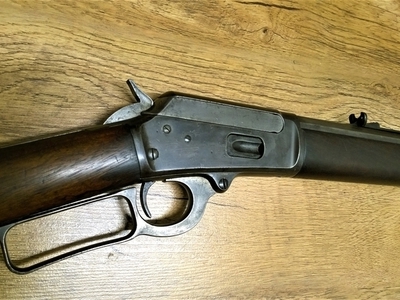
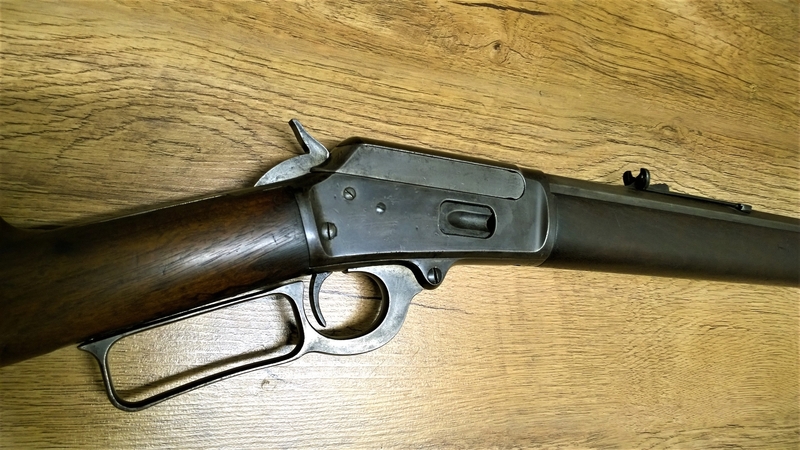
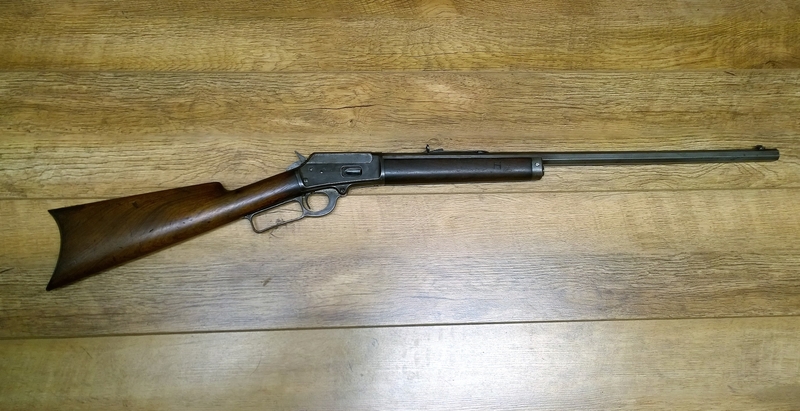
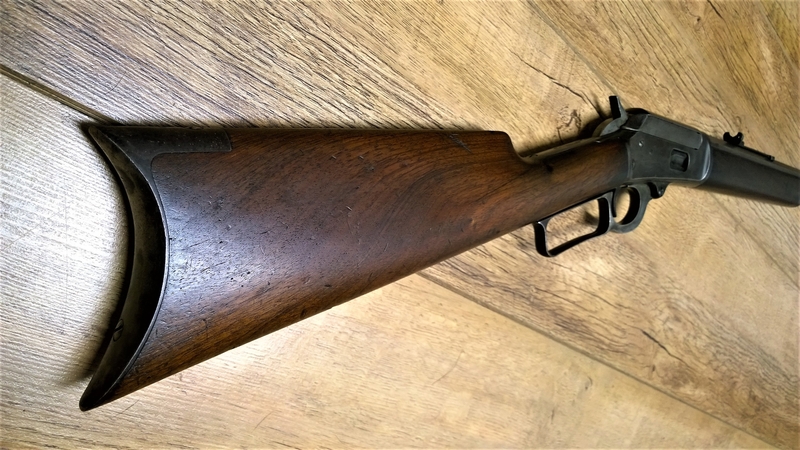
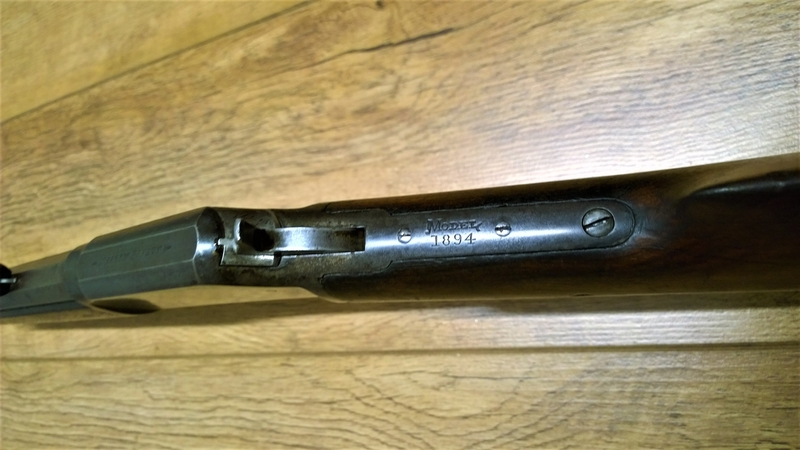
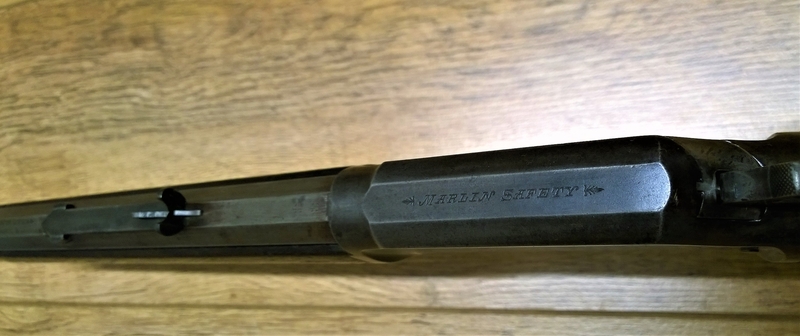
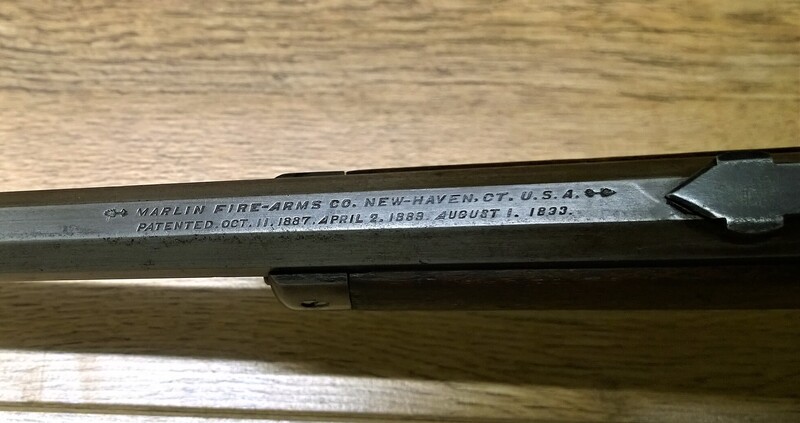
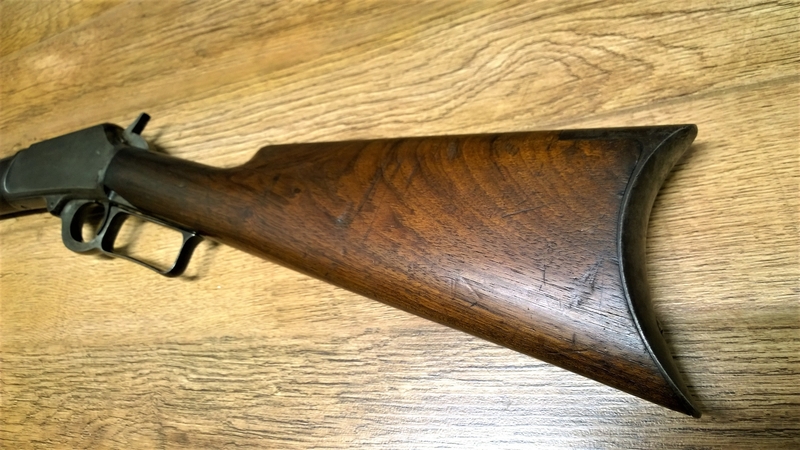


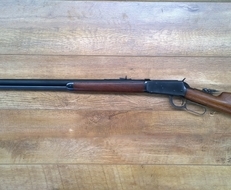
Marlin 1894 Lever Action .44-40 Winchester Rifle
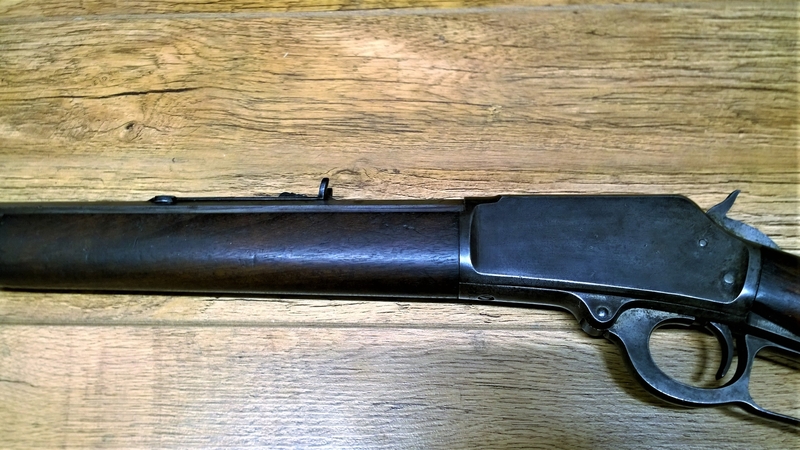
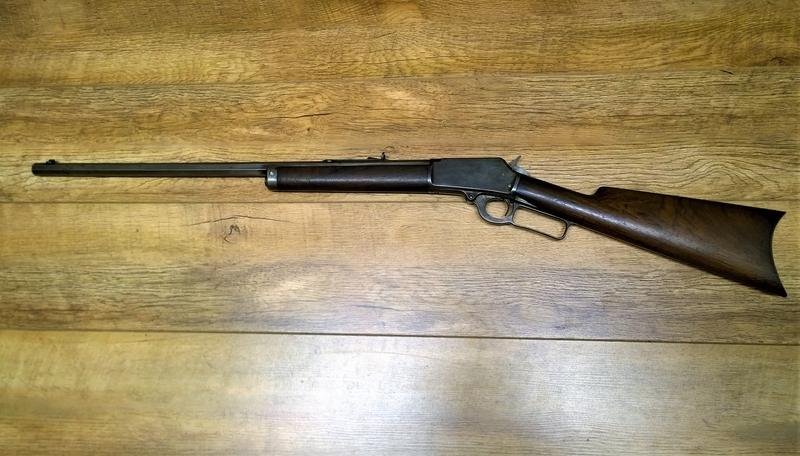
A good all original Marlin 1894 in 44-40 cal.
reduced to sell quickly
Special order.
The Marlin Model 1894 is a lever-action repeating rifle introduced in 1894 by the Marlin Firearms Company of North Haven, Connecticut. At its introduction the rifle came with a 24-inch barrel and was chambered for a variety of pistol rounds such as .25-20 Winchester, .32-20 Winchester, .38-40, and .44-40. Variants in other chamberings remain in production today.[1]
Special style side ejector bicycle rifle (1902)
Marlin produced its first lever-action repeating rifle as the Model 1881, a strong but heavy design that could accept powerful large-caliber black powder cartridges similar to those used in single-shot designs used for buffalo, bear, and other big game hunting.
This was followed by the Model 1888 which was a top-eject action like the 1881 with several improvements, most important was the incorporation of a locking lug locking the breech. It was chambered in the WCF (Winchester centerfire) family of cartridges originally developed for the Winchester 1873 rifle: .44 WCF, .38 WCF, and .32 WCF (also known as the .44/40, .38/40, and .32/20).
The designer and patentee of the Model 1888 and subsequent Marlin lever action rifles (including the Model 1894) up to the Model 1897 was L.L. Hepburn (Lewis Hepburn), a Marlin firearms engineer.[2] The Marlin Model 1889 was the very first lever-action repeater to incorporate a flat solid steel top receiver with side ejection of spent cartridge cases.[3] Marlin's design team believed that a solid-top steel receiver would be safer in the event of a hang-fire cartridge, and stronger than a top-eject frame of equivalent weight.[4][2] The Model 1889 was chambered for the same cartridges as the 1888. Internal upgrades included a locking lug and firing pin system that prevented discharge until the bolt was locked in place. The new model also utilized a cartridge carrier that raised automatically, closing the end of the magazine after the head of the cartridge had passed into the carrier, thus preventing the next cartridge from entering the carrier and jamming the action.[3]
The Marlin 1894 was originally patented on August 1, 1893 by L.L. Hepburn.[5] With this design, Marlin simplified and strengthened the internal lever-action mechanism while continuing the practice of using a flat solid steel top receiver with side ejection.[5] With the Model 1894, Marlin removed the rear-locking lug, which extended down into the trigger guard and had a tendency to pinch the shooter’s fingers during rapid-fire cycling.[3] Other design improvements over the Model 1889 included a one-piece trigger and a two-piece firing pin to prevent the rifle from firing unless the finger lever was fully closed or if the locking lug were missing.[2] Additionally, the finger lever lock of the Model 1889 was eliminated on the Model 1894 and replaced by a latch built into the lever itself.[2] This model was chambered in the same calibers with the addition of the .25/20 and later .218 Bee.[6]
The Model 1894 and its successors found particular favor in Canada, Alaska, and the Pacific Northwest, where precipitation combined with cold temperatures sometimes caused top-eject designs to freeze solid.[7] During the Klondike Gold Rush, the solid-top Marlin design was preferred by many prospectors facing subzero temperatures and dangerous animals, since the solid top frame was better at keeping freezing rain, snow and dirt out of the operating parts of the action.

Related ads
17 photos
![Henry Repeating Arms Original Lever Action .44-40 Winchester Rifle]() £ 3,350ONO
Promoted
£ 3,350ONO
Promoted

Not quite what you’re looking for?