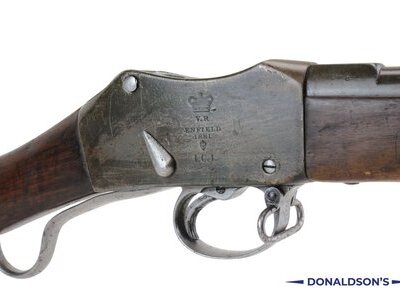
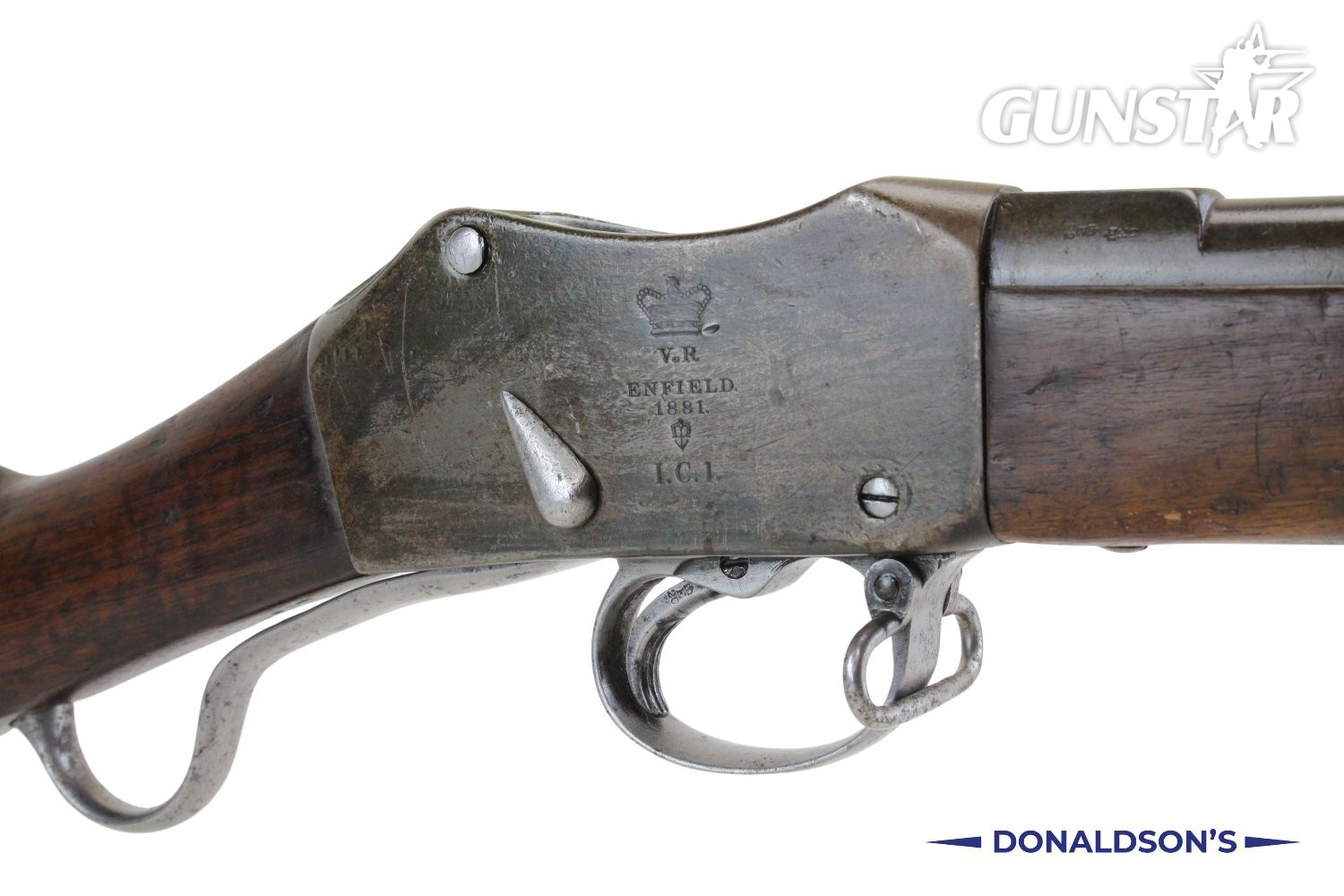
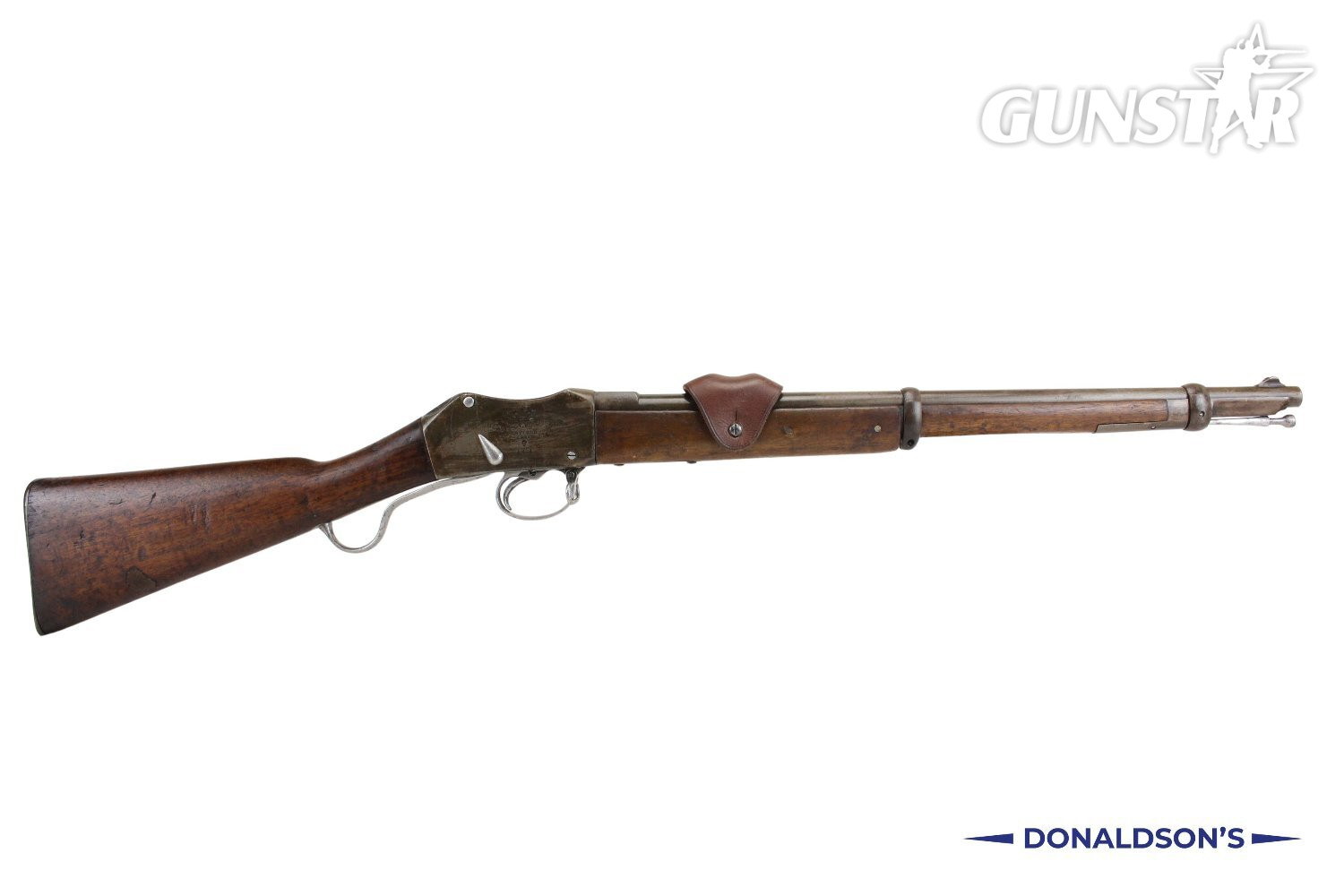


Martini Henry Martini Henry IC1 Carbine Single Shot .577/450 Martini-Henry Rifle
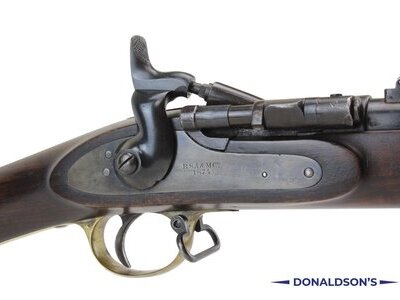
This is an 1881 Martini Henry IC1 (Interchangeable Carbine Mark 1) in the original .577/450 Martini-Henry calibre. The rifle retains a good bore with Henry's patent heptagonal rifling featuring seven grooves. The IC1 designation stands for Interchangeable Carbine MK1, first introduced in 1878 primarily for use by British Garrison and Field Artillery units and regiments. These carbines featured interchangeable furniture allowing conversion from Artillery to Cavalry configuration simply by changing the stock arrangement.
The Martini-Henry was a breech-loading single-shot rifle with lever action that first entered British service in 1871, eventually replacing the Snider-Enfield. It combined the dropping-block action developed by Henry O. Peabody and improved by Swiss designer Friedrich von Martini, with polygonal rifling designed by Scotsman Alexander Henry. The carbine fired 410-grain bullets made from tin and lead alloy, propelled by 71 grains of RFG2 black powder, delivering considerable stopping power with manageable recoil compared to the full rifle load.
Martini-Henry variants served throughout the British Empire for 47 years, seeing extensive action in colonial campaigns including the Anglo-Zulu War in 1879, notably at Isandlwana and Rorke's Drift. Between 1878 and 1889, RSAF Enfield manufactured 130,000 IC1 carbines before production ceased with the adoption of .303 calibre. This example represents a significant piece of Victorian military engineering and British imperial history.

Related ads
5 photos
![Remington Model 95 .41 Short Rimfire Deringer]()
Remington Model 95 .41 Short Rimfire Deringer
Milton Keynes
£ 1,099
3 photos
![Tranter Pocket Pistol .32 Revolver]()
Tranter Pocket Pistol .32 Revolver
Milton Keynes
£ 599
4 photos
![Martini Henry Martini Henry Mk2 Single Shot .577/450 Martini-Henry Rifle]() £ 1,999
4 photos
£ 1,999
4 photos
![Westley Richards Westley Richards Monkey Tail Single Shot .45 Rifle]() £ 1,799
7 photos
£ 1,799
7 photos
![BSA BSA Snider Single Shot .577 Snider Rifle]()
BSA BSA Snider Single Shot .577 Snider Rifle
Milton Keynes
£ 1,499
5 photos
![BSA BSA & Mco Mk3 Snider Single Shot .577 Snider Rifle]()
BSA BSA & Mco Mk3 Snider Single Shot .577 Snider Rifle
Milton Keynes
£ 1,699
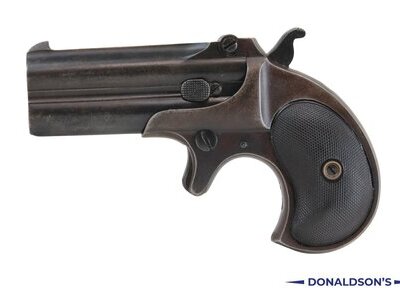
Remington Model 95 .41 Short Rimfire Deringer
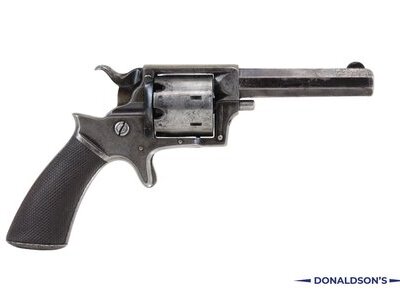
Tranter Pocket Pistol .32 Revolver
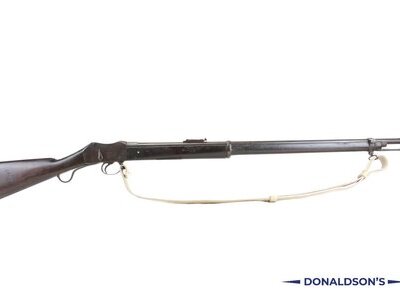
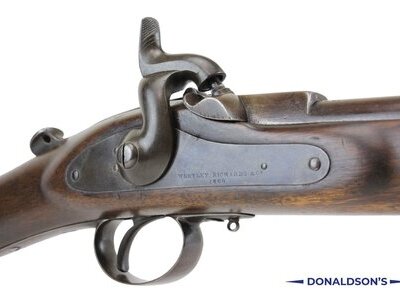
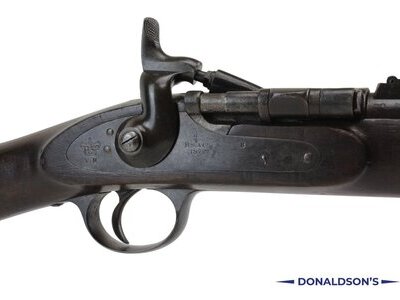
BSA BSA Snider Single Shot .577 Snider Rifle
BSA BSA & Mco Mk3 Snider Single Shot .577 Snider Rifle


Not quite what you’re looking for?