

Original 1914-1918* Large Framed Hand Embroidered ‘Royal Flying Corps’ (RFC) Silk Wings & Motto. 20014:1. Large Framed Hand Embroidered ‘Royal Flying Corps’ (RFC) Silk Wings & Motto. 20014:1. Other Accessory
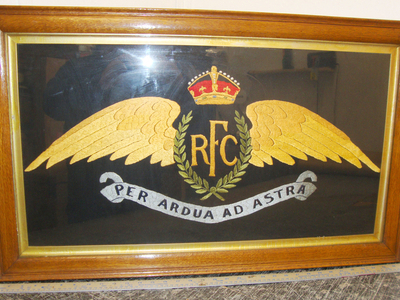
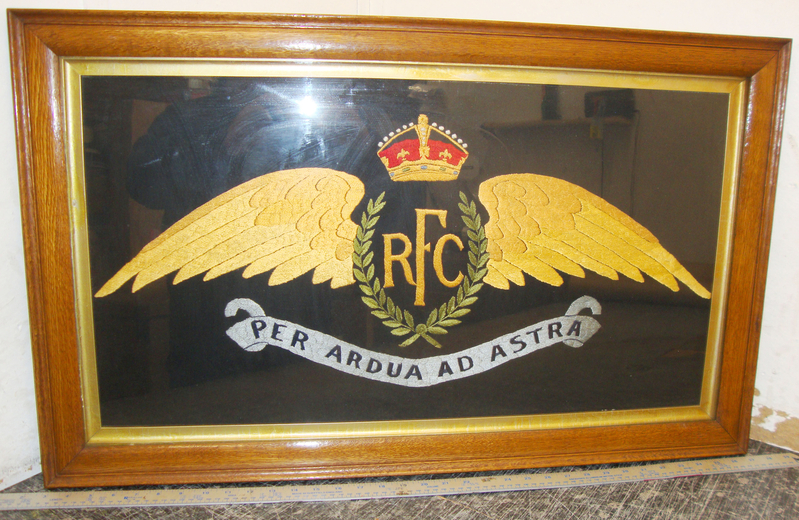
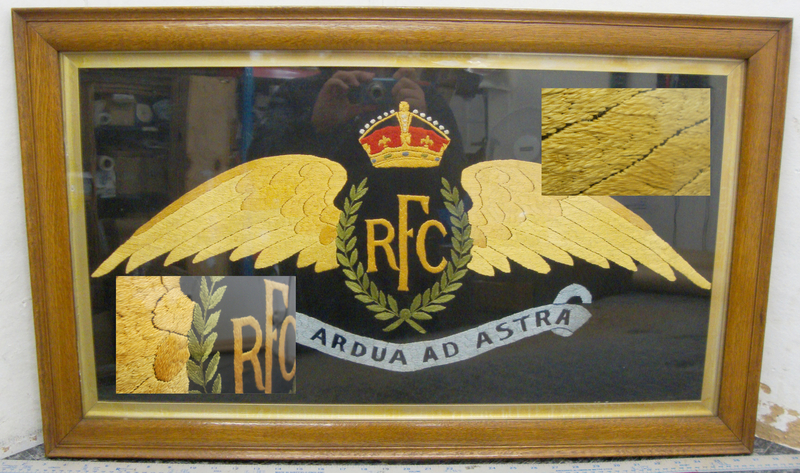
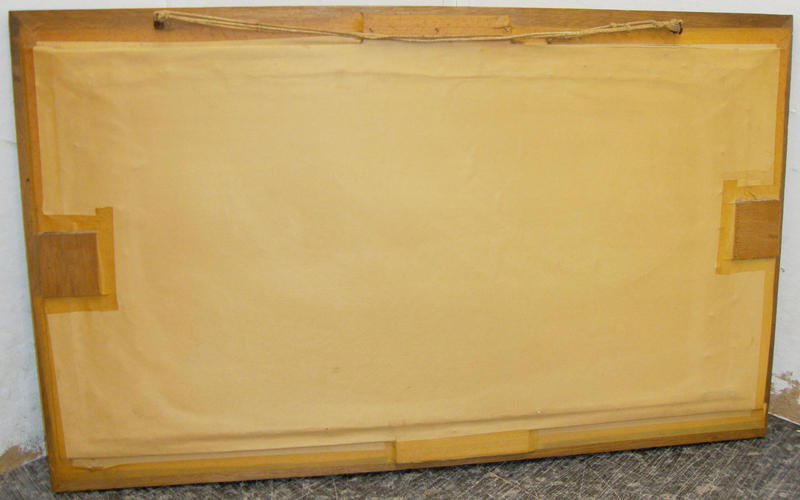
The Royal Flying Corps (RFC) was the air arm of the British Army before and during the First World War until it merged with the Royal Naval Air Service on 1 April 1918 to form the Royal Air Force. During the early part of the war, the RFC supported the British Army by artillery co-operation and photographic reconnaissance. This work gradually led RFC pilots into aerial battles with German pilots and later in the war included the strafing of enemy infantry and emplacements, the bombing of German military airfields and later the strategic bombing of German industrial and transport facilities. For many returned airmen, learning a new skill whilst convalescing provided a lifeline. Embroidery was a perfect craft for many as it offered a quiet, portable and intimate activity which did not require standing or much movement and could be undertaken in a group. Imagine how difficult it must have been for many of these men, not only were they coming to terms with their experiences and injuries, they also found themselves incapacitated or heavily reliant on others for basic needs. Embroidery or ‘fancy work’ was usually women’s work, and despite the societal chaos created by the conflict, this was yet another thing that had to be overcome. This fine original example measures; 87 x 52 ½ cm and is encased in a glazed medium Oak frame with a gold coloured border. The Royal Flying Corps wings are in two tone silk below crown. The RFC motto is beneath; ‘Per Ardua Ad Astra’ (through adversity to the stars). A beautiful piece of history for the collector or ex-serviceman *the camera flash is shown on the glass in picture 1*. The price includes UK delivery. 20014:1.

Related ads
3 photos
![German WW 1Gruson Ballooon Gun (53x176R) German WW 1Gruson Ballooon Gun (53x176R) Round Antique & Militaria]() £ 295
Promoted
£ 295
Promoted





Not quite what you’re looking for?