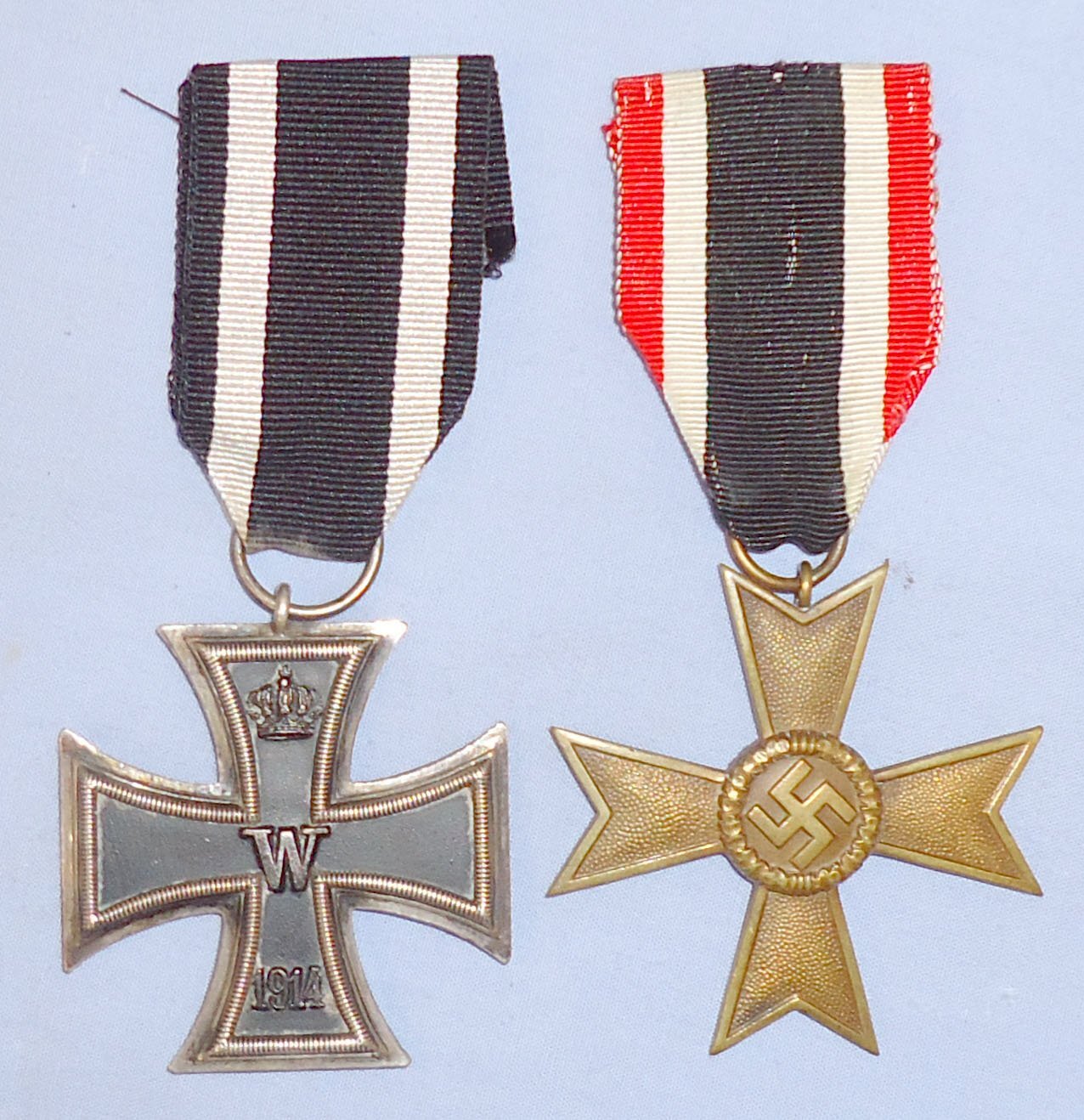
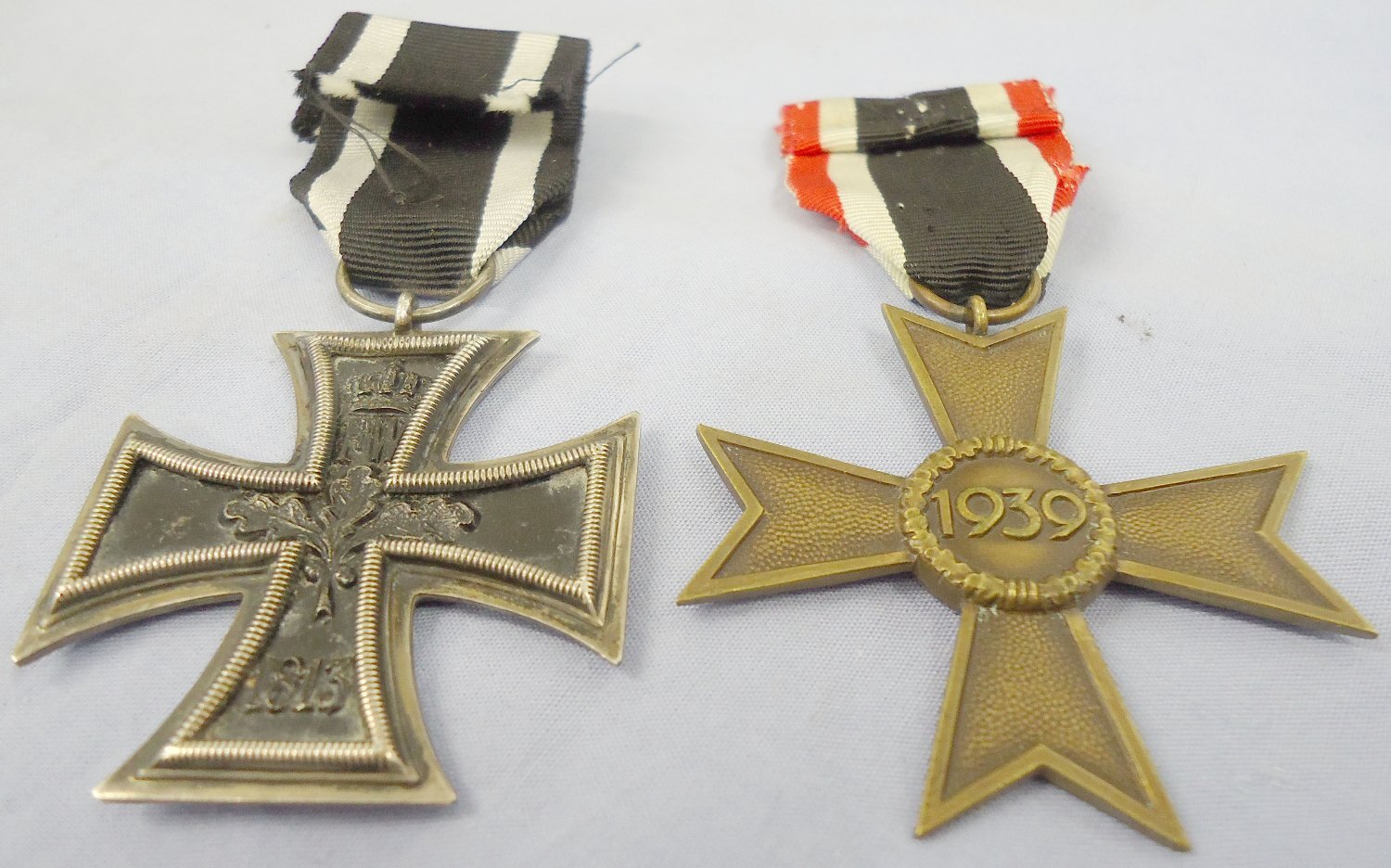
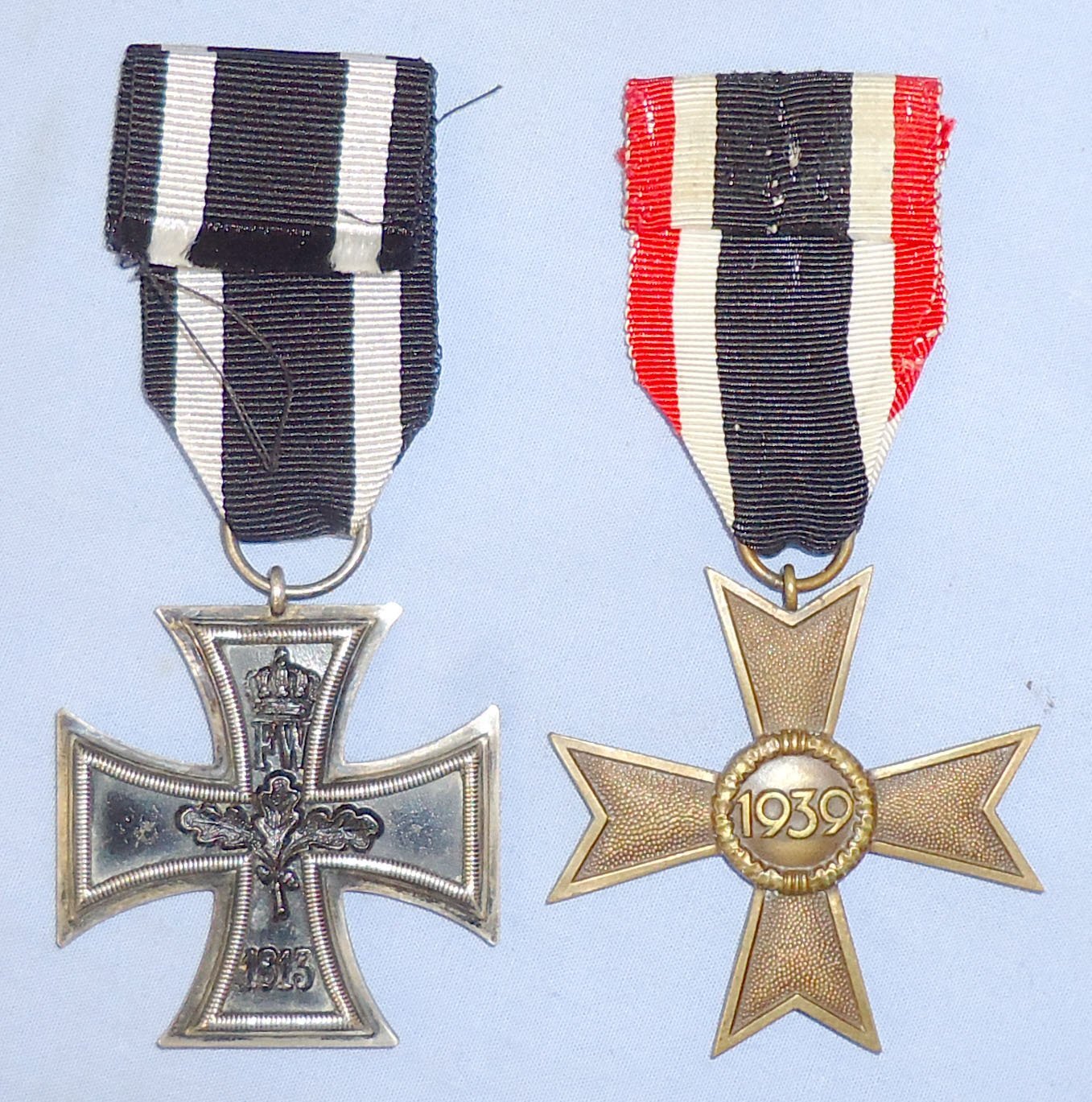


Pair* 1939 Nazi 2nd Class War Merit Cross and WWI Imperial Army 2nd Class Iron Cross with Ribbons. N 121. Pair* 1939 Nazi 2nd Class War Merit Cross and WWI Imperial Army 2nd Class Iron Cross with Ribbons. N 121. Antique & Militaria
The War Merit Cross (German: Kriegsverdienstkreuz) was a state decoration of Nazi Germany during World War II. This award was created by Adolf Hitler in October 1939 as a successor to the non-combatant Iron Cross which was used in earlier wars (similar medal but with a different ribbon). The award was graded in the same manner as the Iron Cross: War Merit Cross Second Class, War Merit Cross First Class, and Knights Cross of the War Merit Cross. The award had two variants: with swords given to soldiers for exceptional service "not in direct connection with combat", and without swords given to civilians for meritorious service in "furtherance of the war effort". The Iron Cross was a military decoration in the Kingdom of Prussia, and later in the German Empire (1871–1918). During World War I, approximately 218,000 EKIs, 5,196,000 EKIIs and 13,000 non-combatant EKIIs were awarded. Exact numbers of awards are not known, since the Prussian military archives were destroyed during World War II. The multitude of awards reduced the status and reputation of the decoration. The official criteria for the award was a single act of bravery in the face of the enemy, or actions that were clearly above and beyond the call of duty. The ring has ‘LV’ but no number that is visible. See pages 45-48 of Combat Medals of the Third Reich by Christopher Ailsby for reference. The price includes UK delivery. N 121.

Related ads
3 photos
![German WW 1Gruson Ballooon Gun (53x176R) German WW 1Gruson Ballooon Gun (53x176R) Round Antique & Militaria]() £ 295
Promoted
£ 295
Promoted


Not quite what you’re looking for?