


RARE ORIGINAL BATTLE DAMAGE REPAIRED**LARGE**Victorian Era North West Frontier Afghan/ Pashtun Tribe Sword Size Khyber Knife With Foliate Panel Brass Inlaid Decoration. Sn 21979:4 Knive
**RARE ORIGINAL BATTLE DAMAGE REPAIRED**LARGE**Victorian Era North West Frontier Afghan/ Pashtun Tribe Sword Size Khyber Knife With Foliate Panel Brass Inlaid Decoration. Sn 21979:4 - 21979:4
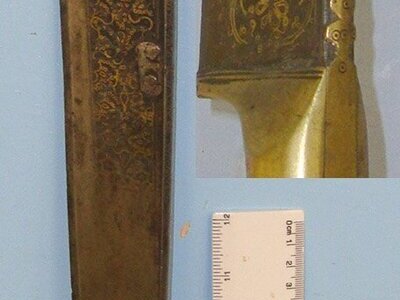
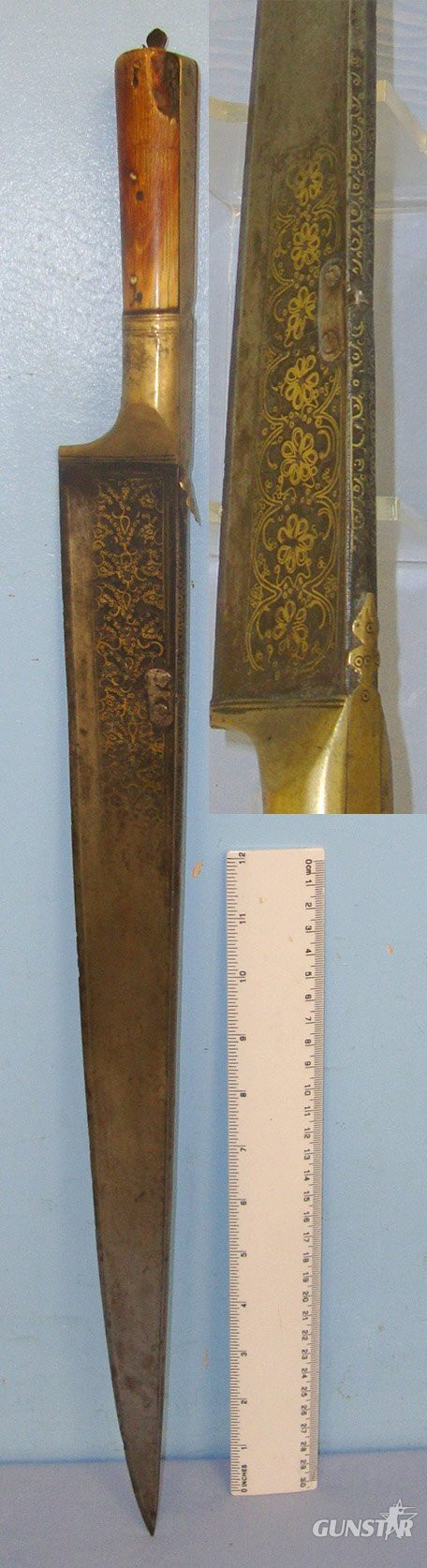
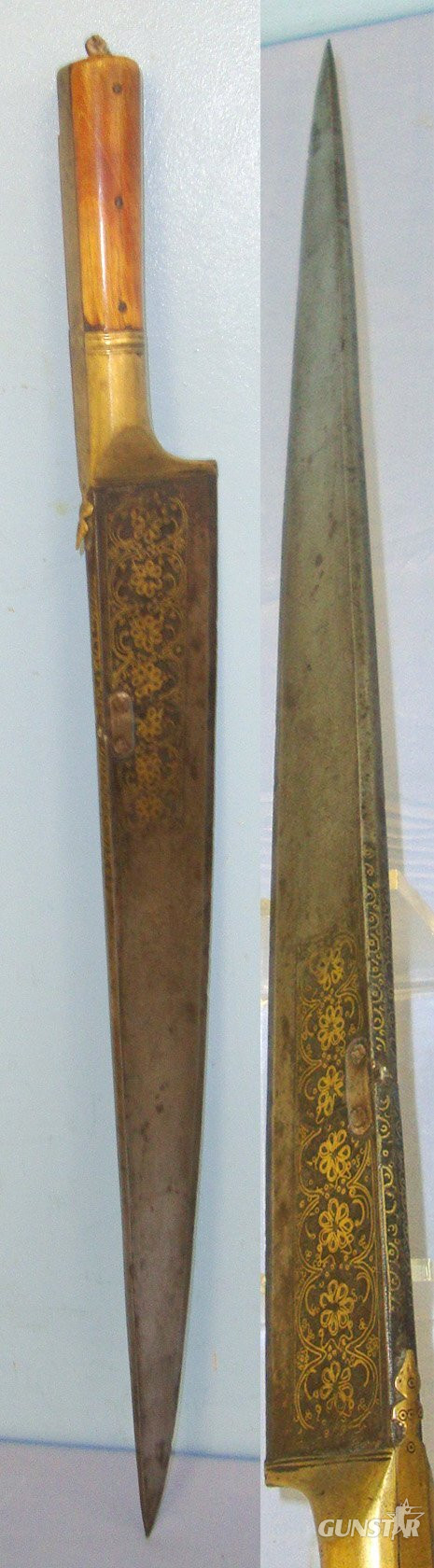
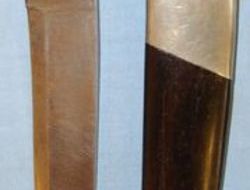
The Pashtun tribes living around the Khyber Pass traditionally use this type of Khyber knife. The Khyber Pass is the most important mountain pass in the Hindu Kush. Because it has played a strategic role in military and trade for over 2,000 years, the Khyber knife is found throughout Afghanistan, Pakistan and Northern India. The knives come in a range of different sizes, blade lengths of over 20" are not unusual. This is an excellent original example made in the Victorian Era (see page 354 of A Glossary Of The Construction Decoration & Use Of Arms & Armour by Stone where similar Khyber knives to ours are illustrated). It has a heavy 18 ½” single edged T section blade (24 ¼” overall). The 2” wide blade narrows to a pin sharp point. The 'T' section blade spine is 8mm broad. The blade has light staining consistent with age but no rust and has blued and brass inlaid foliate decoration on both sides of the blade and spine near to the hilt. The blade is sharp. Interestingly the blade has a period repair to the spine of the blade whereby 2 lozenge shaped steel plates have been riveted to the blade, securing a small cut to the top of the spine most likely battle damage caused by an opponent’s blade strike. The repair is secure and we have not encountered one of these repairs before on a tribal weapon. It has a brass hilt with polished bone scales secured by pins. The scales have age related surface wear and one scale has a small secure chip to one of the top edges. The grip frame has naïve tribal punch dot decoration. The pommel is fitted with a flat steel lug for cord. As is common the knife is without scabbard. The price for this substantial piece with ornate decoration from the British North West Frontier campaign era includes UK delivery. Sn 21979:4 (storeroom shelves behind bayonet boxes)
£295.00
Related ads
3 photos
![German WW 1Gruson Ballooon Gun (53x176R) German WW 1Gruson Ballooon Gun (53x176R) Round Antique & Militaria]() £ 295
Promoted
£ 295
Promoted


Not quite what you’re looking for?