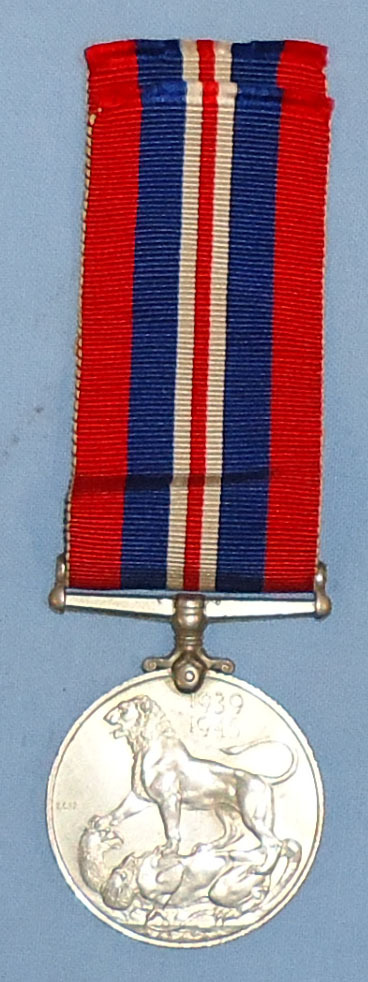
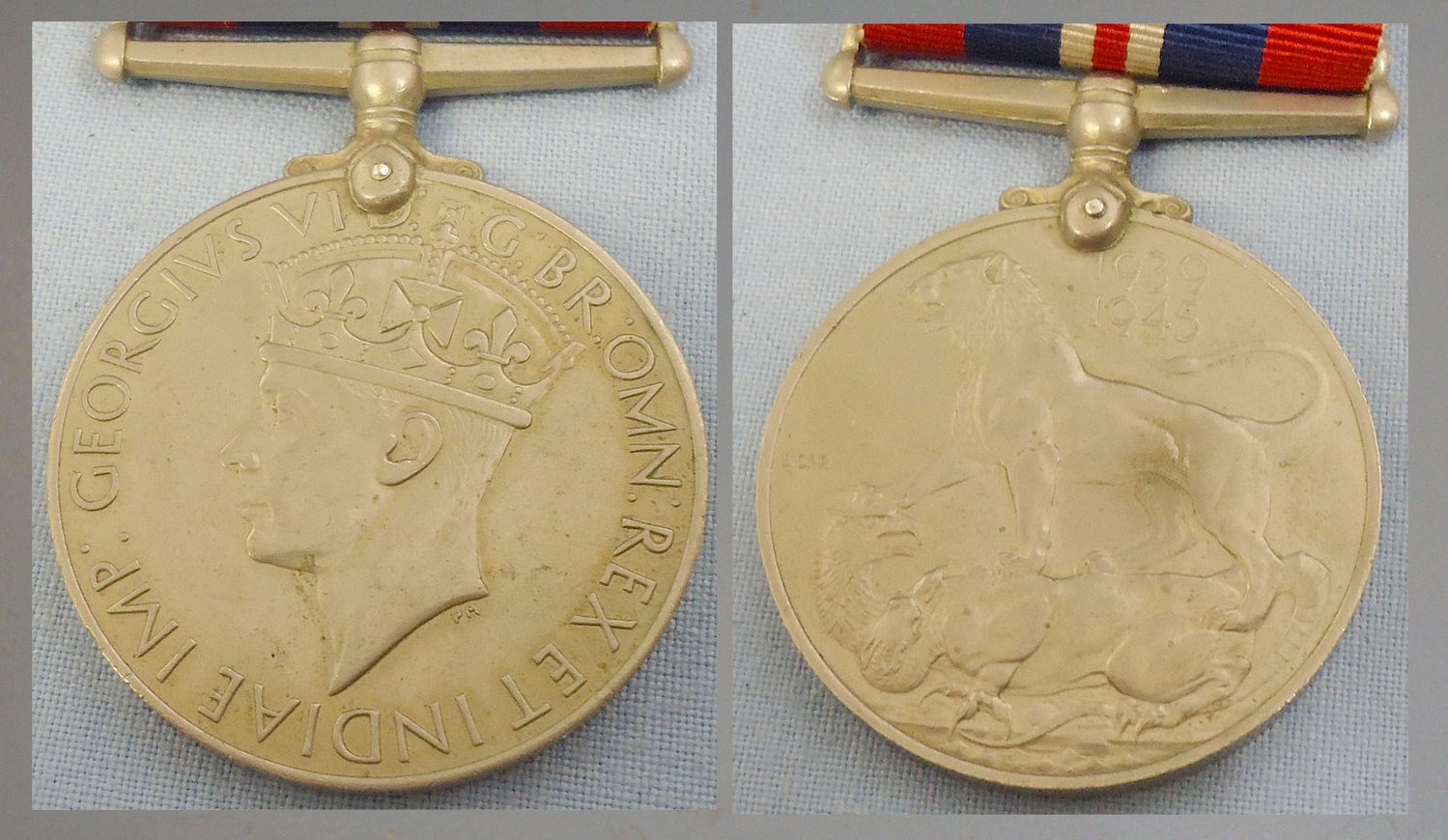
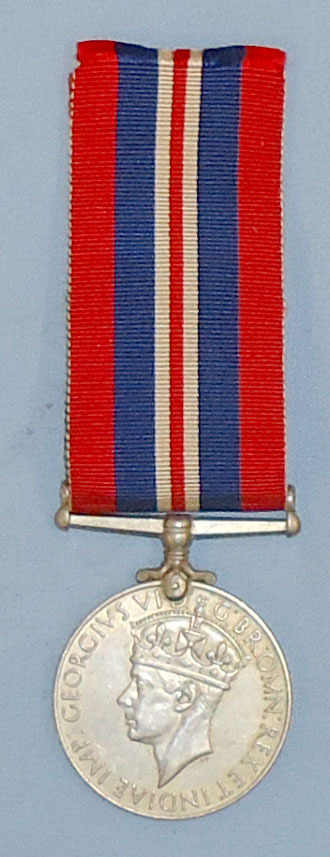


War Medal 1939–1945 with Ribbon. M 135. War Medal 1939–1945 with Ribbon. M 135. Antique & Militaria
The War Medal 1939–1945 is a campaign medal which was instituted by the United Kingdom on 16 August 1945, for award to citizens of the British Commonwealth who had served full-time in the Armed Forces or the Merchant Navy for at least 28 days between 3 September 1939 and 2 September 1945. The qualification requirement for the award of the War Medal 1939–1945 to full-time military personnel was 28 days of service, wherever rendered. Qualifying service in the Merchant Navy was 28 days of service anywhere at sea during the qualifying period. Foreign citizens commissioned or enlisted into British Forces, who did not receive a similar award to the War Medal 1939–1945 from their own Governments, were also eligible to qualify for the award of this medal. Full-time paid members of the specially approved colonial and other military forces, militarised police or militarised civilian bodies which were eligible to qualify for campaign stars, were also eligible to qualify by 28 days of service. Measuring; 36 millimetres (1.42 inches) in diameter. The non-swivelling straight bar suspender is attached to the medal with a single-toe claw mount and a pin through the upper edge of the medal. The British issue medals were struck in cupro-nickel, while those awarded in Canada (about 700,000) were struck in silver. The medal is sometimes incorrectly referred to as the "Victory Medal" for the Second World War. The ribbon is 32 millimetres wide, with a 6½ millimetres wide red band, a 6½ millimetres wide blue band and a 2 millimetres wide white band, repeated in reverse order and separated by a 2 millimetres wide red band. The colours are those of the British Union Jack. The price includes UK delivery. M 135.
Related ads
3 photos
![German WW 1Gruson Ballooon Gun (53x176R) German WW 1Gruson Ballooon Gun (53x176R) Round Antique & Militaria]() £ 295
Promoted
£ 295
Promoted


Not quite what you’re looking for?