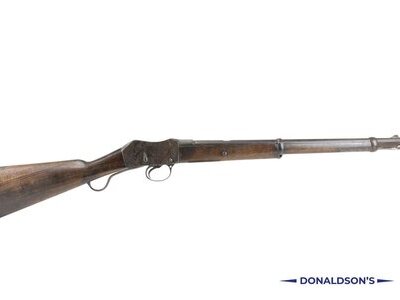
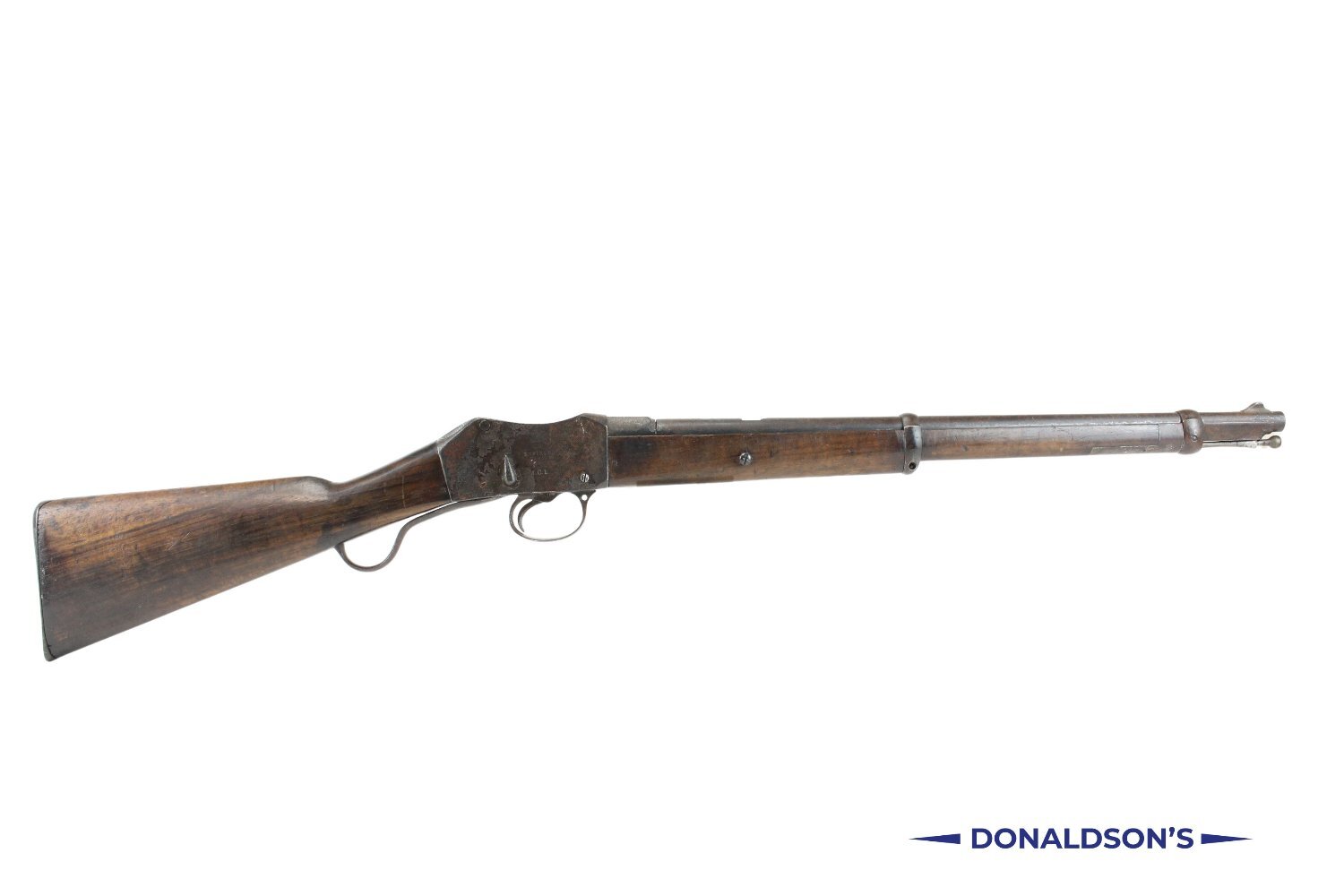


Martini Henry Martini Henry IC1 Single Shot .577/450 Martini-Henry Rifle
Antique No license required.
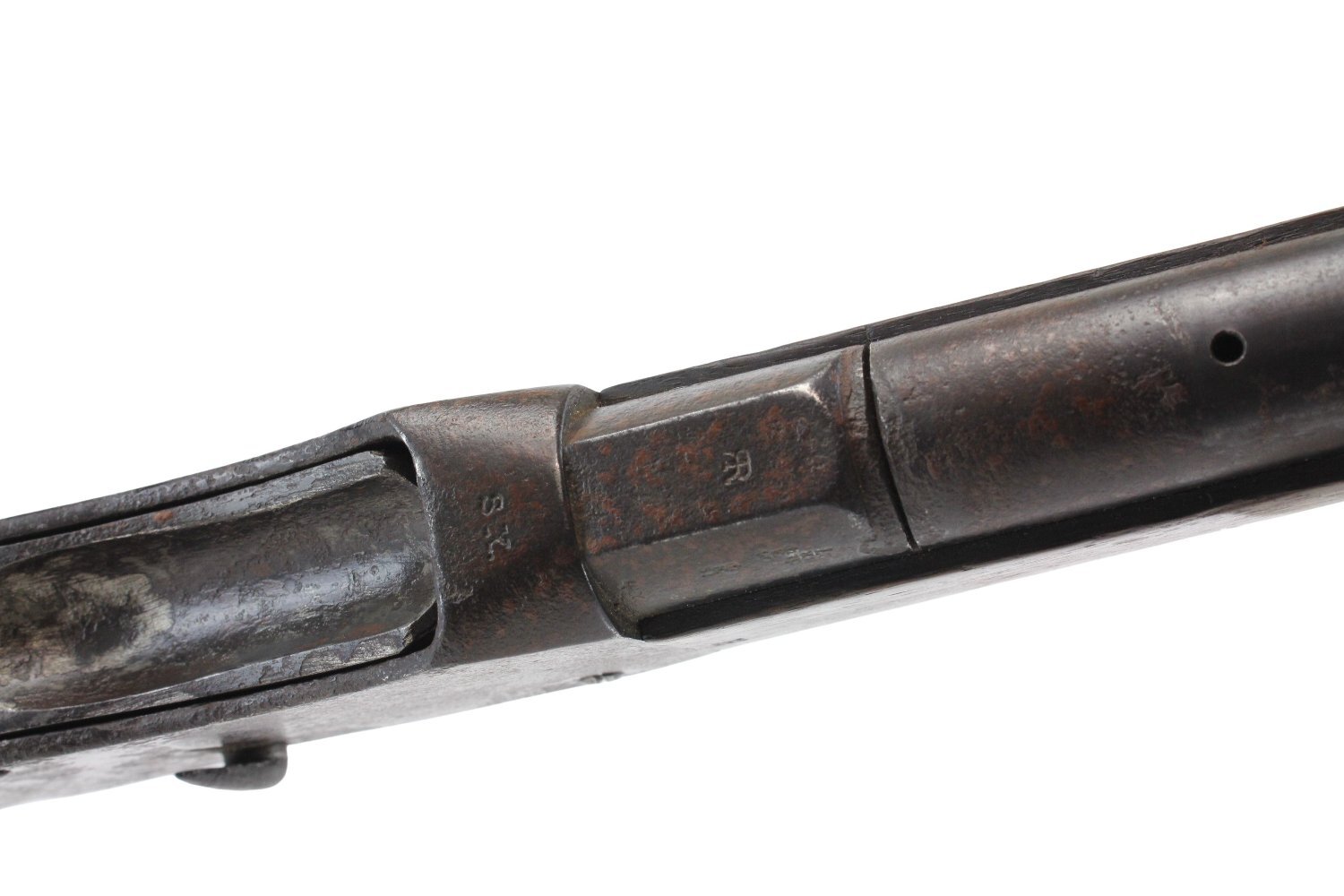
An 1885-dated Martini-Henry IC1 in .577/450 — a single-shot, lever-operated falling-block rifle that served as the principal arm of the British Empire through some of the most significant colonial campaigns of the Victorian era, including the Anglo-Zulu War and the Second Anglo-Afghan War.
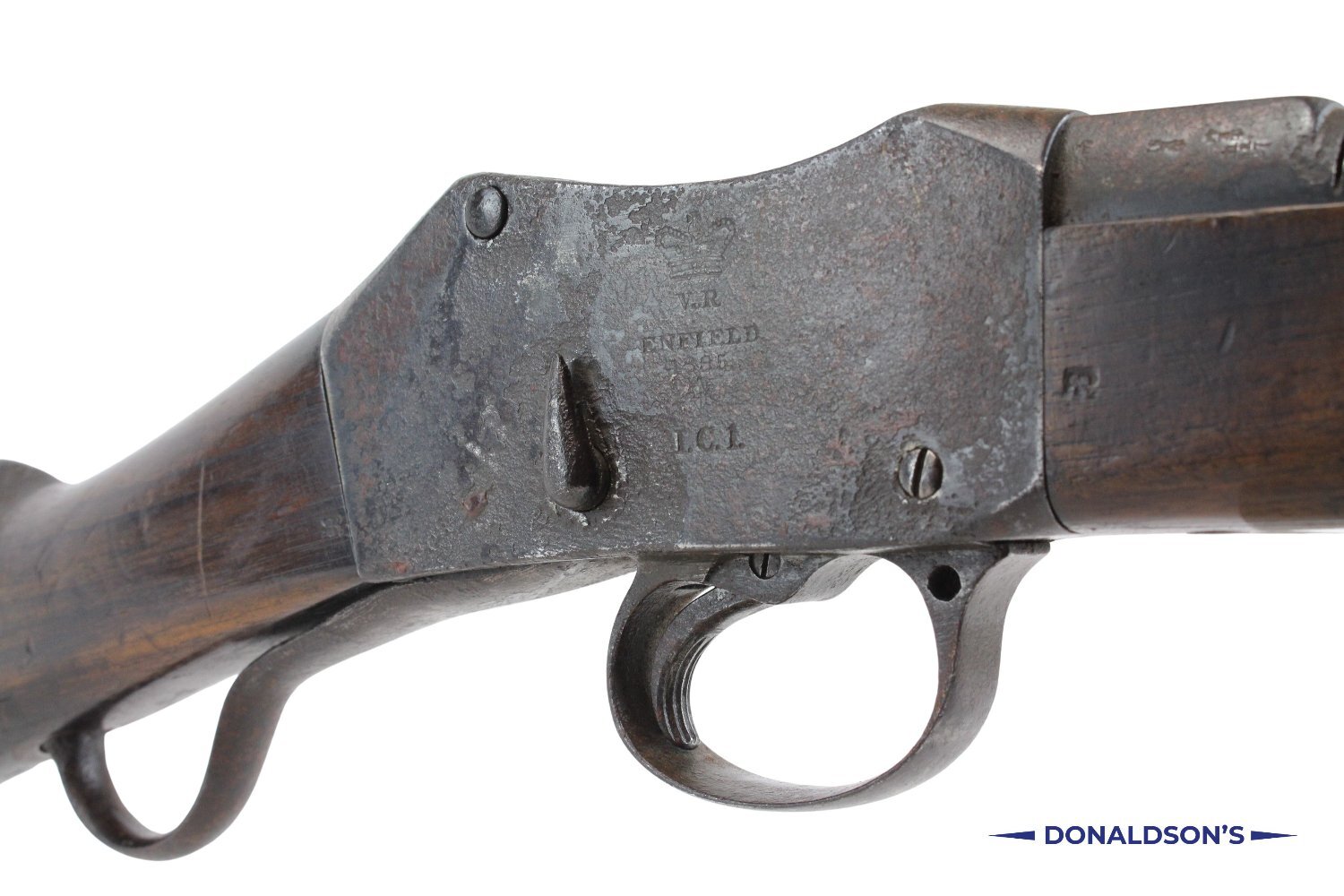
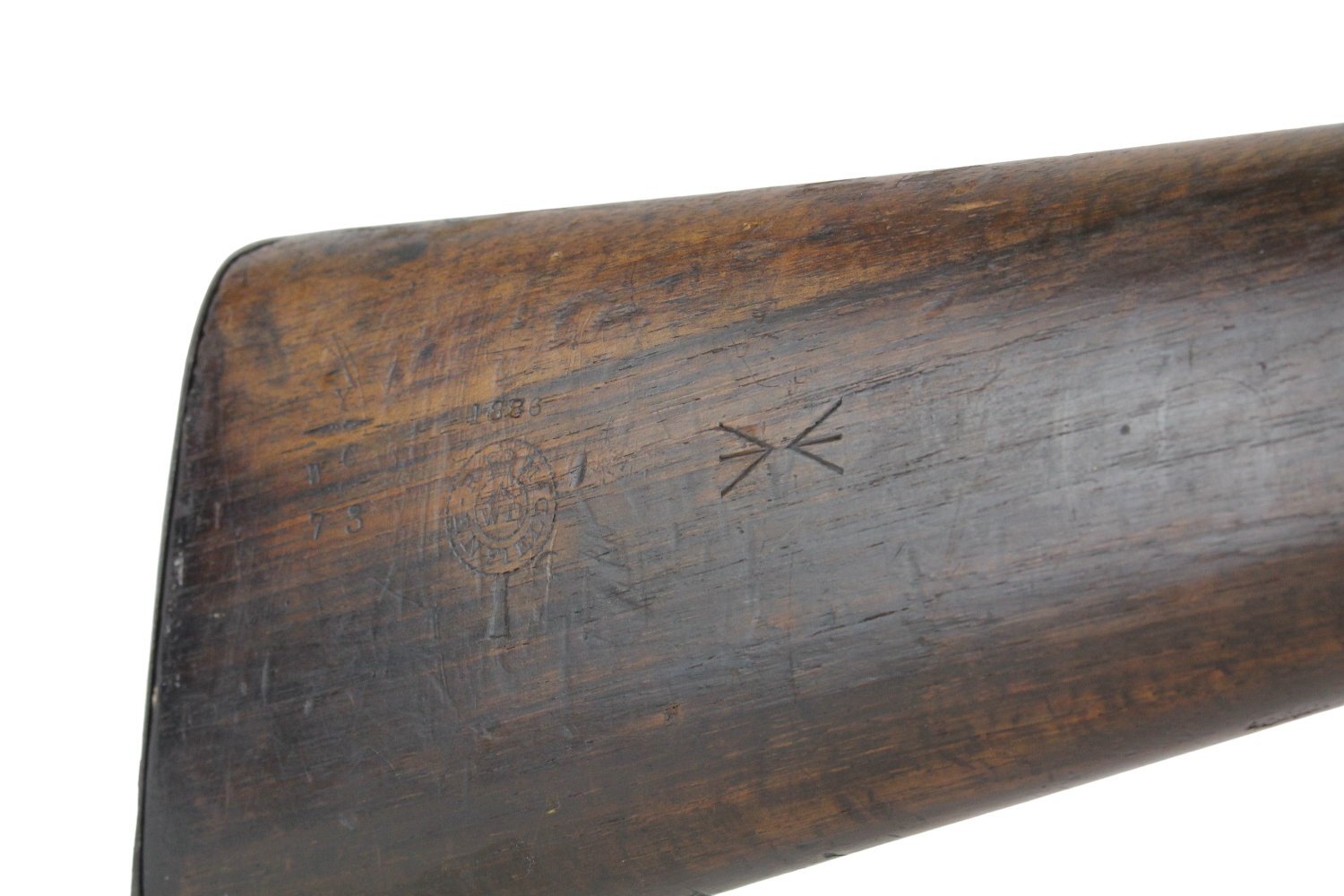
The IC1 designation identifies this as an Interchangeable Carbine pattern, approved on 24 September 1877 and produced at RSAF Enfield. The action carries the SX stamp, denoting the fitting of the Pattern 1885 Strengthened Extractor — a factory upgrade applied to address the extraction problems associated with the earlier coiled brass case ammunition. By 1885, the British Army had also introduced the solid drawn brass cartridge case to replace the fragile foil-wrapped original, and this rifle dates precisely to that transitional year.
The markings tell the story of a full working life. The opposing broad arrows — sold-out-of-service marks — confirm the arm was officially disposed of from military stores rather than lost or transferred informally. The back-to-back R condemnation mark and the regulation saw cut across the barrel just ahead of the knocks form are the standard British military deactivation procedure: the barrel sawn halfway through, the firing pin ground flat, and a nail driven into the pin hole from the rear to prevent refitting. These are not damage — they are an authentic and historically significant record of official condemnation.
A richly marked Victorian arm whose stamps chronicle life, service, and honourable discharge from the British Army. Offered as a display or collection piece only. Not capable of firing. The rear sight is also missing.
Related ads
8 photos
![Brown Bess Brown Bess Short Land Pattern 1769 Single Barrel Obsolete]() £ 5,999
5 photos
£ 5,999
5 photos
![Winchester Winchester 1894 .32-40 Lever Action .32-40 Winchester (.32-40 Ballard) Rifle]()
Winchester Winchester 1894 .32-40 Lever Action .32-40 Winchester (.32-40 Ballard) Rifle
Milton Keynes
£ 4,299
4 photos
![Remington Rolling Block .41 Spanish Single Shot Obsolete Rifle]() £ 899
6 photos
£ 899
6 photos
![Walther Walther LP53 .177]()
Walther Walther LP53 .177
Milton Keynes
£ 999
1 photo
![Belgium Pinfire Revolver Belgium Pinfire Revolver 7mm Revolver]() £ 329
5 photos
£ 329
5 photos
![BSA BSA & Mco Mk3 Snider Single Shot .577 Snider Rifle]()
BSA BSA & Mco Mk3 Snider Single Shot .577 Snider Rifle
Milton Keynes
£ 1,699
Winchester Winchester 1894 .32-40 Lever Action .32-40 Winchester (.32-40 Ballard) Rifle

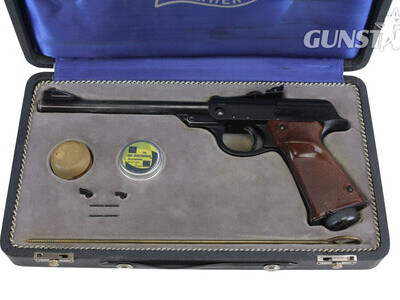
Walther Walther LP53 .177
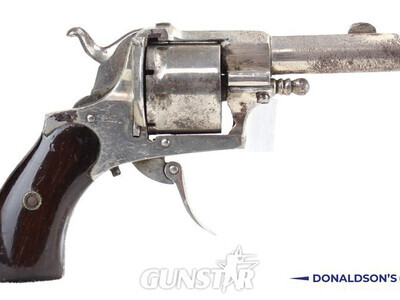
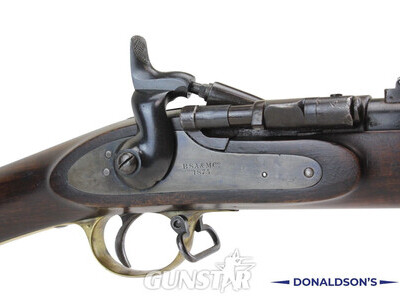
BSA BSA & Mco Mk3 Snider Single Shot .577 Snider Rifle


Not quite what you’re looking for?