You can own a shotgun in the UK, and you can own several. What you cannot do is buy or hold one without a shotgun certificate issued by your local police force. That certificate is the whole game. Getting it, keeping it valid, and staying inside its conditions is what shotgun ownership actually involves, and most of the work happens after the gun is in your cabinet, not before.
This guide walks through the full picture as it stands in 2026: what the certificate is, who qualifies, what it now costs, how the police process really runs, and the ongoing duties that catch people out once they own the gun.
Shotgun certificate or firearm certificate: know which one you need
The law splits guns into two tiers, and the tier decides which certificate you apply for. A shotgun in the legal sense is a smooth-bore gun with a barrel of at least 24 inches, a bore no larger than 2 inches, and either no magazine or a non-detachable magazine holding no more than two cartridges. That is a "section 2" firearm, and it is covered by a shotgun certificate (SGC).
Anything outside those limits, most rifles, and larger-capacity guns fall under "section 1" and need a firearm certificate (FAC), which is a stricter regime. The practical difference matters from day one. A firearm certificate authorises specific, individual guns and the exact ammunition for them. A shotgun certificate is broader: it lets you possess, buy, or acquire an unlimited number of shotguns without naming each one in advance.
So the first decision is not "how do I apply" but "what am I actually buying". If it is a standard side-by-side, over-and-under, or a pump or semi-auto limited to two cartridges plus one in the chamber, you are in shotgun-certificate territory. If you are not sure the gun meets the section 2 definition, confirm it before you apply, because the wrong certificate stops the purchase.
Who can get a shotgun certificate
There is no minimum age to hold a shotgun certificate, and the youngest holder on record in England and Wales was aged 8 as of March 2026. That surprises people, but young holders shoot under supervision and cannot buy a gun or ammunition themselves until they are 18. Someone under 15 may not carry an assembled shotgun in public without an adult, and there are further limits below 14.
For adults, the test is not a checklist you can simply pass. The police have to be satisfied that you can be permitted to possess a shotgun without danger to public safety or the peace, and that you have no legal bar. A prison sentence of three years or more means a lifetime prohibition; shorter sentences bring fixed exclusion periods. Beyond the hard bars, the force weighs your medical history, any history of violence or domestic abuse, alcohol or drug concerns, and intelligence they hold about you.
The framing that campaigners and ministers now use openly is that "holding a gun licence is a privilege and not a right." In practice that means the benefit of the doubt runs towards public safety. In the year to March 2026, 4.9% of new shotgun applications were refused, which is 684 people, so refusal is real but not the norm for a clean, well-prepared applicant.
What it costs in 2026
The fees went up recently, and several online guides still quote the old numbers. From 4 June 2026 the grant of a new shotgun certificate costs £200 and a renewal costs £130. Those replaced the £194 grant and £126 renewal that had been in place since 5 February 2025, which had themselves jumped from much lower long-standing fees. The stated aim of the increases is to let police forces fully recover the cost of running licensing.
The certificate fee is not your only spend. You will need a gun cabinet, and retail estimates put a typical domestic cabinet somewhere around £200 to £500 depending on capacity and spec. Some GP practices charge for the medical information the police require, and estimates run from nothing to around £50, though there is no national tariff so it varies by surgery. Budget for the whole package, not just the £200, because the cabinet and any medical fee land before the certificate does.
The application, step by step
The process is standardised enough to plan around, even though each force runs its own licensing unit.
Get and complete the form
Applications use the shotgun certificate form (commonly still called Form 201, though many forces now take it online). You supply your personal details, address history, and answers on your health, any offences, and who else has access to where the gun will be kept.
Sort your storage first
Do not treat the cabinet as an afterthought. The police will want to see suitable secure storage, and a home visit will check it. Buying and fitting the cabinet before or during the application removes the most common cause of delay, which is an applicant who is otherwise ready but has nowhere compliant to keep the gun.
Arrange your medical disclosure
You give consent for the police to contact your GP, and your medical record is checked for markers that bear on suitability, such as certain mental health conditions, alcohol or drug dependence, or self-harm history. A relevant marker does not automatically sink an application, but undisclosed history that later surfaces will.

Line up your referees
This is where the rules recently changed, and it is the detail most likely to trip up anyone relying on older guidance. Shotgun applications used to need a single referee. Since the August 2025 tightening, applicants are asked for two referees who know you well, are not related to you, and can speak to your character. Where the force has concerns about domestic abuse or violence, it may now also speak to partners and household members as part of the check.
The Firearms Enquiry Officer visit
After you submit, a Firearms Enquiry Officer (FEO) interviews you, usually at home. They assess you in person, inspect the cabinet and where it is fitted, and form a view on your suitability and the safety of the setup. Treat this as the real decision point. A calm, honest interview and a properly installed cabinet carry a lot of weight.
How long it actually takes
Set your expectations by the evidence, not by the optimistic timelines some sites quote. BASC's 2025 licensing report, built on more than 5,000 certificate-holder responses and freedom-of-information returns from 41 of 42 police forces, found grant turnaround ranging from 18 days in the fastest areas to more than two years in the slowest. Only 45% of grants were completed in under six months, and 28% took over a year.
That variation is by force, not by applicant, so where you live has a large effect on your wait. It is worth checking your own force's current position before you plan around a purchase. The backlog also explains a sharp rise in temporary permits, which lets an existing holder stay lawful while a renewal is stuck in the queue. If your renewal is delayed through no fault of yours, ask the force about a permit rather than assuming your possession has quietly become illegal.
Storing the gun and the ammunition
A gun cabinet bolted into the fabric of your home is the standard method of secure storage, and new cabinets are expected to conform to the British Standard BS7558. The core principle is simple: the gun is locked away, out of sight, and only accessible to people entitled to it. The FEO will confirm the cabinet is fitted somewhere sensible, not just standing in a spare room.
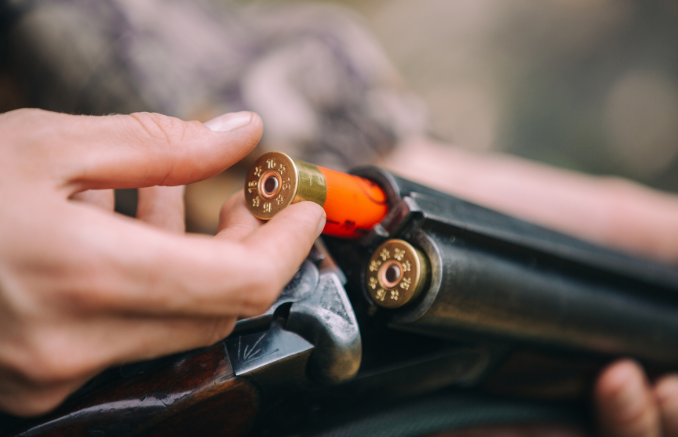
Shotgun cartridges are treated differently from the gun. Secure storage of ordinary section 2 shotgun ammunition is not actually a legal requirement under the Firearms Act, but locking it away separately is strongly recommended for safety and security, and many owners store cartridges in the cabinet or a separate locked box anyway. If anyone else lives in or visits the home, keeping ammunition secured is simply good practice.
What you must keep doing after you get the certificate
This is the part thin guides skip, and it is where ownership genuinely lives. The certificate is not a one-off hurdle; it is a set of standing obligations for five years.
The certificate lasts five years, then must be renewed. Because you can hold an unlimited number of shotguns on one SGC, there is no need to re-apply every time you buy, but every acquisition and disposal has to be recorded. Whenever you buy, sell, or otherwise transfer a shotgun, you must notify your force's firearms licensing department within seven days. Miss that window and you are in breach, even if the transaction itself was perfectly lawful.
Lending works differently for short periods. A shotgun held on loan for less than 72 hours does not have to be entered on your certificate, and neither party has to notify the police for that temporary transfer. Beyond 72 hours the normal rules apply. When you transport a gun, keep it secured and out of sight in transit, and think about security overnight if you are away from home, because your storage duty does not stop at your front door.
Your suitability is also treated as ongoing, not fixed at grant. If your circumstances change in a way that bears on safety, a serious health development, for instance, that is relevant to whether you should still hold the certificate. The system tries to catch changes during the certificate's life through digital medical markers placed on holders' GP records, though the coverage of that scheme is itself part of the current policy debate.
Buying safely, especially from a private seller
Buying from a registered firearms dealer (RFD) is the low-risk route, because the dealer verifies entitlement and handles the paperwork. Private sales are legal and common, but they carry more responsibility on both sides, and this is an area where recent fraud has changed the advice.
The National Crime Agency has warned about an increasing number of fraudulent firearms documents used to obtain legally held guns, and it runs a dedicated response called Project RUTIC. If you are selling privately, always see the buyer's original certificate, check it is printed on proper certificate paper rather than plain paper, and compare the format and photo to the person in front of you. Confirm the buyer's entitlement, use an RFD for the transfer if you have any doubt, and never accept or send a gun by unsecured post. Buyers should apply the same care in reverse: verify the seller, inspect the gun, and agree payment and documentation clearly before anything changes hands.
The lead ammunition change to plan for
Ammunition choice is no longer a settled question, and it affects which guns stay practical to use. In July 2025 the government announced a ban on selling shot containing more than 1% lead and bullets with more than 3% lead to the public, subject to exemptions, with a three-year transition. The driver is environmental: the measure is expected to prevent around 7,000 tonnes of lead entering the countryside each year, and lead poisoning is estimated to kill up to 100,000 wildfowl annually.
For a buyer, the practical point is compatibility. Some older shotguns, particularly older barrels, are not proofed for steel or other non-lead alternatives, so an ownership decision now sits alongside a question about what you will actually be able to feed the gun over the coming years. If you are buying second-hand, check what the gun is proofed for before you commit.
The rules themselves are under review
It is worth knowing that you would be buying into a framework the government is actively reconsidering, so today's rules are not a fixed backdrop. In its February 2025 response to a licensing consultation that drew 91,385 replies, the government set out its view that shotguns are no less lethal than other section 1 firearms and signalled a further consultation on bringing shotgun controls closer into line with the stricter firearm-certificate regime.

That direction is contested. A petition against merging section 1 and section 2 licensing had gathered 119,232 signatures by early 2026, reflecting strong opposition from the shooting community, who see the two-tier system as proportionate. The tightening already delivered, the second referee and the household checks, came partly out of hard lessons: the 2023 Plymouth Prevention of Future Deaths report found a "catastrophic failure" in one force's licensing unit and a culture that defaulted to granting and returning certificates. Wherever the reform lands, expect scrutiny of applicants to stay high rather than ease.
A note on Northern Ireland
"UK" is doing some heavy lifting in most shotgun guides, because the licensing framework described here applies to England, Scotland, and Wales. Northern Ireland runs a separate system under its own firearms legislation, administered by the PSNI, with different rules and forms. If you are in Northern Ireland, the general principles rhyme but the detail does not, so work from PSNI guidance rather than the England and Wales process above.
The bottom line
Owning a shotgun in the UK is legal, reasonably common, and entirely doable for a suitable applicant, but it is a licensed responsibility rather than a purchase. Budget beyond the £200 grant fee, sort compliant storage before you apply, line up two referees and your medical consent, and expect a home visit and a wait that depends heavily on your force. Once you hold the certificate, the seven-day notifications, secure storage, renewal cycle, and honest handling of changes in your circumstances are the real ongoing job. Do those well, and ownership is straightforward. It is the standing duties, not the initial application, that separate holders who keep their certificates from those who lose them.