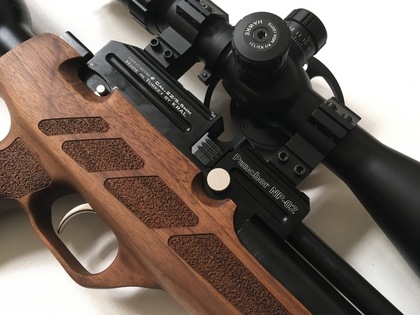
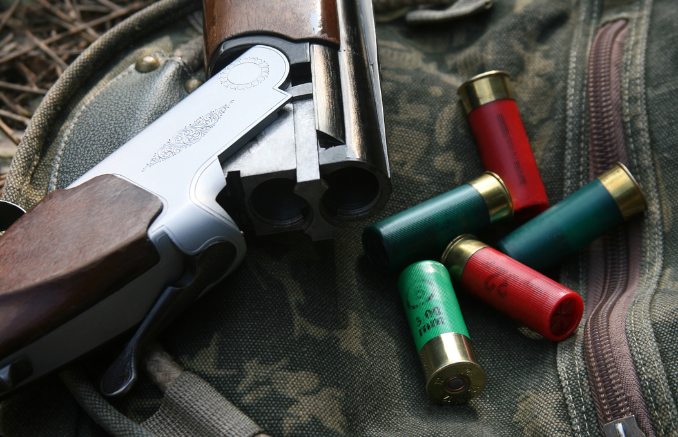
The quickest way to tell them apart is what happens inside the barrel. Rifles have spiral grooves cut into the bore that spin a single bullet for accuracy at distance. Shotguns have a smooth barrel and usually fires a cartridge packed with many small pellets that spread out as they travel.
That one design choice drives almost everything else: how far each gun reaches, how you aim it, what you can legally do with it, and, in the UK, which certificate you need to own it. If you are new to shooting and trying to work out where to start, the mechanical difference is only half the story. The legal difference is the part that actually shapes what you can buy and why.
The core mechanical difference
A rifle's grooved bore makes the bullet spin, like a well-thrown rugby ball. That spin keeps the bullet stable over long distances, which is why rifles are the tool for precise shots at a single target hundreds of metres away.
A shotgun does the opposite job. The smooth bore lets a cluster of pellets leave the barrel and open into a widening pattern. You are not placing one bullet on one spot, you are throwing a spreading cloud of shot at a moving or close target.
This is why the two guns feel so different to shoot. With a rifle you line up and squeeze off a considered shot. With a shotgun you point, swing with the target, and fire, which is what makes it the natural choice for clays and birds that are moving fast through the air.
Shot, slugs, and single bullets
Most shotgun cartridges hold multiple pellets, but you can also load a shotgun with a single solid projectile called a slug. A slug turns a shotgun into a short-range single-projectile gun, though without a rifle's accuracy at distance because the smooth barrel gives the slug no spin.
Rifles only ever fire a single bullet. There is no spread to work with, so everything depends on aiming precisely, which is exactly what the rifled barrel is built to reward.
What the difference means when you shoot
Range and accuracy
A rifle is the long-range, high-precision option. The spinning bullet holds a tight line, so a competent shooter can put rounds on a small target well beyond the reach of any shotgun.
A shotgun is a short-range tool by design. The spreading pattern that makes it forgiving on a moving clay is the same thing that makes it useless for precise work at distance, because the pellets scatter and lose energy quickly.
There is no single tidy number for "shotgun range versus rifle range." It depends on the gauge, the load, the calibre, the barrel, and the choke. Anyone who gives you one clean figure is smoothing over a lot of variables.
Spread and choke
Shotgun spread is not random, and this is where a lot of beginner guides stop too early. The pattern is controlled by the choke, a constriction at the muzzle end of the barrel that tightens or widens how the shot opens up.
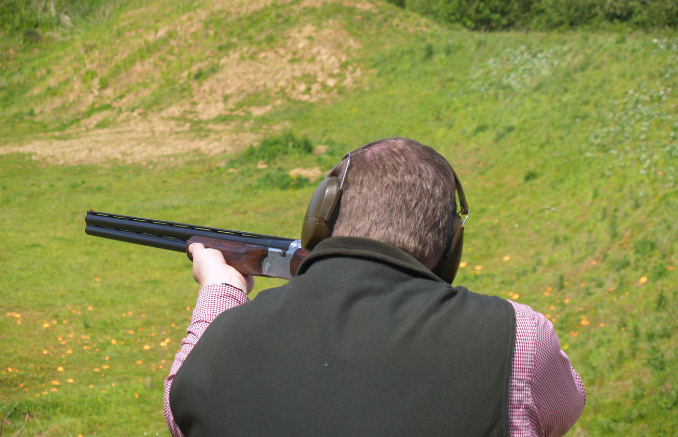
A tighter choke keeps the pellets together for longer, which helps at distance. A more open choke spreads them sooner, which helps on close, fast targets. Being able to change choke is part of what makes a shotgun a configurable system rather than a fixed one.
Recoil and handling
Recoil varies more by gun and load than by category, but the shooting style differs. Shotguns, especially 12-gauge, can give a firm shove, though a lighter 20-gauge is a common starting point for smaller-framed or younger shooters.
Rifles range from almost gentle rimfire calibres up to heavy centrefire rounds with a serious kick. If you are starting out, the specific calibre or gauge matters far more than the shotgun-or-rifle label.
Ammunition: shells, cartridges, gauge and calibre
Shotgun ammunition is usually called a shell or cartridge, and its size is described by gauge. Confusingly, a smaller gauge number means a bigger bore, so a 12-gauge is wider than a 20-gauge. The 12-gauge is the general-purpose UK workhorse, while the 20-gauge trades some power for lighter recoil.
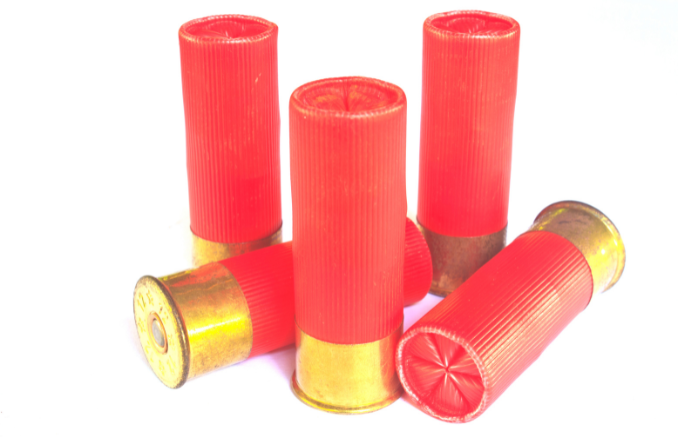
Rifle ammunition is a cartridge measured by calibre, which describes the bullet's diameter. Calibre matters enormously for what you can legally and ethically shoot, particularly for deer, which we will come to.
The UK lead ammunition change
This is a current shift that older and US-based guides miss entirely. In June 2025 the UK government confirmed a phased restriction on lead ammunition, banning shotgun pellets containing more than 1% lead and bullets containing more than 3% lead for most uses.
There are exemptions, including for military, police, elite athletes, some outdoor ranges, and museums. The decision report concluded that a UK REACH restriction was appropriate to reduce risks to human health and the environment from lead in ammunition.
The practical takeaway for a new owner is simple. Whichever gun you choose, plan around non-lead ammunition, because the direction of travel is fixed and it affects shotgun and rifle shooters differently in the field.
The part most guides skip: UK law decides more than you think
Here is where UK ownership genuinely diverges from the American guides that fill most search results. In England and Wales, shotguns and rifles sit under two different certificates, and that split shapes the whole decision.
Shotgun certificate vs firearm certificate
A shotgun, in law, is a smooth-bore gun with a barrel of at least 24 inches, a bore no larger than 2 inches, and either no magazine or a non-detachable magazine that holds no more than two cartridges. Most rifles fall under section 1 and need a firearm certificate instead.
The difference between the two certificates is not just paperwork. To get a firearm certificate you must show "good reason" for each firearm, such as target shooting at a club or vermin control on specific land. A shotgun certificate does not carry the same "good reason" test, and the police must instead show why a certificate should be refused.
There is a second practical gap. A shotgun certificate authorises you to possess, buy or acquire an unlimited number of shotguns covered by it, without seeking approval for each individual gun. A firearm certificate ties you to specific approved firearms. In plain terms, a shotgun certificate is broader and generally more straightforward to hold, which is a big reason shotgun ownership is far more common in the UK.
How common each actually is
The numbers make the point. As at 31 March 2025, England and Wales had 145,306 firearm certificates but 482,612 shotgun certificates, with 496,904 people holding one or both.
Those certificates covered 626,276 firearms and 1,332,209 shotguns. Of firearms held on firearm certificates, 57% were rifles and 33% were sound moderators. Over 99% of guns on shotgun certificates were standard section 2 shotguns.
Ownership also skews rural. The highest rates per 100,000 people were in areas like North Yorkshire, Dyfed-Powys and Norfolk, which fits the countryside pull of clays, vermin control and deer management.
What people actually use each for in the UK
Clay pigeon shooting and vermin
Shotguns dominate the two most common UK uses. The Home Office describes section 2 shotguns as mainly used for vermin control or clay pigeon shooting, and clays in particular are a huge on-ramp into the sport. The Clay Pigeon Shooting Association alone manages the sport for around 22,500 members across roughly 400 affiliated clubs and grounds.
If your interest is heading to a ground on a Saturday to break clays, or controlling pests over farmland, a shotgun is almost certainly your starting gun. It suits moving targets, it is the more accessible certificate, and there is a ready-made club network to learn in.
Deer and the rifle thresholds
Deer are where rifles become non-negotiable, and where the law gets specific. You cannot lawfully take most deer with a shotgun in normal circumstances, and there are minimum calibre and energy thresholds for rifles.
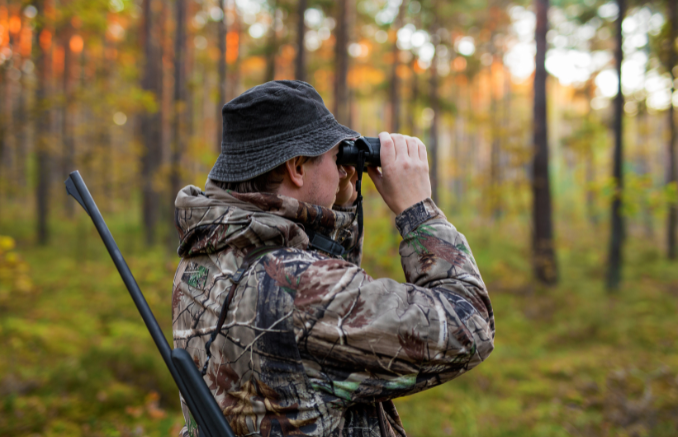
Best-practice guidance based on the Deer Act sets minimums of .240 calibre and 1,700 ft-lbs of energy for red, fallow, sika and roe deer. For the smaller muntjac and Chinese water deer, the threshold is .220 calibre, a 50-grain bullet, and 1,000 ft-lbs. There is also a competence benchmark for deer management: three rounds into a 10cm circle at 100m as the minimum standard for the shooter, rifle and ammunition together.
If deer stalking is your goal, you are in firearm-certificate territory from the outset, and you will need to show good reason and demonstrate you can shoot to that standard.
So which should a beginner start with?
For most people in the UK dipping a toe into shooting, a shotgun is the more natural first step. The certificate is generally more accessible, clay grounds are set up to teach newcomers, and vermin control gives a practical everyday use. You also get a large, sociable community to learn safely within.
A rifle makes sense when your specific goal demands it, above all deer stalking or precise target shooting at a club. That path involves a firearm certificate, showing good reason, and meeting real accuracy standards, so it tends to suit people who already know what they want to shoot and where.
The honest answer is that the gun follows the activity. Decide what you actually want to do, whether that is clays, pest control, target shooting or stalking, and the right category and the right certificate largely pick themselves.
Owning either one: the ongoing reality
The sticker price is only the start. Budget for ammunition, which is a recurring cost and now shifts with the move to non-lead, plus club or ground fees, and secure storage. UK certificate holders are legally required to store guns securely, so a proper cabinet is part of the true cost of ownership, not an optional extra.
There is also upkeep. Both guns need cleaning and maintenance to stay safe and reliable, and rifles paired with optics and moderators add more kit to look after. None of this should put you off, but it is worth knowing that ownership is an ongoing commitment rather than a one-off purchase.
A quick word on noise
Both categories are loud enough to damage hearing, so ear protection is not optional. General firearms guidance notes that small-calibre rifles, air rifles, shotguns and pistols can reach around 140 dB, while higher-calibre rifles can exceed 175 dB. Whichever you choose, treat proper hearing protection as essential from your very first session.
The short version
A rifle spins a single bullet for accuracy at distance. A shotgun throws a spreading pattern of shot for close, fast, moving targets, and can be tuned with different chokes and loads. That mechanical split leads to different uses: shotguns for clays and vermin, rifles for deer and precision work.
In the UK, the deciding factor is often legal rather than mechanical. Shotguns and rifles live under different certificates, with different tests and different levels of access, and current rules on lead ammunition apply to both. Work out what you want to shoot, match it to the right certificate, and the choice between shotgun and rifle becomes far clearer.