
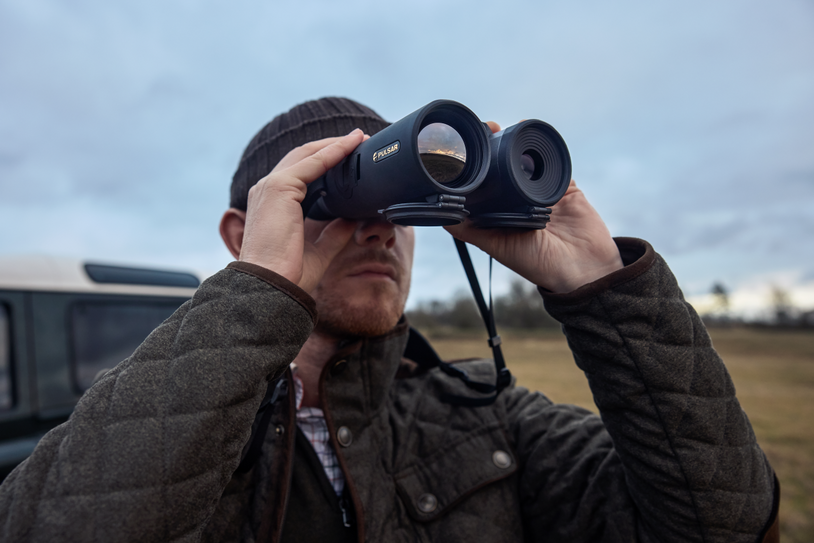
The Pulsar Symbion multispectral binoculars represent a new generation of advanced optics built for users who need full situational awareness in any lighting condition. The system combines thermal imaging, 4K digital imaging channel, digital night vision supported by an infrared illuminator, and a built-in laser rangefinder. This allows consistent performance from full daylight to complete darkness.
This guide explains the key features, models, and technical capabilities of the Pulsar Symbion LRF series, based on official specifications and product information.
What Are Pulsar Symbion Multispectral Binoculars?
The Symbion is a multispectral binocular system that integrates two optical channels into one device. It combines a 4K digital channel for full-color daytime imaging and improved twilight performance with a thermal imaging channel that detects heat signatures in any lighting or weather condition.
This dual-channel design gives users continuous visibility and awareness across day, night, and low-light environments.

See the latest Pulsar Symbion models
Key Features of the Pulsar Symbion LRF
Multispectral Imaging (Thermal and Digital)
The Symbion combines digital and thermal imaging in one platform. Users can detect objects in all conditions and identify depending on distance without switching devices.
Picture-in-Picture Multispectral Mode
The Picture-in-Picture feature allows users to view thermal and digital images at the same time. This improves identification and overall awareness in complex environments.
Built-in Laser Rangefinder
The integrated laser rangefinder provides accurate distance measurement directly through the binoculars. It offers a range of up to 1,500 meters, accuracy within one meter, and operates at a wavelength of 905 nm.
Long Detection Range
The thermal channel supports detection ranges of up to 2,300 meters. This allows users to identify heat signatures at extended distances.
Infrared Illuminator for Night Viewing
A focusable infrared illuminator improves visibility in low-light and night conditions. It supports the digital channel and ensures usable imaging when natural light is limited.
Image Stabilization and Recording
The Symbion includes electronic image stabilization to reduce shake during observation. It also supports photo and video recording with sound and includes 64GB of built-in memory. Users can capture and review footage directly on the device.
Stream Vision 2 App Integration
The binoculars connect to the Stream Vision 2 mobile app. This enables wireless control, file transfer, and extended functionality.
Rugged and Field-Ready Design
The Symbion is built for demanding environments. It features a magnesium alloy housing and an IP67 protection rating for resistance to dust and water. It operates in temperatures from -25°C to +50°C, making it suitable for a wide range of conditions.
Symbion Models: DXT50 vs DXR50
The Symbion is available in two models, each designed for specific observation needs.
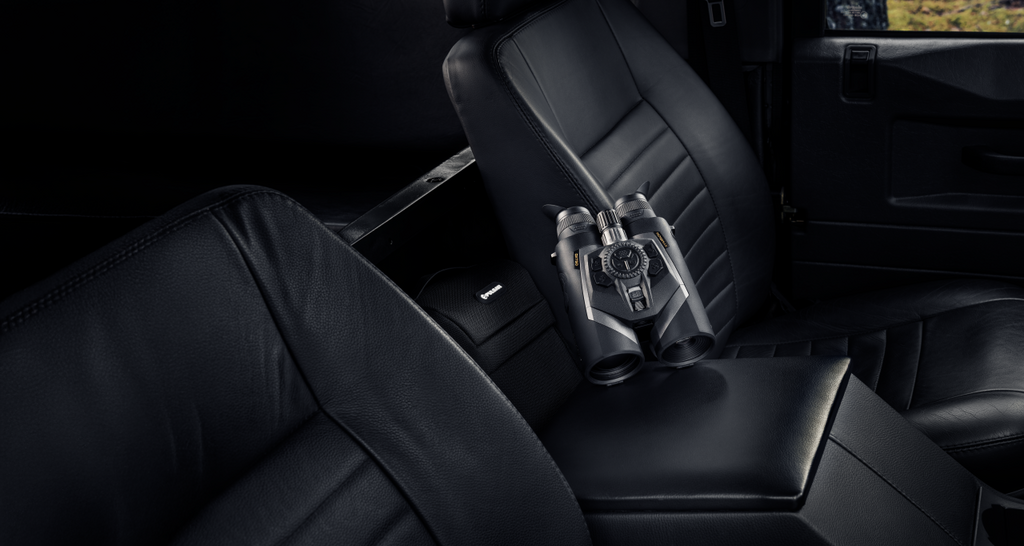
Symbion LRF DXT50
The DXT50 focuses on wide-area awareness and detailed imaging. It features a high-resolution 1280×1024 thermal sensor, a 17.5° field of view, which equals 30.7 meters at 100 meters, and thermal magnification from 2x to 16x.
This model is optimized for wide field coverage, detailed identification, and use in forest or mixed terrain.
Symbion LRF DXR50
The DXR50 is designed for long-range detection. It uses a sensitive 640×480 thermal sensor with magnification from 4x to 32x and a narrower 8.8° field of view, which equals 15.4 meters at 100 meters.
This model suits long-distance observation in open terrain and mountainous environments.

Compare Symbion DXT50 and DXR50 models
Digital Channel Performance
Both models include a 4K digital imaging system. It offers magnification from 6.5x to 26x with digital zoom options of 2x, 4x, and 8x. The field of view is 5.8°, which equals 10.2 meters at 100 meters.
This setup ensures clear daytime imaging and reliable performance in twilight and low-light conditions.
Battery Life and Power
The Symbion uses a replaceable APS5 battery system (with external USB-C support). The DXR50 provides up to 10 hours of operation, while the DXT50 delivers up to 8 hours. The device also supports external power through USB Type-C.
Additional Technical Highlights
The binoculars feature an AMOLED display with 1920×1080 resolution and a 50 Hz frame rate. They include 64GB of internal memory and support Wi-Fi on 2.4 and 5 GHz bands along with Bluetooth connectivity. The total weight is about 1 kilogram.
Designed for Total Awareness
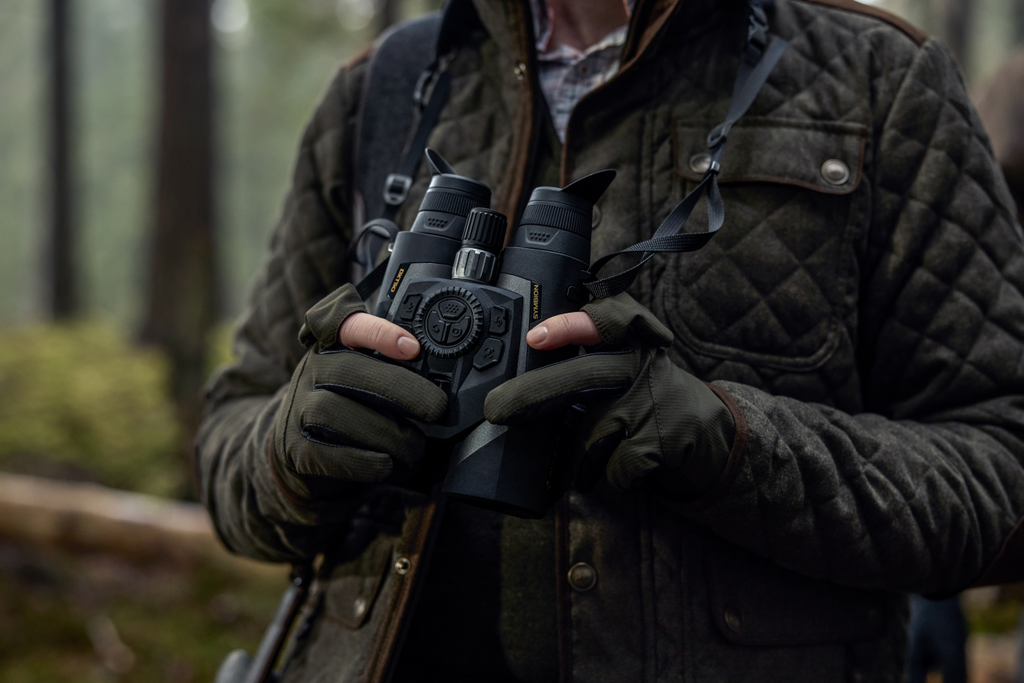
According to the official product release, the Symbion is "built to provide complete control of the field in every light condition." By combining multiple imaging technologies into one system, it allows users to detect, observe, and measure targets without interruption.
Final Thoughts
The Pulsar Symbion multispectral binoculars bring together thermal imaging, digital optics, infrared illumination, and laser rangefinding in one integrated device. With two specialized models and a full set of advanced features, the Symbion delivers consistent performance across daylight, twilight, and nighttime environments.
Explore the Pulsar Symbion LRF range