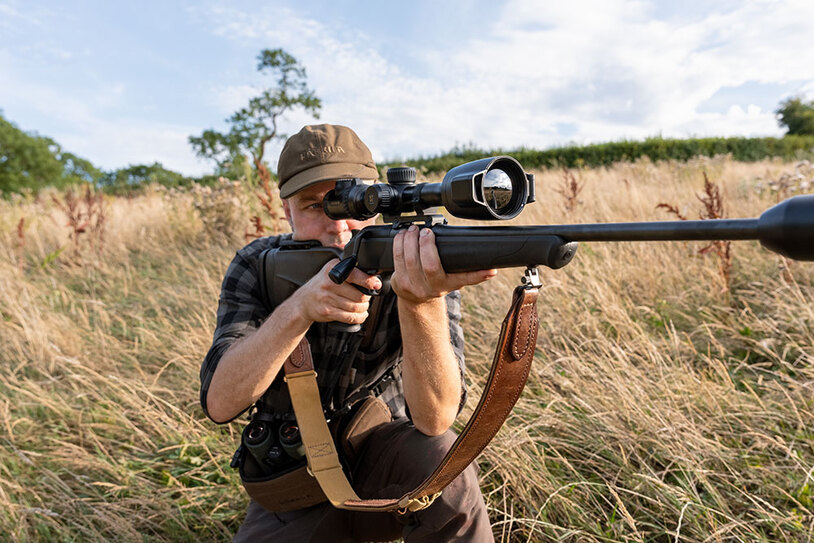
The Pulsar Thermion 3 Series has landed, bringing two thermal scopes with one shared body and two very different strengths.
Pulsar pioneered the thermal scope, and the Thermion 3 Series is the latest chapter in that story, refining a design shooters already know. Pulsar describes it as “The Original thermal scope. Perfected.” Here’s what’s new and what it means for you.
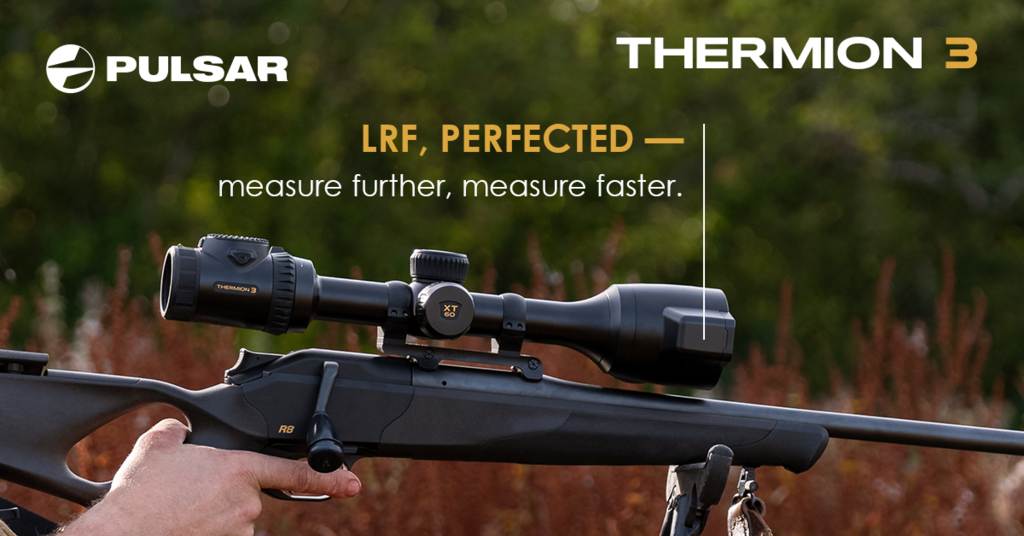
The Thermion 3 Series is built around the idea that a thermal scope should feel like a riflescope. It sits on the rifle the way a conventional scope does, balances the way you expect and lets you do everything without taking your eye off the target. Pulsar has tucked the rangefinder inside the main body, given the zoom a ring that turns like the magnification ring you already know, and placed the focus where you can reach it from either side.
It’s made for hunters who buy kit to keep for years, so if your shooting means foxing on farmland, keeping rabbits in check or regular pest control for landowners, the Thermion 3 Series is aimed squarely at you.
Two scopes, two ways of shooting
Both scopes share the same body, lens and display, but the sensor and the zoom are different, and that difference shapes the kind of shooting each one suits.
The XR60 is the long-range specialist. With 4–40× magnification and a zoom tuned for extended distances, it’s made for the shooter who spends nights watching open fields and taking considered shots at range, and its finer adjustment and 14-hour battery suit that patient style of shooting.
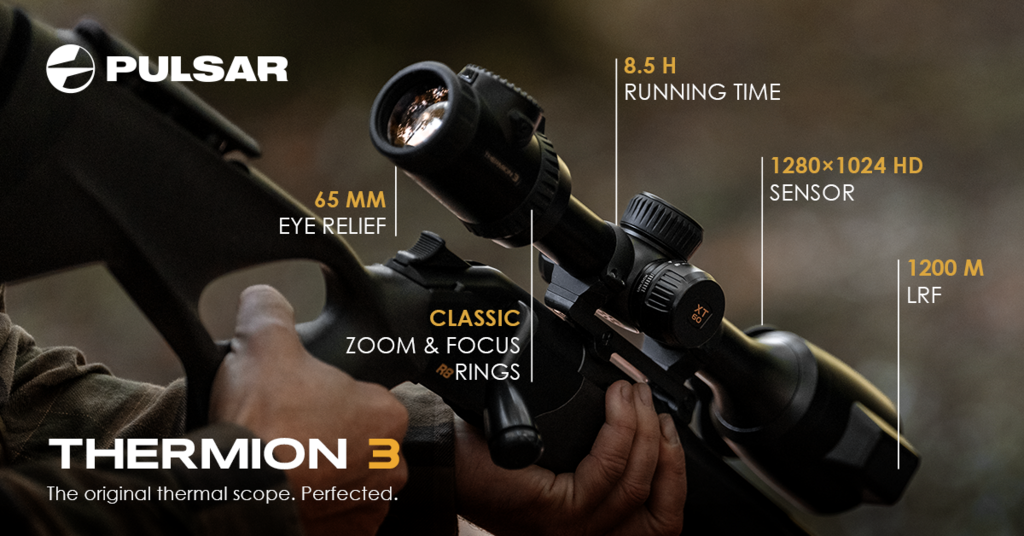
The XT60 is the all-rounder. Its HD sensor draws a more detailed picture, and because its field of view is twice as wide as the XR60’s, more of the field fits in the frame at once. With 2–24× zoom and a battery that lasts 8.5 hours, it’s designed to cover an evening that starts with a fox along a close hedge line and finishes with a longer shot across the next field.
What’s new since Thermion 2
If you already shoot with a Thermion 2, the Thermion 3 Series will feel familiar, with a sharper image and a more thought-through layout.
The image gets the biggest lift, because the XT60 moves to a higher-resolution HD sensor with a wider view and a faster lens on both scopes lets more thermal energy reach the sensor. Together, that gives you more detail to work with when you’re deciding what’s in front of you.
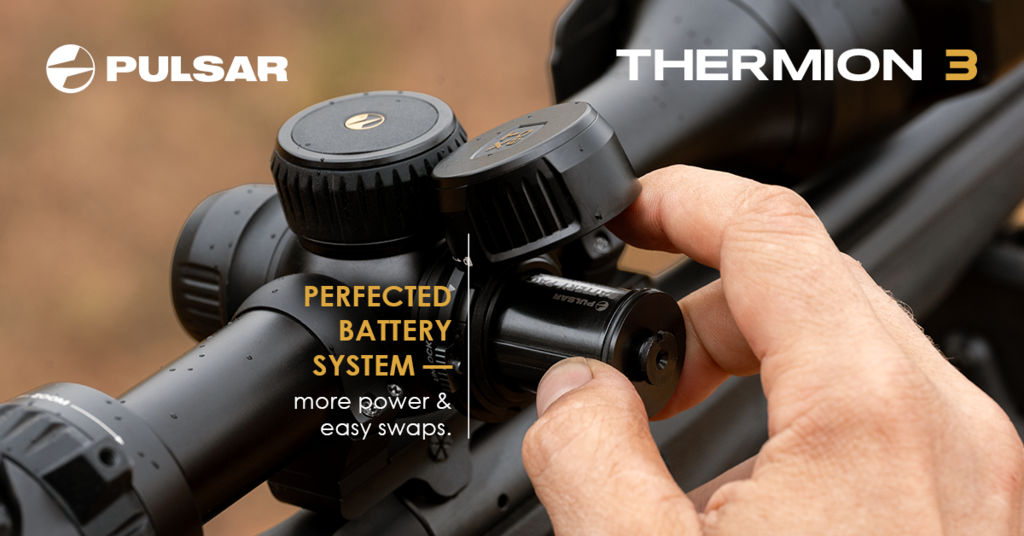
The rangefinder now reaches 1,200 m, up from 800 m, so you can get a reading on targets that were out of range before. The battery can also now be replaced by the user, and since a scope like this is a long-term purchase, being able to swap a tired battery yourself keeps it in service for longer.
On top of that, the body is shorter and slimmer, the new IP67 rating covers dust as well as water, and storage doubles to 128 GB for your recordings.
Knowing the range and where to hold
Anyone who has misjudged distance across a dark field knows how much it matters. With the Thermion 3 Series, you range the target and the ballistic calculator turns that distance into a Suggested Point of Aiming on the display, so you can see where to hold without working it out in your head.
Scanning mode keeps measuring as you sweep across the view, which is handy for getting a feel for distances to the hedge, the gate and the far edge of the field before anything turns up.
On sloping ground, True Horizontal Distance mode accounts for the angle, and while you range the display also shows rifle tilt and elevation, which makes the small errors that grow at distance easier to catch before you take the shot.
You can build ballistic profiles for your own rifle and ammunition in the Stream Vision Ballistics app and send them to the scope, and if you shoot more than one rifle or load, each can have its own zeroing profile.
Reticles scale as you zoom, and there’s a wide choice of reticle colours so you can pick one that stands out against the thermal image.
Built to feel like a riflescope
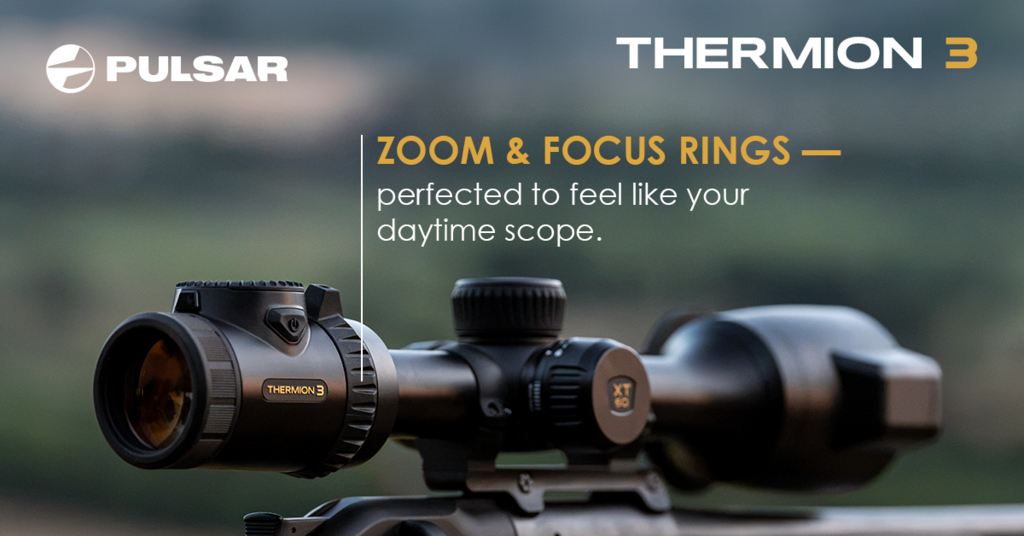
The layout is designed to make sense straight away, with a zoom ring you turn the way you would on a day scope, so you can change magnification by feel without looking away from the target. Focus sits on a central turret you can reach from either side, and the menus use a cleaner horizontal layout with related settings grouped together.
You can tune the picture to the night you’re having with different sensitivity levels, colour palettes and picture-in-picture views. Meanwhile, a proximity sensor switches the display off when you lift your eye away, which saves battery and keeps the glow off your face.
On a damp, misty night, the higher sensitivity settings help bring out detail in a flat-looking image, and the smoothing filter keeps the picture clean while they do it. Switching between palettes such as White Hot and Black Hot is worth trying too, since one may be easier to read than the other depending on the background and your own eyes.
Both scopes are built for regular use in rough conditions, with generous eye relief to keep your eye safe on bigger calibres, a body made to take heavy recoil and IP67 protection to keep out rain and dust. They’re also rated to work well below freezing, so a British winter is no trouble.
Every shot on record
The built-in recorder captures video with sound, and two features help you catch the moments that matter. Shadow Recording keeps the 30 seconds before you press record, so if something walks out before you’re ready it’s still on the card, while Recoil Recording automatically saves the 30 seconds either side of a shot. Afterwards, AI Shot Detection finds each shot in your footage so you can go straight to it.
Through the Stream Vision 2 app you can stream live to your phone, download recordings, change settings and update the firmware, with 16 GB of cloud storage included.
Live streaming means someone standing beside you can follow along on their phone, which is useful when you’re out with a landowner or showing someone new what thermal looks like. And if you film your shooting or just like looking back over a night out, having the footage, the shots marked and everything in one app saves a lot of scrubbing through clips.
Choosing your scope
If you mostly take longer shots across open ground, the XR60 is built for exactly that. If your nights mix close encounters with longer shots, or you want the most detailed picture and the widest view, the XT60 is the better fit. The rangefinder, ballistics, recorder and controls are the same on both, so the choice comes down to how and where you shoot.
Specification
|
Specification |
THERMION 3 LRF XR60 |
THERMION 3 LRF XT60 |
|---|---|---|
|
Sensor resolution |
640 × 480 |
1280 × 1024 |
|
Magnification |
4–40× |
2–24× |
|
Field of view |
7.3° |
14.6° |
|
Laser rangefinder |
Up to 1,200 m |
Up to 1,200 m |
|
Battery life |
Up to 14 hours |
Up to 8.5 hours |
|
Internal memory |
128 GB |
128 GB |
|
Waterproof rating |
IP67 |
IP67 |
|
Recording features |
Shadow Recording, Recoil Recording, AI Shot Detection |
Shadow Recording, Recoil Recording, AI Shot Detection |
Final thoughts
The Thermion 3 Series stays true to the idea Pulsar started with, a thermal scope that handles like a conventional riflescope, and refines the parts you use every time you go out: the image, the zoom, the rangefinder and the battery. With one scope built for distance and one built for versatility, it’s easy to see which suits the way you shoot.
See more infomation on the Thermion 3 Series here:
For anyone moving up from a Thermion 2, the longer rangefinder reach and the replaceable battery are upgrades you’ll appreciate from the first night out.