
In England and Wales you can walk into a gun shop, buy an air rifle, and take it home the same day with no licence, as long as it produces less than 12 ft-lb of muzzle energy. An air rifle fires a single pellet using stored compressed air rather than a chemical charge, and that 12 ft-lb number shapes almost every rifle on the shelf.
Manufacturers build the vast majority of UK air rifles to sit just under that ceiling. So when you compare two rifles at the same price, you're rarely choosing "more power." You're choosing how the rifle makes its power, what size pellet it throws, and the engineering that decides how it feels to shoot.
Get the legal ceiling clear first. After that, the whole decision is about fit.
The 12 ft-lb ceiling, and why it runs the whole show
In England and Wales, an air rifle is legal to own without a certificate as long as its muzzle energy stays below 12 ft-lb. Cross that line and it becomes a Section 1 firearm, which needs a Firearm Certificate from your local police force. Air pistols are tighter; anything over 6 ft-lb is effectively off-limits for normal ownership.
There's also a lower threshold worth knowing. Any "lethal barrelled" air weapon producing more than 1 joule (about 0.74 ft-lb) counts as a firearm in law. That's why even a low-powered air rifle is technically a firearm, even though most need no paperwork at all.
Scotland works differently. You need an Air Weapon Certificate to buy, own or use any air weapon there, whatever its power. It costs £72 for five years, or £5 if you already hold a firearm or shotgun certificate. At the last count, around 31,600 air weapon certificates were on issue across Scotland.
Northern Ireland has its own firearms regime and treats air weapons more strictly than England and Wales. If you're there, check the PSNI rules before buying anything.
Age applies everywhere. You must be 18 to buy an air rifle or its ammunition anywhere in Great Britain. Younger shooters can use one under supervision and on private land, but the exact rules by age are worth confirming for your situation before you hand a rifle to anyone under 18.
How the rifle makes its power
This is the decision that changes daily life with the rifle the most, and it's the one beginners tend to underthink. The power system decides what you have to do to take a shot, how much kit you carry, and how forgiving the rifle is.
Spring and gas-ram (springers)
A spring-piston rifle is the classic break-barrel. You snap the barrel down to cock a spring, and the trigger releases it to drive a piston that compresses air behind the pellet.
The appeal is simple. No batteries, no gas, no charging kit. You buy the rifle and a tin of pellets and you can shoot forever, which makes springers cheap to run and free of anything else you depend on.
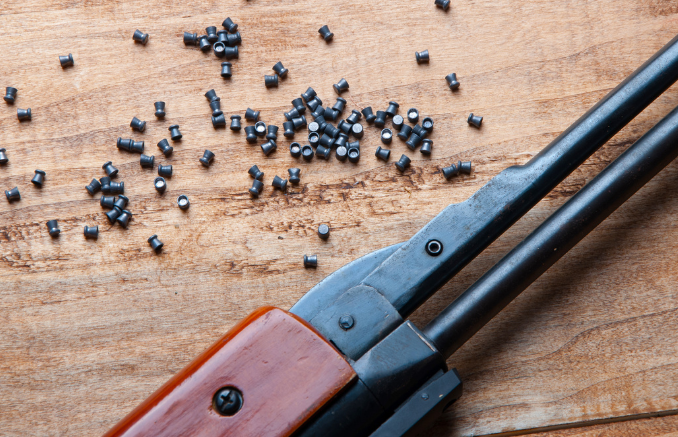
The catch is the shooting feel. A spring rifle recoils in two directions as the piston slams forward and stops, and that twitch happens while the pellet is still in the barrel. It makes springers less forgiving of sloppy technique, which is why people call them easy to own but harder to shoot well.
Gas-ram rifles swap the coiled spring for a sealed gas strut. They cock a little more smoothly, cope better with cold, and can be left cocked without weakening, but they shoot with the same basic springer character.
PCP (pre-charged pneumatic)
A PCP rifle stores compressed air in an onboard cylinder or buddy bottle, usually filled to somewhere around 200 to 230 bar. Each shot releases a metered burst of that stored air, so there's almost no recoil and the rifle is far easier to shoot accurately.
That's why nearly all serious target and hunting setups are PCP. The trade-off is everything around the rifle, because you can't refill it out of thin air.
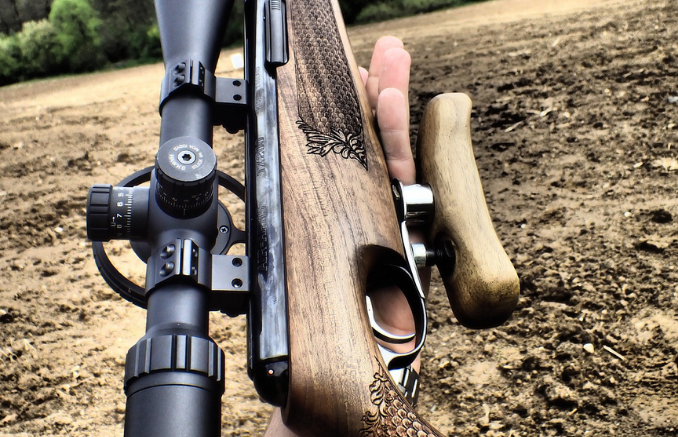
You charge a PCP one of three ways. A hand pump is the cheapest but it's hard work, and careless use can let moisture into the rifle. A divers' air bottle is the popular middle ground. You fill the rifle from the bottle, then pay a dive shop or club to top the bottle up now and then. A dedicated air compressor costs the most up front but makes you self-sufficient.
A single fill typically gives you anywhere from around 30 to 100-plus shots, depending on the rifle and calibre. The point is that PCP ownership is a small system, not just a rifle, and that running kit is a real cost you should budget for before you buy.
CO2
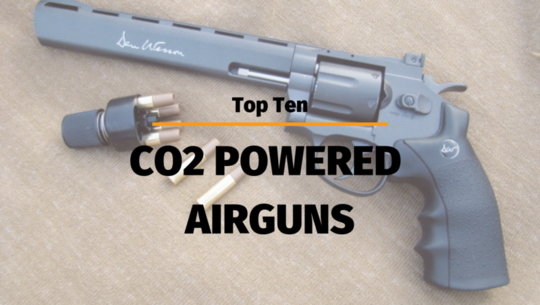
CO2 rifles run off small capsules or larger cylinders. They're cheap, pleasant and recoil-free, but power drops noticeably as the gas cools, especially in winter. That makes them better for plinking and casual target practice than for fieldwork, where a steady point of impact matters.
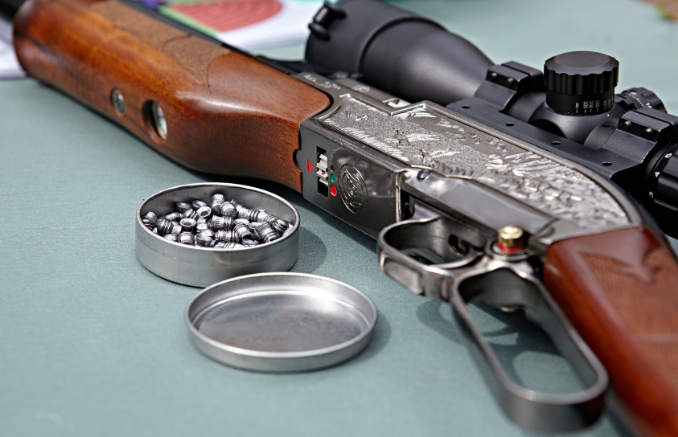
.177 or .22 - the calibre question
Almost every UK buyer ends up choosing between two calibres, .177 and .22. The honest answer is that under the 12 ft-lb ceiling, the gap between them is smaller than the internet arguments suggest, because the legal limit caps the energy for both.
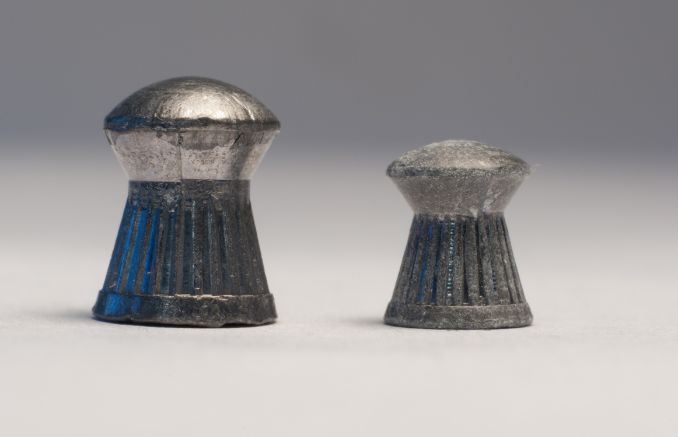
Here's what actually changes. With a fixed energy budget, a lighter .177 pellet flies faster and flatter, which makes judging range more forgiving. A heavier .22 pellet flies slower and drops more, but carries its energy in a way many hunters prefer for a clean strike.
A worked UK example at 11.5 ft-lb makes it concrete. A .177 pellet leaves the muzzle at about 783 fps and drops roughly 2 inches at 25 yards. A .22 pellet leaves at about 571 fps and drops roughly 3.5 inches at the same distance. By 45 yards, the .22 is holding slightly more energy than the .177 (around 8.2 ft-lb against 6.8 ft-lb).
So most UK shooters land on a simple rule of thumb. Choose .177 for target shooting and a flatter trajectory, and .22 for pest control and hunting, where retained energy at the strike counts for more. Both are legal, both work, and neither is a mistake.
Two larger calibres exist, .20 and .25, but they're niche. The .25 hits hard yet drops fast under the UK limit (about 5.7 inches at 25 yards in that same example), so it only really suits close-range work.
The key features that separate two rifles at the same price
Two rifles can share a power system, a calibre and a price tag and still feel completely different in your hands. These are the features that explain the difference, and the ones worth checking on any product page.
The trigger
A two-stage adjustable trigger is one of the biggest upgrades to how a rifle shoots. The first stage takes up slack, then a crisp, light second stage breaks the shot cleanly. Cheaper rifles often have a heavy, vague single-stage trigger, and you feel it dragging the rifle off target on every shot.
Single-shot or multi-shot
A single-shot rifle takes one pellet at a time, loaded by hand. A multi-shot PCP uses a rotary magazine that feeds a fresh pellet each time you cycle the bolt or lever, which is much quicker for pest control or a run of targets. Springers are nearly always single-shot, because the cocking stroke is what loads them.
The regulator (PCP only)
An unregulated PCP shoots its most consistent pellets in a middle band of pressure, with weaker shots at the very top and bottom of the fill. A regulator meters air to a fixed pressure for every shot, which tightens consistency and usually lifts your shot count per fill. Regulated rifles cost more, but for target work that consistency earns its keep.
The moderator
A moderator (silencer) sits at the muzzle and takes the crack off the shot. It won't make an air rifle silent, but it makes a real difference to noise, which matters a lot if you're shooting anywhere near neighbours. Many UK rifles come moderator-ready or with one already fitted.
Barrel and stock
Barrel quality drives accuracy more than headline power does. A good barrel and a stock that puts your eye naturally behind the scope will out-shoot a more powerful rifle you can't hold steady. Stocks come in ambidextrous, right-handed and adjustable forms, and how the rifle fits you matters more than what the stock is made of.
What it actually costs to get started
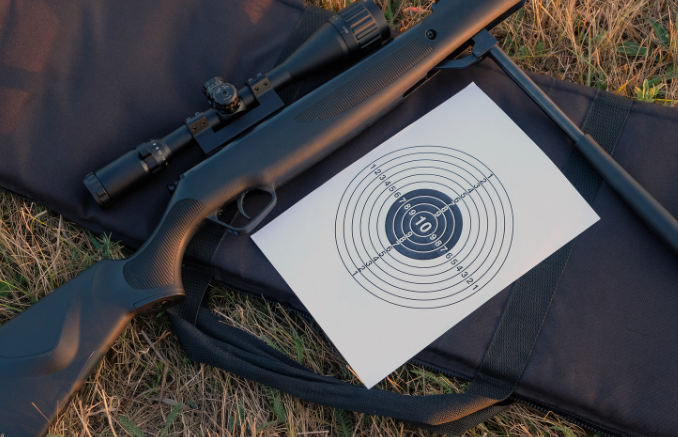
The rifle is only part of the spend, and budgeting for the whole setup up front saves the classic mistake; buying a rifle, then finding you need another chunk of money before you can use it.
A basic spring rifle sits at the cheap end and a capable PCP costs more, and that's before you add anything. Almost any rifle then needs a scope and mounts. Then pellets, which are cheap per tin but disappear faster than you expect once you start shooting properly.
For a PCP, add the charging kit on top. A hand pump is the cheapest way in, a divers' bottle plus periodic refills is the common choice, and a compressor is the biggest single extra. This is why a springer can be cheaper to own overall even when the rifle itself isn't much cheaper, because there's simply nothing else to buy to keep shooting.
Treat any price you see as a starting point. Retailers vary and stock moves, so the useful thing is to plan for the full setup rather than just the rifle.
Owning it legally - storage, age and where you can shoot
Buying without a licence doesn't mean owning without rules, and this is where first-time owners most often slip up. The law also tightened recently.
Storage
Since the Firearms (Air Weapons) (England and Wales) Rules 2023 came into force, owners must take reasonable precautions to stop people, especially anyone under 18, getting unauthorised access to the rifle. In practice that means keeping it stored securely, out of sight, and somewhere it can't just be picked up.
There's a sharp history behind that rule. The review that led to it followed the accidental death of 13-year-old Benjamin Wragge in 2016, and the official safety guidance is blunt; treat every air weapon as though it were loaded, and never fire unless you're certain the shot is safe.
A locked cabinet is the cleanest answer, especially in a home with children, and keeping pellets stored separately adds another sensible layer.
Where you can shoot
You can shoot on private land where you have the landowner's permission, and every pellet has to stay within that boundary. Letting a pellet cross into a neighbour's property or a public place is an offence even if it hits nothing.
A back garden can be legal to shoot in, but only if you can genuinely guarantee pellets stay on your property, which usually means a solid backstop and a moderated, sensible setup. The smaller the garden, the harder that is to promise.
Public land is out, and carrying an air rifle in a public place without a reasonable excuse is itself an offence. Transport it unloaded and in a bag or case, not slung over your shoulder on the walk to wherever you're shooting.
Clubs and ranges
If you don't have land, a club or commercial range is the easiest legal way to shoot, and it's also the fastest way to get good. Many beginners gain more from one supervised session than from a month of solo trial and error, and a club lets you handle different rifles before you commit to buying one.
A simple way to decide
If you mostly want to punch paper and learn to shoot well, a .177 with a setup you find easy to hold steady will serve you best, and a regulated PCP makes accuracy easier to reach. If you want pest control around a property, a .22 PCP with a moderator and a multi-shot magazine is the common, sensible choice. If you want the cheapest honest way in with no ongoing kit, a .22 break-barrel springer still does the job it always has.
Whatever you pick, the rifle is the start of a setup, not the whole of it. Budget for the scope, the pellets and, for a PCP, the charging gear. Sort your storage before the rifle arrives, and you'll sidestep the mistakes most first-time buyers make.