For UK sub-12 ft/lb shooting, the rifle itself is rarely the thing that lets you down. Any decent modern air rifle from a known brand will put a pellet where you aim it and kill a rat or squirrel cleanly at sensible range. The choices that actually shape whether you succeed are the powerplant, the calibre, and staying inside the law. Get those right and almost any of the usual named models will do the job.
So this guide spends less time crowning a single winner and more time on the decisions that trip people up. It covers the legal boundaries first because they narrow your options before you spend a penny, then works through calibre, power, and system, and finishes with specific air rifles worth shortlisting for different budgets and situations.
Sort the law out before you shortlist a rifle
The legal picture changes what you can buy and where, so it belongs at the top rather than buried in a footnote.
The power limit that defines "no licence needed"
In England and Wales, an air rifle producing more than 12 foot-pounds of muzzle energy needs a firearm certificate. Air pistols over 6 foot-pounds are effectively prohibited without Home Secretary authority. Stay under 12 ft/lb and you can buy and own a rifle without a licence, which is why almost every pest-control rifle sold in Britain is tuned to sit just below that line.
Scotland is different. Police Scotland requires anyone buying or acquiring any air weapon to hold an Air Weapon Certificate or Permit, and possession without lawful authority is an offence. The certificate costs £72 and lasts five years. Northern Ireland runs its own firearms licensing regime, so the "no licence" rule of thumb does not carry across the whole UK. Check your own country's rules before you buy.
Where you can shoot and how you store it
The Home Office guidance is clear that air weapons can be used for vermin control and hunting small ground game, but only on private property where you have permission to shoot. No permission means no legal shooting, even on land that looks like nobody's bothered about it.
Two more rules catch people out. It is an offence to fire an air weapon within 50 feet of the centre of a public road if a road user is injured, interrupted, or endangered. Carrying an air weapon in a public place without reasonable excuse is also an offence, so a rifle in transit needs to be in a slip or case, ideally unloaded. England and Wales now also have minimum storage rules aimed at stopping under-18s getting hold of air guns, so a lockable cabinet or similar is worth having from day one.
What you can actually shoot
A rifle that is legal to own does not make every target legal to shoot. BASC lists brown rats, grey squirrels, stoats, mink, and rabbits as suitable air rifle quarry. Pest birds like woodpigeon or magpie sit under general licences, and those licences vary by country and are reviewed every year. The species on the list this season is not guaranteed to be there next season, so check the current general licence for your country before you shoot any bird.
Calibre: .177 or .22 for pest control
This is the debate that dominates every forum, and for sub-12 air rifles the honest answer is that both work.
Because the muzzle energy is capped at 12 ft/lb, the calibre changes how that energy is delivered rather than how much of it there is. A .177 pellet is lighter and faster, so it shoots flatter and is more forgiving if you misjudge the range. A .22 pellet is heavier and slower, drops more over distance, but transfers its energy into the target more emphatically, which many shooters prefer for a clean kill on furred pests.
For rats, squirrels, and rabbits at typical garden and farmyard distances, .22 is the traditional pest-control pick and remains a sensible default. If you expect longer or more variable ranges, or you want the flattest trajectory to reduce misjudged shots, .177 has the edge. Neither choice will be the reason you miss. Consistent range estimation and a steady shot matter far more than the number on the barrel.
Power, range, and killing cleanly
Sub-12 ft/lb is plenty of power for the pests an air rifle is meant for. The limiting factor is not the rifle, it is your effective range and shot placement.
A humane kill on a rat or squirrel means a head shot, and that means only taking shots you know you can place. For most shooters and most sub-12 rifles that is somewhere inside 30 to 40 metres, closer in wind or poor light. Beyond that, pellet drop and drift grow quickly and the risk of a wounding shot rises. The discipline of passing up marginal shots does more for humane, effective control than any spec on the box.
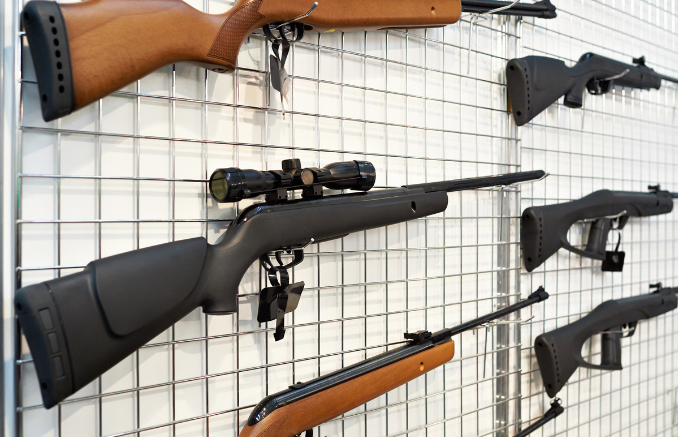
This is also where practice earns its keep. BASC and the professional trade body BPCA both treat trigger control, pellet choice, wind reading, and range judgement as skills to be trained, not assumed. Time on paper targets at known distances tells you your own limit, which is the number that actually governs your shooting.
Spring, PCP, or CO2: pick the system that fits your situation
The powerplant is the single biggest practical decision, because it sets your cost, your maintenance, and how the rifle behaves in the field.
Spring-powered (springer)
A springer makes its power from a piston and spring cocked with each shot. There is no air bottle to fill and nothing to charge, so a spring rifle like the Air Arms TX200 or Weihrauch HW95K is essentially self-contained. You buy it, you buy pellets, and that is the running cost.
The trade-off is technique. Springers have a small recoil and are less forgiving of a sloppy hold, so they take more practice to shoot consistently. They also give you one shot before you re-cock. For a patient shooter picking off pests one at a time, that is rarely a problem, and the low running cost and reliability are a genuine draw.
Pre-charged pneumatic (PCP)
A PCP runs off a cylinder or bottle of compressed air, usually filled to 200 to 250 bar. That gives you recoilless, highly consistent shots and, with a magazine, several follow-up shots without re-cocking. Most of the rifles you see recommended for serious pest control, from the BSA R-10 and R12 CLX to the Air Arms S510 and Weihrauch HW100, are PCPs for exactly this reason.
The catch is that a PCP needs an air source. That means a hand pump, a diver's bottle, or a compressor, plus the cost and faff of refilling. Shot counts are generous once filled. Weihrauch quotes up to 210 shots per fill in .177 and 250 in .22 for the full-length HW100 X, and Air Rifle Warehouse lists the BSA R12 CLX Pro carbine at around 400 shots in .177 and 440 in .22. You will not be refilling mid-session, but the air source is a real, ongoing part of ownership.
CO2
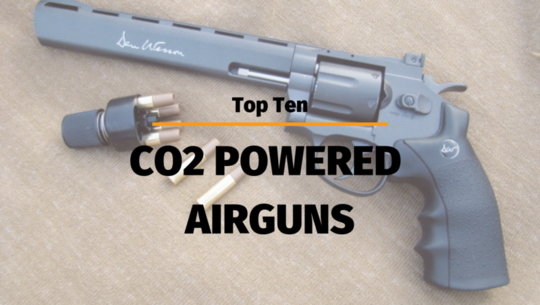
CO2 rifles run off 12g or 88g cartridges. They are simple and pleasant to shoot, and the larger cartridges can give 150-plus shots, but they have one weakness that matters in Britain: cold. CO2 loses pressure as temperature falls, and below about 5°C accuracy and consistency drop off. For a British winter or an early morning session, that is a meaningful limitation. CO2 suits casual or fair-weather use more than reliable year-round pest control.
Rifles worth shortlisting
These are the models that come up again and again across UK buying guides, grouped by what they are actually good for rather than ranked one to ten. Prices move, so treat any figure as a guide and check current stock.
Best low-maintenance choice: Air Arms TX200 or Weihrauch HW95K
If you want something that just works with no air source to worry about, a quality springer is hard to beat. The TX200 has a long reputation for accuracy and build quality, and Air Arms markets it on classic power and precision with no external charging needed. The HW95K is the lighter, more affordable Weihrauch springer that turns up on nearly every UK list. Both reward practice and last for years.
Best all-round PCP: BSA R-10 / R12 CLX or Air Arms S510
For most people doing regular pest control, a mid-range PCP is the sweet spot. You get consistency, a magazine for quick follow-ups, and enough shots per fill to forget about the bottle for a session. BSA says it ran the R12 CLX Pro through more than 50,000 test shots in development, and the Air Arms S510 is a long-standing favourite for exactly this kind of work. Budget for an air source on top.
Best value package for a first PCP: Gamo Phox Mk2
If the extras are putting you off PCPs, a package deal solves it. The Airgun Centre lists the Gamo Phox Mk2 PCP value package around £579 with a scope, pump, case, and silencer included. It is not a boutique rifle, but for someone starting out it bundles the awkward extras into one price and gets you shooting.
Best premium option: Weihrauch HW100 or Daystate Red Wolf
At the top end you are paying for refinement, shot consistency, and electronics rather than more killing power, since the 12 ft/lb ceiling applies to everyone. The Weihrauch HW100 is a benchmark PCP, and the Daystate Red Wolf sits at the premium, electronically regulated end. Lovely to own, but overkill if your job is a few rats behind the shed.
Noise and shooting near neighbours
"Quiet", "silenced", and "whisper" appear all over air rifle marketing, and it is worth knowing that none of it comes with published decibel figures you can compare. The claims are real in the sense that a moderated PCP is genuinely quiet, but you cannot rank models on noise from the copy alone.
What matters in practice is that a screw-on moderator plus a subsonic pellet makes most PCPs discreet enough for garden or farmyard use without alarming neighbours or spooking every pest in the area. Springers add a little mechanical twang from the spring that a moderator does not touch. If shooting unobtrusively near houses is a priority, a moderated PCP is the easier tool.
Pellets, optics, and the real cost of ownership
The rifle is the start of the bill, not the end of it. A realistic setup is rifle plus scope plus air source plus pellets, and for a springer you can drop the air source.
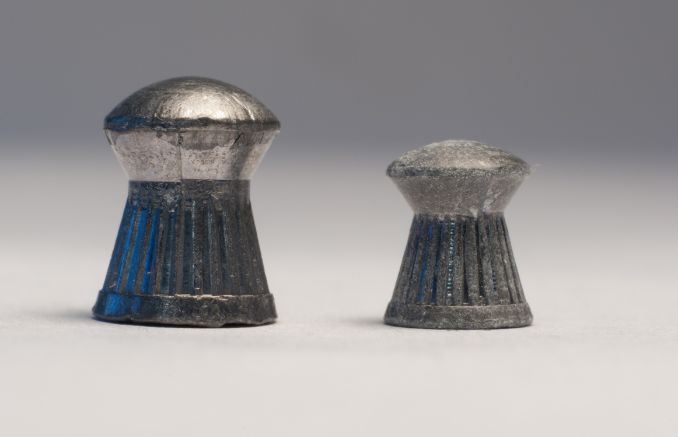
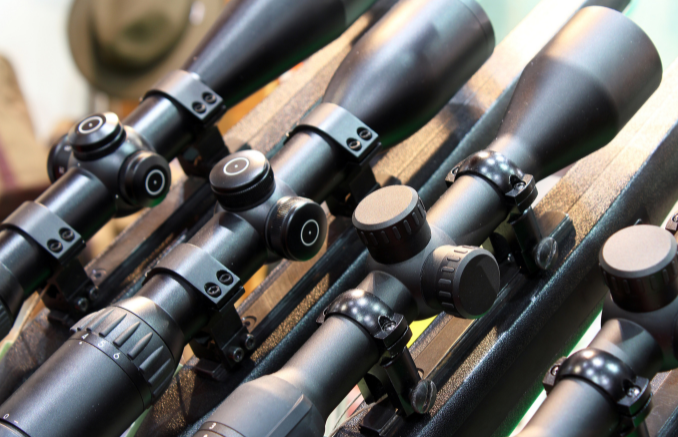
Pellets are cheap but not interchangeable. Different rifles prefer different pellets, so buying a few tins and testing which one groups best in your rifle is time well spent before you settle on one. A decent scope matters more than most beginners expect, because head shots need precision and a vague sight picture undoes a good rifle.
For a PCP, factor in how you will fill it. A hand pump is the cheapest entry but hard work; a bottle or compressor costs more upfront but saves effort. This is the running cost most listicles gloss over, and it is the main reason a springer can be the cheaper rifle to live with over time even if it takes more skill to shoot.
Is shooting even the right answer?
Worth a pause before you buy anything. Air rifle shooting works best as one part of a wider approach, not a standalone fix. BPCA, the pest-control trade body, describes air rifles as effective in the right situations and as part of an integrated pest management programme, alongside proofing, trapping, and removing what is attracting the pests in the first place.
The RSPCA makes the point plainly for squirrels: killing on its own is unlikely to be a long-term solution, because new squirrels can move into a vacated territory within a month. If you have a recurring problem, blocking entry points, removing food sources, and denying shelter will do more lasting good than shooting alone. For a serious infestation, or where the law and welfare rules are hard to meet yourself, a professional is often the better call.
None of that means an air rifle is the wrong tool. For thinning rats around a farm, keeping squirrels off a feeder, or dealing with rabbits on land you have permission to shoot, it is a precise and humane option in trained hands. Just go in knowing it is a tool in the kit, not the whole solution.
Quick answers
Do I need a licence for an air rifle in the UK? In England and Wales, no, as long as it is under 12 ft/lb. In Scotland you need an Air Weapon Certificate. Northern Ireland has its own licensing.
Is .177 or .22 better for pest control? Both work under the 12 ft/lb limit. .22 is the traditional pest pick for furred quarry; .177 shoots flatter and is more forgiving on range.
Can I shoot in my garden? Only on land where you have permission, keeping pellets on that land, away from public roads, and within the law. A moderated PCP with subsonic pellets is the discreet choice near neighbours.
Are CO2 rifles any good for pest control? For casual or warm-weather use, fine. For reliable year-round British shooting, cold weather saps their power, so a PCP or springer is the safer bet.
What's the single most important thing? Your effective range. Know the distance at which you can reliably place a head shot, and only take shots inside it.