Most arguments about .177 versus .22 are really arguments about power, and in the UK that argument is already over before you start.
Any air rifle you can buy without a firearms certificate is capped at 12 foot-pounds of muzzle energy. That limit applies to both calibres equally. So whichever you pick, the rifle leaves the muzzle with the same amount of energy.
That single fact changes the whole question. You are not choosing the more powerful calibre. You are choosing how that fixed amount of energy gets delivered to the target.
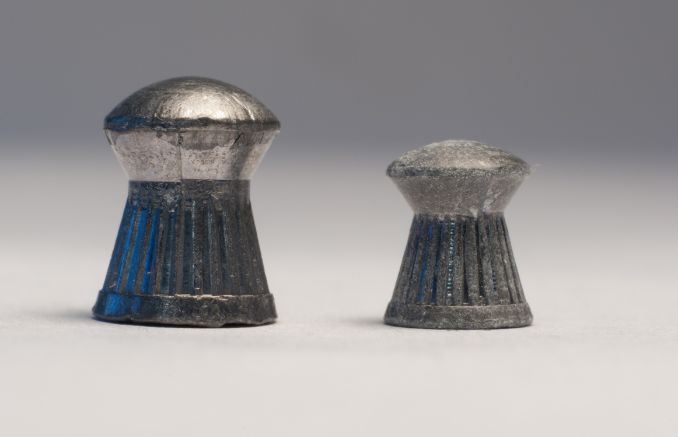
The .177 (4.5mm) packs it into a light pellet moving fast. The .22 (5.5mm) packs it into a heavier pellet moving slower. Everything else that matters, trajectory, holdover, how it behaves in wind, how it kills, flows from that one trade-off.
What the 12 ft·lbf cap actually does to each calibre
Energy is fixed, so velocity has to give. A heavier pellet at the same energy is simply slower, and the numbers make the gap obvious.
Set a rifle to exactly 12 ft·lbf and fire a standard 8.4 grain .177 pellet, and it leaves the barrel at roughly 802 feet per second. Drop in a 16 grain .22 pellet at the same energy and you get about 581 feet per second. Same punch at the muzzle, but the .177 is travelling nearly 40% faster.
That speed difference is the thing to hold onto. It is the reason the .177 shoots flatter, and the reason the .22 carries its weight better downrange. Neither is "stronger." They just spend the same energy budget differently.
This is also why US-focused guides can mislead a UK buyer. In countries with no energy cap, a .22 in the same rifle genuinely produces more energy than a .177, so power becomes a real variable. Under UK sub-12 law it isn't. If you read that a .22 "hits 20% harder," that claim doesn't survive the 12 ft·lbf ceiling.
Trajectory is where the .177 earns its place
A faster pellet spends less time in the air, so it drops less on the way to the target. That gives the .177 a flatter, more forgiving flight path, and it is the calibre's biggest practical advantage.
The effect is large, not marginal. From a similar starting point around 11.5 ft·lbf, the heavier .22 pellet drops at least twice as much as the .177 once you get out past 40 yards. That is a real-world field figure rather than a lab claim, but it matches the physics.
Why does this matter to you? Because most missed shots at range are missed on elevation, not because the pellet was too weak. A flatter trajectory means a misjudged distance hurts you less. If you range a target at 30 yards and it's actually 38, the .177 forgives that error far more readily than the .22.
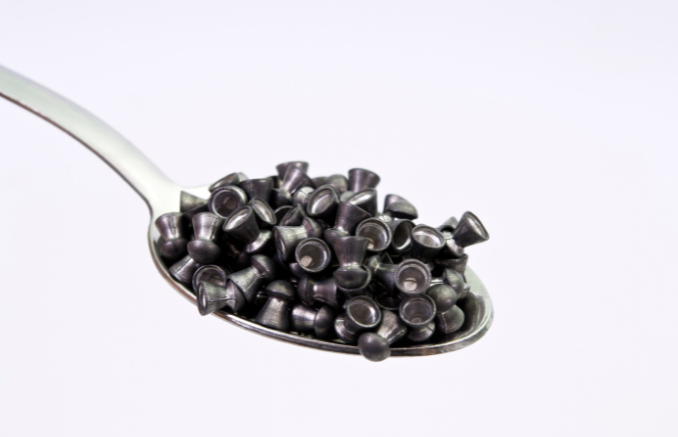
The flip side is holdover. The .22's looping path is more pronounced and, some shooters argue, easier to learn and "read" at known distances because the aim points are spaced further apart. If you mostly shoot at marked ranges where you already know the distance, that loop stops being a handicap and becomes predictable.
The .22's real argument: heavier pellets and cleaner kills
The .22's case has almost nothing to do with muzzle power and almost everything to do with what happens at the target.
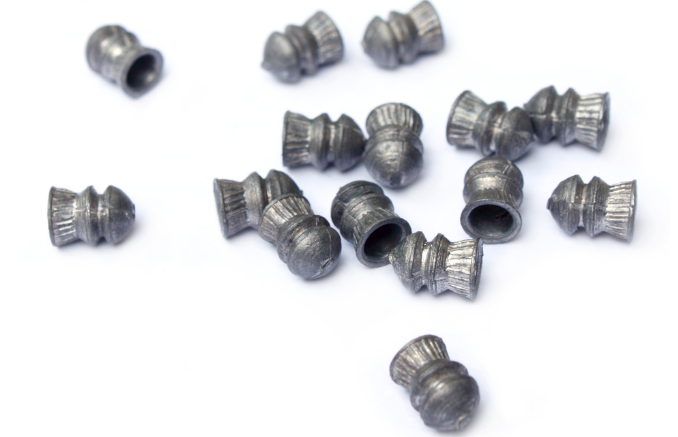
A heavier pellet bleeds off speed more slowly in proportion to its mass, so it tends to carry its energy further and dump more of it on impact. For pest control on rabbits, squirrels, and similar quarry at sensible airgun ranges, that heavier hit is what many hunters trust for a clean, humane dispatch.
The .177, being lighter and faster, can pass through soft tissue more cleanly and transfer less of its energy on the way through. That is fine with precise shot placement and arguably better at longer range where it still carries enough speed, but it leaves a narrower margin if your shot lands slightly off.
The honest caveat, and one the manufacturers themselves make, is that shot placement matters more than calibre. A well-placed .177 pellet to the head kills more reliably than a poorly placed .22 to the body. No calibre choice rescues a bad shot, so the .22's edge here is best read as a slightly larger margin for error, not a different league.
Wind is less one-sided than people claim
The usual line is that the .22 handles wind better because it's heavier. It's not that simple, and nobody seems to have a controlled UK test to settle it.
The heavier .22 pellet does resist being pushed sideways for a given gust. The faster .177 pellet spends less time exposed to that gust in the first place. Those two effects pull against each other, which is why experienced shooters disagree about which calibre actually drifts less over typical air rifle distances.
What you can take from this practically: don't pick a calibre on its wind reputation alone. If you regularly shoot in open, gusty conditions at range, both calibres will need you to read the wind, and your own consistency will matter more than the few millimetres of difference between them.
What each calibre costs to shoot
Pellets are the running cost, and the gap is real but smaller than people expect once you put numbers on it.
Take one common pellet sold in both calibres. A tin of 500 standard .177 pellets runs around £14, which works out at about 2.80p per shot. The same range in .22 is around £18 for 500, or about 3.60p per shot. That's roughly three quarters of a penny more per .22 shot at current UK retail.
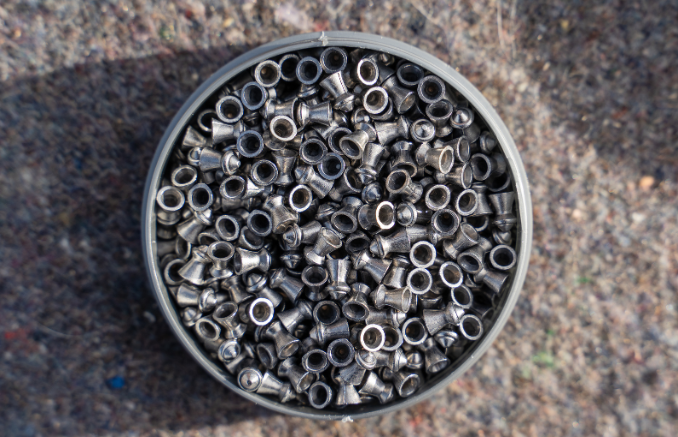
Put that in perspective. Over 1,000 pellets, a heavy month of regular practice for most people, you're looking at about £8 more to shoot the .22. That is not the figure a buying decision should turn on.
One thing to watch is tin count rather than headline price. Heavier .22 pellets are sometimes sold 250 to a tin where the .177 comes 500 to a tin, so compare cost per pellet, not cost per tin, or you'll overestimate the difference.
The shot-count factor most guides skip, and it matters for PCP buyers
If you're buying a pre-charged pneumatic (PCP) rather than a spring rifle, calibre affects how many shots you get per air fill. Almost no comparison mentions this, and it can swing a buying decision.
Here's the catch: the direction isn't consistent, so you can't rely on a rule of thumb. On the BSA R12 SE, the .22 version is quoted at around 215 shots per fill against 140 for the .177, a big advantage to the .22. On the Air Arms S510 Tactical, it flips the other way, with the .177 giving up to 100 shots against around 90 for the .22.
Different barrels, regulators, and valve tuning between calibre versions of the same rifle produce these differences, which is why one model favours .22 and another favours .177. The lesson is to ignore generic claims entirely and check the published shot count for the exact model and calibre you're considering.
For a plinker burning through pellets in the garden, or a hunter who wants more shots before a top-up, this can be a more meaningful real-world difference than trajectory or cost. It only applies to PCPs, though. On a spring or gas-ram rifle, every shot is "fresh air," so this consideration drops away.
So which should you actually buy?
The right answer depends on what you'll shoot, not on which calibre is "better." Here's how the trade-offs land for the most common cases.
Club, target, and 10-metre shooting
Go .177. Formal target disciplines are built around it: the ISSF 10-metre air rifle event specifies 4.5mm (.177) ammunition, full stop. The flat trajectory also rewards the precision these disciplines demand, and at 10 metres the .22's knockdown advantage is irrelevant.
Pest control and hunting
This is where the .22 makes its strongest case. The heavier pellet and harder energy transfer give you a slightly more forgiving margin for a humane kill on rabbits, squirrels, and similar quarry at typical ranges. If your shooting is mostly at known or short distances, the .22's extra drop is easy to manage. If you take longer or more variable-range shots, a .177 in capable hands stays flatter and still does the job, so don't rule it out.
Beginners
A .177 is the easier first calibre for most people. The flatter trajectory means small errors in judging distance cost you fewer misses, so you'll hit more and learn faster. Pellets are marginally cheaper too. Either calibre is a sound starting point, but the .177 removes one variable while you build the fundamentals.
Mixed use and plinking
If you want one rifle for a bit of everything, the .177 is the safer all-rounder because its flat trajectory suits casual target shooting and informal range, and it remains entirely capable for close-range pest control with good placement. If hunting is your main use and target work is the occasional extra, lean .22 instead.
The quick version, if you just want a steer:
- Choose .177 for target shooting, longer or unknown distances, learning, and general mixed use.
- Choose .22 for pest control and hunting at known or moderate ranges where a slightly bigger margin on the kill matters more than a flat trajectory.
Whichever you land on, remember that under UK law both rifles leave the muzzle with the same energy. You're choosing a flight path and a delivery style, not a power level, so pick the one that matches how and what you shoot.